


Company Profile
Established in 1995, Laike hydraulics is committed to developing and manufacturing hydraulic fittings, Adapters, Hose assemblies and other related products that are widely used in mining, machinery, transportation, Shipping, And oil fields. We now own plant of 18,000 square meters, 200 machines, 100 employees and store 40,000 kinds of regularly used items.
It is the long-standing commitment to "First class design, First class products, First class service" that has made Laike Hydraulics a name synonymous with hydraulic fittings and adapters. We welcome everyone to visit us.
Why choose us
High quality
Our products are manufactured or executed to very high standards, Using the finest materials and manufacturing processes.
Professional team
Our professional team collaborate and communicate effectively with one another, and are committed to delivering high-quality results. They are capable of handling complex challenges and projects that require their specialized expertise and experience.
Long warranty
The long-term warranty is designed to give consumers more confidence that their purchases and services will continue to be valid.
Rich experience
Dedicated to strict quality control and attentive customer service, our experienced staff is always available to discuss your requirements and ensure complete customer satisfaction.


Product Categories
Latest Products
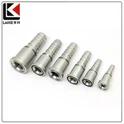
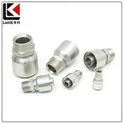
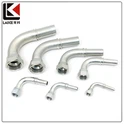
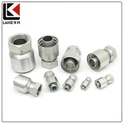
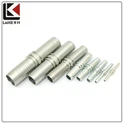
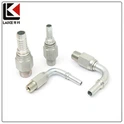
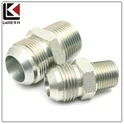
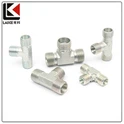
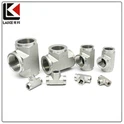
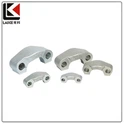
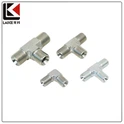
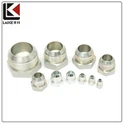
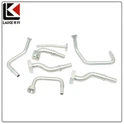

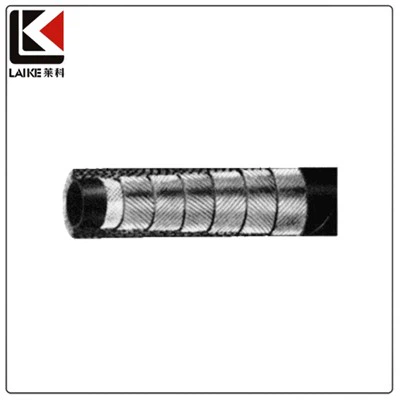
Hose is a type of flexible hose that features a layer of metal wire or strands woven around an inner tube to provide additional strength, durability, and resistance to kinking and crushing. This wire reinforcement allows the hose to maintain its shape under pressure and makes it suitable for applications where the hose might be subjected to physical stress or require a degree of structural support.
The construction of hose typically includes an inner layer made of rubber or another flexible synthetic material, the braided wire mesh which serves as the reinforcement layer, and an outer layer of protective material such as rubber or PVC. The wire braid acts as a protective barrier against abrasion, punctures, and external damage, while also offering improved resistance to bursting and collapse under high internal pressures.
Benefits of Hose


Flexible
A notable benefit of wire braided pipe is the uncompromised flexibility, as compared to traditional non-braided rubber pipes. Owing to this property it can manoeuvre through restrictive spaces with a reduced risk of kinks, bursts, cracks and blockages in the pipeline. This makes it an effective choice for most industrial requirements involving conduiting.
Durable
Braided pipes have a longer life span and require little maintenance as compared to the non-braided PVC and rubber alternatives that are less durable. The double reinforcement in the form of meticulously selected yarn, entwined and fused between the inner & outer layers, Raksha PVC braided pipes can endure more wear and tear-related damages without giving way. This means that braided pipes can last for several years with minimum care and maintenance.
Strength
Braided pipes apart from being flexible and durable are stronger and more resilient. The yarn or cords that are braided or fused in the outer and/or inner layers reinforces the pipes and strengthens them and makes them less prone to damages like breaking, bursting, bending and the like. Also, the yarn or cord weaved into the pipes creates a smoother inner and outer texture and prevents particles from collecting at the base of the pipes which can lead to contamination and compromise the structural integrity.
Resilient
Braided pipes are superiorly resilient. Apart from functioning under high pressure, they can withstand extremely high and low temperatures, especially if they are made of stainless steel. They do not expand and contract easily making them resistant to damage. This reduced the risk of material loss, extra costs and the hassle of frequent replacements. However, they must be used within the recommended range to avoid any malfunction. They are also resistant to chemical corrosion owing to their compatibility with a range of chemicals and effectively transport different types of gases (such as air, steam, and natural gas) and liquids (water, oils, and, chemicals and solutions). This simply means less replacement of parts and no fluid, gas, or liquid loss. The entire length of the pipe is integrated with braided yarn and chords that provide extra layers of protection and strength making it more resistant to abrasions.
No permeation and full vacuum
Unlike PVC and rubber pipes, braided pipes do not allow any permeation from the inside out or vice versa. There are no chances of the material being transported getting exposed to external particles, and the toxic or expensive material from the pipe going out. This makes it a secure conduit by eliminating the chances of leaks and convolutions. While other rubber and normal PVC pipes might collapse under high pressure, these pipes are one of the best options when it comes to high-pressure applications that need a full vacuum. These hoses are a great solution for full vacuum and high-pressure applications while other alternatives may collapse under the same circumstances.
Transparent and versatile
One of the most useful features of braided pipes is its transparency which enables ease of visual access to observe its internal functioning. With most industrial applications, monitoring and regular checks are essential. The industrial thread and yarn used to reinforce the braided pipes offer all the benefits that make it flexible, resilient, and versatile without hindering visual monitoring. Owing to this, braided pipes can be used for a multitude of functions and are compatible with various machinery.
Single braided hoses
Single braided hoses are constructed with a reinforced inner hose wrapped in an outer layer of protective braiding for added durability and strength. This type of hose is designed for applications like hydraulic systems, fuel delivery, and air conditioning lines, where flexibility and resistance to chemical breakdowns are important. Single-braided hoses can often be used instead of double-braided alternatives since the single layer provides enough pressure tolerance and safety. They’re also typically more lightweight than their counterparts, allowing users to reduce installation time.
Double braided hoses
Double braided hoses are hoses with two layers of reinforcement. The first layer is a conventional hose wrapped in a second layer of high-tensile stainless steel wire braid. This double-braiding technology results in superior performance and greater pressure capacity than traditional rubber or braid-reinforced hoses, which makes them the ideal choice for demanding applications. They also offer increased flexibility and durability due to their unique construction – while the internal hose remains unaffected by external conditions, the external stainless steel mesh offers extra protection against abrasion, corrosion and temperature extremes. Furthermore, double-braided hoses can handle up to twice the operating pressure of single-braided varieties – making them an excellent option for higher-pressure hydraulic systems.
Close-pitch braided hoses
Close-pitch braided hoses are flexible components in a hydraulic system which permit bends and turns within the hose’s design. These hoses feature very closely arranged reinforcing strands that help provide superior pressure performance and increased flexibility. They are ideal for applications requiring frequent or tight bending, such as those found in robotics, machine tools, agricultural machinery, automotive equipment, aircraft, and other mobile units. Benefits include improved flexibility over standard hoses and reduced abrasion resistance due to its smaller helix angle. Additionally, they increase cycle life; reduce kinking when routing; support faster deployment times; easy installation; extremely durable construction; and lower overall maintenance costs due to fewer replacement parts required for repair. The small diameter also allows them to fit into more compact spaces compared with conventional metal tubing options provided by competitors.
Open-pitch braided hoses
Open-pitch braided hoses are designed to provide a high-pressure solution for tough industrial applications. Constructed from heavy-duty advanced synthetic core materials, these hoses offer superior chemical resistance and function at higher temperatures than rubber or PVC hoses. The open pitch design of the hose allows for minimal bends in the inner part of the hose, which significantly reduces turbulence and increases flow rate while maintaining maximum pressure ratings up to 5000 psi (345 bar). Open-pitch braided hoses also resist flex fatigue, making them reliable and durable even under extreme conditions. Its sturdy construction, dependable performance, and noise reduction make it an ideal choice for hydraulic operation systems in industries ranging from oil & gas to aerospace manufacturing.
Strip-wound hoses
Strip-wound hoses are one of the most commonly used types of flexible conduit in industrial HVAC systems, piping, and ducting. They are made from stripped metal wounds in a spiral fashion to provide strong support and resistance to vibration, corrosion, abrasion, and extreme temperatures. The design also makes for an especially easy installation process; they can be quickly cut with tools such as a Dremel or aviation snips to meet the exact specifications needed for a given job. Additionally, strip-wound hoses come with various helpful accessories for safety and convenience, including strain reliefs, stainless steel bands or clamps, adapters and couplers. This makes them ideal for use in locations prone to moisture or corrosion where plastic-coated hoses may not be suitable.
Application of Hose
High-pressure systems
Wire braid hoses are commonly used in high-pressure applications such as hydraulic systems, where they can safely convey fluids at pressures up to several thousand PSI.
Chemical transfer
Their chemical resistance makes them suitable for handling a wide range of corrosive and aggressive chemicals, making them ideal for use in the chemical processing industry.
Automotive industry
Wire braid hoses are used in various automotive applications, including brake lines, power steering systems, and turbocharger hoses due to their durability and resistance to heat and vibration.
Aerospace and defense
Their lightweight yet robust nature suits them for applications in aircraft and military equipment, where reliability under harsh conditions is essential.
Oil and gas industry
Reinforced hoses are used for oilfield service operations, such as drilling, well servicing, and production, where they transport drilling fluids and other petroleum products.
Industrial machinery
They are utilized in machinery that requires the transportation of high-pressure fluids, such as in paint sprayers, pressure washers, and heavy-duty construction equipment.
Marine applications
Wire braid hoses are used on boats and ships for conveying fuel, lubricants, and hydraulic fluids, where they must withstand saltwater and marine environments.
Food and beverage industry
Certain wire braid hoses are designed to comply with food-grade standards, making them suitable for handling food-grade liquids and beverages.
Process of Hose
Size test and package – Measure lengths of rubber hoses and packed them with packing belt.
Extrude inner rubber – Smooth surface and uniform thickness.
Air drying – Keep the hose dry.
Reinforcement layer production – Braided or spiral process.
Extrude rubber cover and stick label – Protect hydraulic hose from corrosion and abrasion.
Wrap water cloth – Protect the hose in vulcanizing process.
Vulcanize – Direct steam heating of vulcanizing boiler or continuous vulcanizing.
Remove water cloth – Separate the water cloth and hose after vulcanization.
Demould by water pressure.
Test pressure – Test the working pressure and burst pressure.
A hose is specifically designed for hydraulic systems. They convey high-pressure oils or water between the fluid ports of the pumps and actuators, where the oils or water are used to create mechanical movement. They are made up of three different layers: a core or inner tube, a reinforcement layer or inlays, and an outer cover. The inner layer comes in direct contact with the fluid. So, they need to be chemically compatible with the fluid. The reinforcement layer is made up of steel, copper, or textile of high tensile strength. This layer provides the necessary strength to the inner tube and facilitates high-pressure applications. The reinforcements can have a helical, spiral, or braided design. The outer cover of the hose acts as a protective layer and should be compatible with the operating environment.
Size
The inside of a hose diameter can vary, and must align with pressure requirements to avoid excessive turbulence. If possible, check the printed measurement on the side of the old hose that needs replacing. If this has worn off, cut the original hose and carefully measure the internal diameter to match up with the new product.
Temperature
Both fluid and ambient temperature need to be considered when putting together a new hose assembly. The selected product must withstand the minimum and maximum temperatures that it will experience in service.
Application
Noting where and how the hose assembly is going to be installed will help to determine an optimum selection. Some questions to ask in this process are:
• What is the fluid compatibility?
• What are the environmental conditions and potential risks?
• What are the routing requirements?
• Are the government and industry standards being met?
• Are there unusual mechanical loads?
• Is a non-conductive hose required?
Material to be conveyed
Ensure that the hose tube, cover, couplings, and O-rings are compatible with the water, oil emulsions, or glycol solutions being used. Take care in this selection where gases are present.
Pressure
Noting the system pressure is one of the most important steps. The published working pressures must be equal to or greater than the relevant system pressure rating. If the hose experiences pressure spikes beyond this, the product life will shorten, so this is not recommended.
Delivery (volume and velocity)
Proper sizing of transport efficiency can be ensured by checking the original hose I.D. Against the new one.

Hoses work by using hydraulic fluid to transfer force between two different components. When fluid is pressurised, it generates force that can be used to power different components.
How to Maintain Hose
Put a maintenance routine in place
First and foremost, establish a regular routine. Hose maintenance shouldn’t be performed on an ad hoc basis or left until something goes wrong. Hoses should be inspected on a regular basis, in order to identify any possible issues and rectify them immediately.
Conduct regular visual inspections
Visual inspections can be a powerful tool in identifying any possible issues before they come to light. Keep a close eye on your hoses and look for any cracks, abrasions, bends or twisting – these can all be telltale signs that your hose needs repairing or replacing.
Maintain the correct hydraulic fluid temperature
Every hose has a temperature rating, and these are specified for good reason. These ratings will vary between hoses, and they dictate the temperature range that the fluid should be within.
Don’t exceed pressure ratings
Similarly, hoses have pressure ratings which should not be exceeded. Pressure ratings are in place to protect the hose and the safety of your operators, so it’s an important measurement to keep an eye on.
Be aware of leaks
Leaks should never be ignored, no matter how minor they may first appear. If you suspect a leak within your system, whether internal or external, it’s a sign that something isn’t quite right.
Prevent contamination
It’s important to ensure that your hydraulic fluid is free from contamination for many reasons, including the safety of the hose. If the fluid travelling through the hose carries debris this can cause significant damage to the inner tube and therefore lead to further complications.
Established in 1995, Laike hydraulics is committed to developing and manufacturing hydraulic fittings, adapters, hose assemblies and other related products that are widely used in mining, machinery, transportation, shipping, and oil fields. We now own plant of 18,000 square meters, 200 machines, 100 employees and store 40,000 kinds of regularly used items.

FAQ
We're professional hose manufacturers and suppliers in China, specialized in providing high quality customized service. We warmly welcome you to wholesale high-grade hose from our factory.
METRIC Hydraulic Fittings, Hydraulic Fluid Connectors, Plugs For BSP Thread