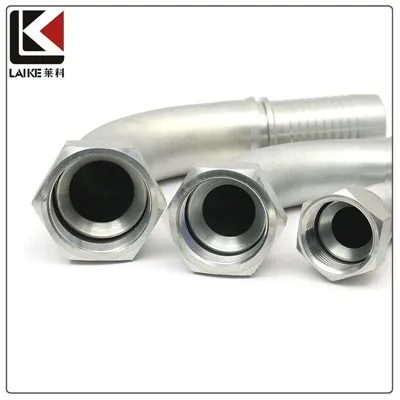
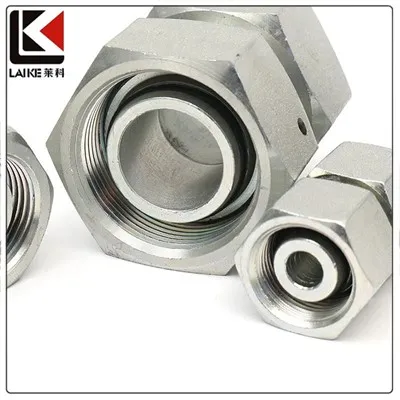
Company Profile
Established in 1995, Laike hydraulics is committed to developing and manufacturing hydraulic fittings, Adapters, Hose assemblies and other related products that are widely used in mining, Machinery, transportation, Shipping, And oil fields. We now own plant of 18,000 square meters, 200 machines, 100 employees and store 40,000 kinds of regularly used items.
It is the long-standing commitment to "first class design, First class products, First class service" that has made Laike Hydraulics a name synonymous with hydraulic fittings and adapters. We welcome everyone to visit us.
Why choose us
High quality
Our products are manufactured or executed to very high standards, Using the finest materials and manufacturing processes.
Professional team
Our professional team collaborate and communicate effectively with one another, And are committed to delivering high-quality results. They are capable of handling complex challenges and projects that require their specialized expertise and experience.
Long warranty
The long-term warranty is designed to give consumers more confidence that their purchases and services will continue to be valid.
Rich experience
Dedicated to strict quality control and attentive customer service, our experienced staff is always available to discuss your requirements and ensure complete customer satisfaction.

* Material: Carbon Steel/stainless steel
* Surface Treatment: Cr3+
* Salt Spray Test: 96h
* OEM/ODM ARE WELCOMED

* Material: Carbon Steel/stainless steel
* Surface Treatment: Cr3+
* Salt Spray Test: 96h
* OEM/ODM ARE WELCOMED

* Material: Carbon Steel/stainless steel
* Surface Treatment: Cr3+
* Salt Spray Test: 96h
* OEM/ODM ARE WELCOMED

* Material: Carbon Steel/stainless steel
* Surface Treatment: Cr3+
* Salt Spray Test: 96h
* OEM/ODM ARE WELCOMED

* Material: Carbon Steel/stainless steel
* Surface Treatment: Cr3+
* Salt Spray Test: 96h
* OEM/ODM ARE WELCOMED

* Material: Carbon Steel/stainless steel
* Surface Treatment: Cr3+
* Salt Spray Test: 96h
* OEM/ODM ARE WELCOMED

* Material: Carbon Steel/stainless steel
* Surface Treatment: Cr3+
* Salt Spray Test: 96h
* OEM/ODM ARE WELCOMED

* Material: Carbon Steel/stainless steel
* Surface Treatment: Cr3+
* Salt Spray Test: 96h
* OEM/ODM ARE WELCOMED

* Material: Carbon Steel/stainless steel
* Surface Treatment: Cr3+
* Salt Spray Test: 96h
* OEM/ODM ARE WELCOMED
What is JIC Adaptor
Most commonly used as hydraulic fittings in the fluid power industry, JIC (Joint Industry Council) adaptors are a type of flare fitting machined with straight threads using a 37° flare seating surface. This is used to form the seal of the fitting instead of an o-ring or tapered threads. Though they have identical dimensions, JIC fittings should not be confused with AN (Army Navy) fittings, and the two should not be considered functionally interchangeable.
Benefits of JIC Adaptor
Universal & affordable
The simplicity and affordability of manufacturing JIC adaptors-As well as the wide range of size and style options-Have made them the industry standard for hydraulic fittings for decades. JIC adaptors now come in a multitude of variations that are easy to adapt to both imperial and metric, Allowing them to fit virtually any hose or port and making them universally accepted by both foreign and American companies.
High/low temperature performance
JIC adaptors perform exceptionally well in high- And low-Temperature environments. The metal-to-metal seal found in JIC adaptors is not affected by temperature like O-rings are, since O-rings are typically made of rubber or some other elastomer material that can handle exposure to a milder range of temperatures.
Connectivity
Beyond the versatility that allows JIC adaptors to be connected to virtually any hydraulic system, JIC fittings can also be disconnected (and later reconnected) without loss in performance, Further explaining how they came to be an industry standard.
Maintenance
If modifications or repairs are necessary, Adaptors can be easily removed and replaced without extensive alterations to the existing piping system.
Durability
JIC adaptors are typically made from high-quality materials, Such as stainless steel or carbon steel, Providing excellent resistance to corrosion and ensuring a long service life.
Space-saving
Their compact design allows for efficient use of space within confined areas, Which is particularly beneficial in tight or complex piping arrangements.

- Easy of use with combination of body, Sleeve and nut.
- Very effective leak-proof joint, Full flow connection in process tubing.
- Repeated disassembly and re-assembly with no need to replace any components.
- Wide range of configurations are available such as straight connectors, Elbows, Union, Tees, And crosses as well as unique special adapters.
Couplings
First up is the coupling. Imagine there are two pipes, How do you connect them? The coupling is the answer. Couplings have female threads at both ends and can connect two identical male parts so that fluid can flow smoothly from one to the other. A coupling with different sizes at each end can be called a reduction coupling, Which connects two fittings of different sizes. Standard couplings have stop zones inside, Called internal stops, Which prevent the pipe from being inserted too deeply and affecting the function of the connection.
Bushings
A bushing is similar to a close nipple fitting, but it has threads on both ends. Bushings have larger male threads and relatively small female threads. Let's say you have a large opening but need to fit a smaller part into it. A bushing will help you with this.
Nipple
Sometimes you need to connect two fittings together. This is easily accomplished by using a fitting. It is a short piece with threads on both ends. By screwing one end into the first fitting and the other end into the second fitting, The fittings can be connected! If it has continuous uninterrupted threads, it is a close nipple.
Union
Now, What if you have different parts that may need to be taken apart later? The union is the perfect adapter for you. A union is similar to a coupler, But with differences. It allows you to connect different parts, But also allows for easy disassembly. So if you need to replace or maintain a part, you can easily remove it without disassembling the entire system.
Reducer
Reducing couplings have two ends: A larger one for larger pipes and a smaller one for smaller pipes. When these two ends are inserted into their respective pipes and tightened, Hydraulic fluid can flow seamlessly between the two differently sized components.
Elbow adapters
Sometimes you need to change the direction of flow in your hydraulic system. Maybe you want to make a 90-degree or 45-degree bend. An elbow adapter can help you do just that. It allows you to change the direction of fluid flow, making your system more flexible. If the two ends of the fitting are different sizes, it is a reducer elbow fitting.
Tee Adapters
Tee adapters allow fluid flow to be split into two directions, Or the two directions can be combined. Common tee ports have the same size threads, But of course, There are tees with different thread sizes. And the types of threaded ports of tees can also be different types.
Cross Adapters
Cross adapters are also called four-way fittings. That is, A cross fitting has four ports, Each of which is threaded. Cross adapters allow fluid to be split into three different directions.
Application of JIC Adaptor
Construction
JIC adapters are widely used in construction equipment, Such as excavators, Bulldozers, And cranes. These adapters facilitate the connection and transfer of fluids in the hydraulic system, Enabling the smooth operation of the equipment.
Agriculture
JIC adapters are also widely used in agricultural equipment, Such as tractors, Harvesters, and irrigation systems. These adapters facilitate the connection and transfer of fluids in the hydraulic system, Enabling the smooth operation of the equipment.
Automotive
JIC adapters are used in various automotive applications, Such as power steering systems, Brakes, And suspension systems. These adapters facilitate the connection and transfer of fluids in the hydraulic system, enabling the smooth operation of the equipment.
Industrial
JIC adapters are widely used in various industrial applications, Such as manufacturing, processing, And handling equipment. These adapters facilitate the connection and transfer of fluids in the hydraulic system, enabling the smooth operation of the equipment.
Marine
JIC adapters are also used in marine applications, Such as offshore rigs, Ships, And boats. These adapters facilitate the connection and transfer of fluids in the hydraulic system, Eenabling the smooth operation of the equipment.
Components of JIC Adaptor
It is the backbone for the adapter. The dimensions of standard adapters are fixed, but they can also be tailored to the components you want to connect. Whether you are connecting a hose to a tube or a tube to another tube, The shape of the main body adapts perfectly to these components.
The threads on the adapter are spiral ridges that, When twisted into place, Ensure that the adapter locks securely in place. That way, It won't wobble or pop off under pressure.
This is the safety guard of the adapter. It prevents leaks by forming a tight seal when you connect it to another component. The sealing surface is critical to maintaining a high-performance, leak-free system.
JIC adaptors work by creating a metal-to-metal seal between their components. Their 37-degree flare angle creates an effective seal, Ideal for high pressure applications. JIC adaptors consist of two parts: the fitting body and its matching nut, Both featuring 37-degree flare angles on their ends; When tightening their respective nuts compress the flare against each other to form an airtight seal against one another and tightening creates a tight seal against its components.


Fluid power systems are utilized by various industries and applications to transmit and regulate power through pressurized fluids, typically pumps, Valves, Actuators and fittings. Fittings play an integral part in fluid power systems by providing connections between components; One key factor that makes JIC adaptors ideal for this application is their robust construction.
JIC adaptors excel at conveying fluids at high pressure due to their robust design and high-pressure capability, Creating secure leak-free connections under high pressure by means of its 37-degree flare angle and metal-to-metal seal that withstands high pressure - thus preventing fluid leakage. These adaptors are easy to install and maintain due to their standardized design which enables replacement or interchangeability between adaptors meeting similar standards.

Determine the size and type of adapters
The first step in choosing the right adapters is to work out the size and type of adapters required for your system. Consider the size and type of hoses and pipes in your system, As well as the pressure and flow rate requirements.
Choose the right material
The material of the adapters plays a significant role in the performance and durability of the system. Steel adapters are suitable for high-pressure systems, While brass and aluminum adapters are suitable for low to medium-pressure systems. Consider the operating conditions and the type of fluid used in the system when choosing the material of the adapters.
Consider the seal type
The seal type of the adapters plays a significant role in preventing leaks in the system. O-ring seal adapters provide a better seal compared to tapered thread adapters, Making them suitable for high-pressure systems where leakage is not acceptable.
Choose a reputable manufacturer
It's essential to choose a reputable manufacturer when it comes to hydraulic adapters. Reputable manufacturers use high-quality materials and follow strict manufacturing processes to ensure the adapters meet industry standards. Choosing a reputable manufacturer also ensures that you get reliable and efficient customer support and technical assistance if you encounter any issues with the adapters.
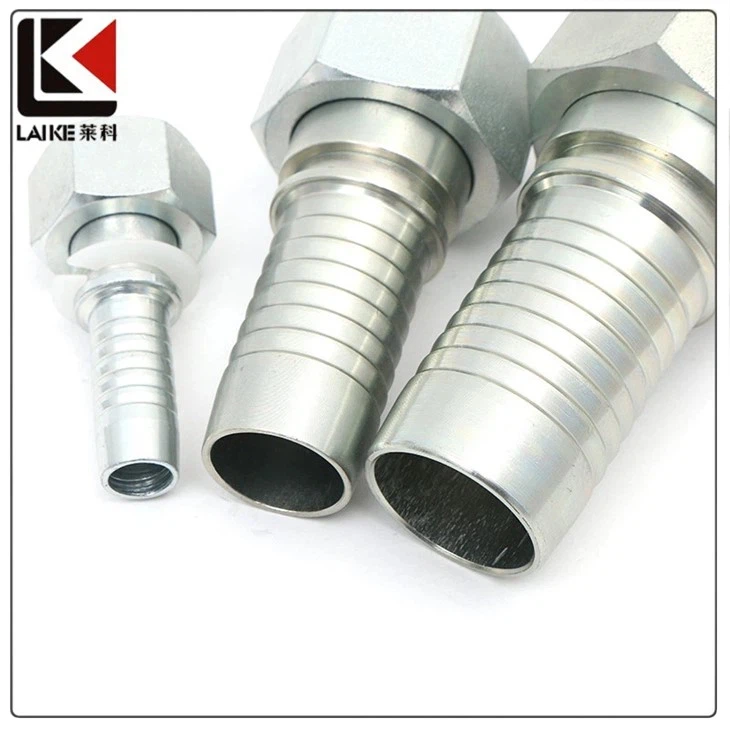
Before we dive into maintenance tips, It's necessary to understand what a JIC adaptor is and its purpose in a hydraulic system. JIC adaptors are accessories used to connect two or more hydraulic components together. These adapters come in various shapes and sizes and are used to create fluid connections between different components of a hydraulic system.
JIC adaptors play a vital role in the performance and reliability of hydraulic systems. Damaged or worn adapters can cause leaks, Pressure losses, And other problems that can lead to costly downtime. Regular maintenance of your JIC adaptor can help prevent these problems and keep your system running smoothly.


How to Maintain JIC Adaptor
Check your JIC adaptor regularly
One of the easiest ways to prevent downtime is to regularly check your JIC adaptor. Look for signs of wear, such as cracks, Corrosion, Aand deformation. If you notice any damage, Rreplace the adapter immediately.
Use the right type of adapter for the job
Using the wrong type of adapter can cause leaks, Pressure loss, And other problems. Make sure to use the correct type of adapter for your specific application.
Monitor your hydraulic system
Regularly monitoring your hydraulic system can help you detect problems before they cause downtime. Keep an eye on pressure levels, Fluid levels and other critical parameters to ensure maximum efficiency.
Keep the adapter clean
Over time, dirt and debris can damage your hydraulic adapter. Make sure to clean the adapter regularly to prevent buildup that could lead to clogs or leaks.
Tighten the adapter correctly
Properly tightening JIC adaptors is critical to preventing leaks and other problems. When tightening the adapter, Make sure to use the correct torque value.
Replace worn adapters
Over time, JIC adaptors wear out and become less effective. Worn adapters must be replaced promptly to prevent downtime and ensure maximum efficiency.
Use high-quality JIC adaptors
Using a high-quality JIC adaptor can help prevent problems like leaks and pressure loss. Make sure to purchase a high-quality adapter for your hydraulic system.
Established in 1995, Laike hydraulics is committed to developing and manufacturing hydraulic fittings, Adapters, Hose assemblies and other related products that are widely used in mining, Machinery, transportation, Shipping, And oil fields. We now own plant of 18,000 square meters, 200 machines, 100 employees and store 40,000 kinds of regularly used items.

FAQ
Hot Tags: jic adaptor, China jic adaptor manufacturers, suppliers, factory, Steel Hydraulic Fittings, BSPT Adapter, Reusable Hydraulic Fittings, Hose Assembly, Interlock Ferrule, JIC Hose Fittings