Hey there! As a supplier of NPT Adapter Unions, I often get asked about the maximum flow rate these little guys can handle. It's a crucial question, especially for those in industries where fluid transfer is a big deal. So, let's dive right in and break it down.
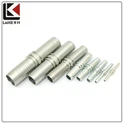
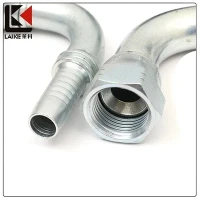
First off, what exactly is an NPT Adapter Union? Well, it's a type of fitting used to connect two pipes or hoses in a hydraulic or fluid - handling system. The NPT stands for National Pipe Tapered, which means the threads on the fitting are tapered to create a tight seal when connected. These unions are super versatile and can be found in all sorts of applications, from industrial machinery to plumbing systems. You can check out more about them on our NPT Adapter Union page.
Now, when it comes to the maximum flow rate, there's no one - size - fits - all answer. A bunch of factors come into play, and we'll go through each one of them.
Size Matters
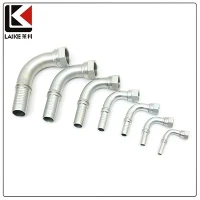
The size of the NPT Adapter Union is a major factor. Just like with a regular pipe, a larger - sized union can generally handle a higher flow rate. This is because there's more space inside for the fluid to pass through. For example, a 1 - inch NPT Adapter Union will have a much higher flow capacity than a 1/4 - inch one. The cross - sectional area of the union's bore is what really counts here. A bigger bore means less resistance to the flow of fluid, allowing it to move more freely.
But it's not just about slapping on the biggest union you can find. You need to make sure it's compatible with the rest of your system. If the pipes or hoses you're connecting are smaller, a large union might cause issues like turbulence or uneven flow, which can actually reduce the overall efficiency of your system.
Fluid Properties
The type of fluid flowing through the NPT Adapter Union also affects the maximum flow rate. Different fluids have different viscosities. Viscosity is basically a measure of how thick or thin a fluid is. For instance, water has a relatively low viscosity, so it can flow through the union more easily compared to something like oil or honey, which are much thicker.
A high - viscosity fluid will require more pressure to move through the union at a certain flow rate. If you're dealing with a thick fluid, you might need to use a larger - sized union or increase the pressure in your system. But be careful not to over - pressurize, as this can damage the union and other components in your system.
Pressure and Flow Relationship
There's a direct relationship between pressure and flow rate. According to Bernoulli's principle, in a fluid - flow system, as the pressure increases, the flow rate can also increase, assuming other factors remain constant. However, there are limits. Each NPT Adapter Union has a maximum pressure rating. Exceeding this rating can cause the union to leak or even burst, which is a huge safety hazard.
You need to find the right balance between pressure and flow rate for your specific application. If you're looking for a high flow rate, you might need to increase the pressure, but only up to the point where the union can handle it safely.
Fitting Design
The design of the NPT Adapter Union itself can impact the flow rate. Some unions are designed with smoother internal surfaces, which reduce friction and allow the fluid to flow more smoothly. On the other hand, unions with rough or uneven internal surfaces can cause more resistance to the flow, reducing the maximum flow rate.
Also, the shape of the union can matter. Some unions have a straight - through design, which is ideal for maintaining a consistent flow. Others might have bends or elbows, which can introduce turbulence and slow down the flow. If you need a high flow rate, a straight - through design is usually the way to go.
Real - World Examples
Let's look at some real - world scenarios to better understand how these factors interact. Say you're working on a water - based cooling system for an industrial machine. You'll likely use a relatively small - sized NPT Adapter Union, maybe 1/2 - inch, because the water has a low viscosity and doesn't require a large bore to flow through quickly. The pressure in this system might be relatively low, so you don't need to worry too much about over - pressurizing the union.


Now, imagine you're in the oil and gas industry, dealing with thick crude oil. You'll probably need a much larger - sized union, like 2 inches or more, to handle the high - viscosity fluid. And you'll need to maintain a higher pressure in the system to keep the oil flowing at a reasonable rate.
Related Fittings
If you're looking for other types of fittings to complement your NPT Adapter Union, we also offer Swivel Hose Fitting and DIN Adapter. Swivel hose fittings are great for applications where you need flexibility in the connection, allowing the hose to move without putting stress on the union. DIN adapters, on the other hand, are useful for connecting components that follow the DIN (Deutsches Institut für Normung) standards.
Conclusion
So, to sum it up, determining the maximum flow rate an NPT Adapter Union can handle is a complex process that depends on factors like size, fluid properties, pressure, and fitting design. There's no simple number that can be given as the maximum flow rate for all NPT Adapter Unions.
If you're in the market for NPT Adapter Unions or need help figuring out the right flow rate for your application, don't hesitate to reach out. We're here to assist you in finding the perfect fitting for your needs. Whether you're a small - scale DIYer or a large - scale industrial operation, we've got the expertise and the products to support you.
References
- Fluid Mechanics textbooks
- Manufacturer's specifications for NPT Adapter Unions
- Industry standards for fluid - handling systems