Precision, Scale, and the Unseen Backbone of Global Industry
Ask any equipment maintenance engineer or hydraulic system designer where the world's hydraulic fittings come from, and the answer will almost certainly point to one country: China. But behind that simple answer lies a complex, highly evolved manufacturing ecosystem-one that has quietly transformed from a low-cost copycat into a legitimate global force.
This article pulls back the curtain on China's hydraulic fitting manufacturing industry, exploring what makes it tick, where it still falls short, and why it now supplies everything from backyard tractors to deep-sea drilling rigs.
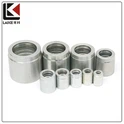
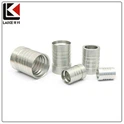
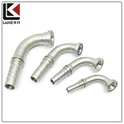
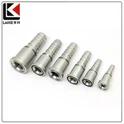
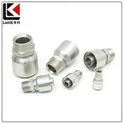
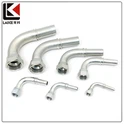
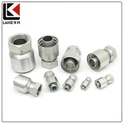
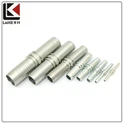
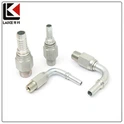
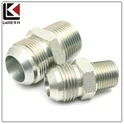
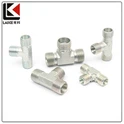
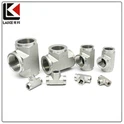
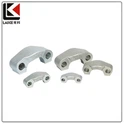
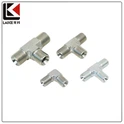
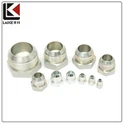
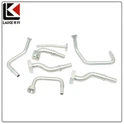
China Hydraulic Fitting Manufacturer
The common Western perception of Chinese manufacturing often stops at low price, acceptable quality. That narrative, however, is increasingly outdated-especially in hydraulic fittings.
A hydraulic fitting might appear simple: a piece of steel with precisely cut threads and a sealing surface. But consider this: a single loose or cracked fitting on a mining excavator can cause catastrophic pressure loss, hours of downtime, and thousands of dollars in repair costs. In aerospace or subsea applications, the margin for error is literally zero.
Today's top-tier Chinese manufacturers have internalized this reality. They are no longer competing solely on price-they are competing on consistency, traceability, and performance under real-world extremes.
Where the Factories Actually Are
If you fly into Ningbo, Zhejiang province, and drive toward the suburbs of Cixi or Yuyao, you'll find yourself in what might be the world's densest concentration of hydraulic fitting production. Small workshops sit next to medium-sized automated factories; steel suppliers line the same roads as plating shops and packaging specialists. Everything you need to turn raw steel rod into a finished, plated, bagged fitting exists within a 30-kilometer radius.
The other major cluster is Jingxian county in Hebei province, known for its strength in high-pressure hose assemblies and larger industrial fittings. Together, these two regions produce the overwhelming majority of China's hydraulic fitting exports.
This geographic concentration creates real advantages: faster raw material sourcing, lower logistics costs for semi-finished goods, and a deep local labor pool with specialized skills. For a foreign buyer, it also means easier quality control visits-because the factories are not scattered across the country.
China Hydraulic Fitting Manufacturer OEM vs. Aftermarket
Here is where many first-time buyers get confused. Not all Chinese hydraulic fitting manufacturers are the same-not even close.
The OEM-quality specialists
These manufacturers hold certifications like ISO 9001 and often IATF 16949 (automotive-grade quality management). They source steel from audited mills, perform incoming material testing (spectrometer analysis, hardness checks), and operate CNC lathes with live tooling and automated part loaders. They own calibrated gauges for thread inspection and impulse test rigs that simulate years of pressure cycling in days. Their customers include Sany Heavy Industry, XCMG, Liugong, and even international names like Caterpillar and Komatsu (through tier-one suppliers).
The aftermarket-focused producers
These manufacturers serve the vast global market for repair shops, agricultural equipment, and lower-pressure pneumatic systems. Their prices can be 40–60% lower than tier-one producers. But there is a trade-off: they may use recycled steel billets, skip certain heat treatment steps, or relax thread tolerance standards. For non-critical applications-think a log splitter or a low-pressure air line-they work just fine. For a hydraulic hammer operating at 3,000 psi day after day? You are taking a real risk.
The smartest foreign buyers understand this distinction and specify accordingly.
Breaking Into High-End: Where China Is Winning
The most exciting development in recent years is not volume growth-it is technical ascent.
Take subsea hydraulic connectors. These devices, used in offshore oil and gas fields, must survive crushing water pressure, saltwater corrosion, and remote-operated vehicle (ROV) handling. For years, this was European-only territory. But in 2025, Chinese manufacturers successfully delivered domestically produced multi-quick connectors (MQC) that passed DNV certification. They now operate in the South China Sea.
Or consider aerospace. A small factory in Zhejiang quietly supplies quick-disconnect couplings for the Shenzhou crewed space missions. The requirement? Zero leakage under extreme vibration and temperature swings. The Chinese solution now matches-and in some metrics exceeds-Swiss and American equivalents.
Even in common industrial applications, China is innovating. Dry-disconnect couplings, which prevent spillage when connecting or disconnecting hoses carrying hazardous chemicals, were once a German specialty. Several Chinese manufacturers now produce dry-break fittings that meet European standards at roughly half the price.
These are not anomalies. They are signs of a maturing industry investing in R&D, testing equipment, and engineering talent.
What Buyers Need to Know Before Sourcing
If you are considering sourcing hydraulic fittings from China, here is practical advice based on real supply chain experience:
1. Demand material traceability.
A reputable manufacturer can tell you which steel mill supplied the raw bar stock and provide a mill certificate. If they cannot, keep looking.
2. Inspect the threads-before you pay.
Thread geometry is everything in hydraulic fittings. Ask for inspection reports using calibrated GO/NO-GO gauges. Better yet, hire a local third-party inspector to check a sample batch.
3. Understand coating options.
Zinc plating (clear, yellow, or black) is standard for indoor or mild environments. For high corrosion resistance (marine, road salt, chemical exposure), ask for zinc-nickel or Dacromet coating. Cheap plating will rust within months; good plating lasts for years.
4. Test for pressure and impulse.
For critical applications, require documentation of burst pressure testing and impulse cycle testing (typically 1 million cycles at rated pressure). Factories serving the OEM tier will have these rigs. Aftermarket-only shops usually will not.
5. Clarify thread standards upfront.
China manufacturers commonly produce BSPP (British Standard Pipe Parallel), BSPT (tapered), NPT (National Pipe Tapered), JIC (37° flare), ORFS (O-ring face seal), and metric threads. Confirm the standard-and the gauge-before mass production begins.
The Competitive Landscape: Who Is Winning?
The market has quietly consolidated. A decade ago, thousands of tiny workshops competed on price alone. Today, the surviving and thriving players fall into three groups:
· The large-scale specialists (e.g., Yuyao JiaRui, Ningbo ZhongHua) running hundreds of CNC spindles across multiple factories, serving major OEMs directly.
· The niche technology leaders (e.g., Zhejiang SongQiao, Winner Hydraulics) focused on quick-release couplings, high-corrosion coatings, or custom-engineered solutions for demanding industries.
· The agile traders with quality control teams who do not own factories but partner with a curated set of medium-sized producers, handling quality assurance, packaging, and logistics for Western buyers.
The pure cheapest possible price shops are shrinking or closing. The middle market-factories with 50–200 employees, modern equipment, and basic quality systems-is the new sweet spot for most foreign buyers.
What China Still Cannot Do (Yet)
Honesty demands acknowledging remaining gaps.
In ultra-high-pressure fittings (10,000 psi / 700 bar and above), European and American brands like Parker, Swagelok, and Voss still lead. The metallurgy, heat treatment consistency, and surface finish required at those pressures are extraordinarily demanding.
In exotic alloys (Hastelloy, Inconel, Monel) for extreme chemical or high-temperature service, Chinese production remains limited and expensive-sometimes approaching Western prices.
And in brand trust, the gap remains large. A Parker or Eaton fitting carries implicit reliability built over decades. A Chinese brand, even with identical specifications, starts with zero trust and must prove itself case by case.
Still, for the vast middle range of hydraulic applications-construction, agriculture, material handling, industrial machinery-China's manufacturers now offer compelling value that is hard to ignore.
The Future: From Made in China to Engineered in China
The next five years will likely see a continued shift. Labor costs are rising, which means the absolute cheapest production is moving elsewhere (Vietnam, India). But rising costs also force Chinese manufacturers to move up the value chain-better automation, more engineering support, faster custom design.
We are already seeing Chinese manufacturers offer 3D scanning of existing fittings for exact replication, finite element analysis (FEA) for fitting design, and just-in-time (JIT) delivery programs for domestic OEMs. These are not the markers of a low-cost commodity industry. They are the markers of a mature industrial sector.
For global buyers, the question is no longer "Should I source hydraulic fittings from China?" It is "Which Chinese manufacturer should I partner with for the long term?"
Final Verdict
China's hydraulic fitting manufacturers have earned their place in global supply chains. They are not perfect-and they are not all equal. But the best among them combine industrial scale, process discipline, and a genuine commitment to quality that would surprise anyone still clinging to outdated stereotypes.
Whether you need 500 pieces for a prototype or 500,000 for global distribution, China has manufacturers ready to deliver. The key is knowing how to find the right one-and how to verify their quality before you commit.
Need help navigating the landscape? Start with clear specifications, demand test reports, and visit the factory if you can. In hydraulic fittings, what you do not see can hurt you-but what you do see, in a well-run Chinese factory, might just impress you.