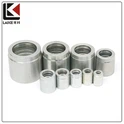
In the dynamic world of hydraulic systems, JIC (Joint Industry Council) adaptors play a pivotal role in ensuring seamless fluid transfer and system integrity. As a dedicated JIC adaptor supplier, I am constantly on the lookout for innovative materials that can enhance the performance, durability, and reliability of our products. In this blog post, I will explore the latest advancements in materials used in JIC adaptors and how they are shaping the future of hydraulic applications.
Traditional Materials in JIC Adaptors
Before delving into the new materials, it's essential to understand the traditional ones that have been the mainstays of JIC adaptor manufacturing. Stainless steel, carbon steel, and brass are among the most commonly used materials due to their excellent mechanical properties and corrosion resistance.
Stainless steel is a popular choice for its high strength, durability, and resistance to rust and corrosion. It is suitable for a wide range of applications, including those in harsh environments where exposure to moisture, chemicals, or extreme temperatures is common. Carbon steel, on the other hand, is known for its high tensile strength and affordability. It is often used in applications where strength is the primary requirement, such as heavy machinery and industrial equipment. Brass is valued for its excellent machinability, corrosion resistance, and electrical conductivity. It is commonly used in applications where a combination of these properties is required, such as plumbing and electrical systems.
New Materials for JIC Adaptors
While traditional materials have served the industry well, advancements in materials science have led to the development of new materials that offer significant improvements in performance and functionality. Here are some of the new materials that are being used in JIC adaptors:
Titanium Alloys
Titanium alloys are gaining popularity in the hydraulic industry due to their exceptional strength-to-weight ratio, corrosion resistance, and biocompatibility. These alloys are lighter than steel and offer superior resistance to corrosion in harsh environments, making them ideal for applications in aerospace, marine, and medical industries. Titanium alloys also have excellent fatigue resistance, which means they can withstand repeated stress and strain without cracking or failing.
Composite Materials
Composite materials are made by combining two or more different materials to create a new material with enhanced properties. In the case of JIC adaptors, composite materials are typically made by combining a polymer matrix with a reinforcing material, such as carbon fiber or glass fiber. Composite materials offer several advantages over traditional materials, including high strength, low weight, and excellent corrosion resistance. They are also more flexible and can be molded into complex shapes, which makes them ideal for applications where space is limited or where a specific shape is required.
High-Performance Polymers
High-performance polymers are a class of materials that offer excellent mechanical properties, chemical resistance, and thermal stability. These polymers are often used in applications where traditional materials, such as metals, are not suitable due to their weight, corrosion resistance, or cost. High-performance polymers can be used to make JIC adaptors that are lightweight, corrosion-resistant, and easy to install. They are also ideal for applications where electrical insulation or chemical resistance is required.
Benefits of Using New Materials in JIC Adaptors
The use of new materials in JIC adaptors offers several benefits, including:
Improved Performance
New materials offer superior mechanical properties, such as high strength, stiffness, and fatigue resistance, which can improve the performance of JIC adaptors in demanding applications. For example, titanium alloys can withstand higher pressures and temperatures than traditional materials, which makes them ideal for use in high-performance hydraulic systems.
Enhanced Durability
New materials are more resistant to corrosion, wear, and fatigue than traditional materials, which can extend the lifespan of JIC adaptors and reduce maintenance costs. For example, composite materials are highly resistant to corrosion and can withstand harsh environments without deteriorating, which makes them ideal for use in marine and offshore applications.


Reduced Weight
New materials, such as titanium alloys and composite materials, are lighter than traditional materials, which can reduce the weight of hydraulic systems and improve fuel efficiency. This is particularly important in applications where weight is a critical factor, such as aerospace and automotive industries.
Cost Savings
While new materials may be more expensive than traditional materials, they can offer cost savings in the long run by reducing maintenance costs, improving performance, and extending the lifespan of JIC adaptors. For example, high-performance polymers can be used to make JIC adaptors that are less expensive to manufacture and install than metal adaptors, which can result in significant cost savings over time.
Applications of JIC Adaptors with New Materials
The use of new materials in JIC adaptors has opened up new possibilities for applications in various industries. Here are some examples of applications where JIC adaptors with new materials are being used:
Aerospace
In the aerospace industry, weight is a critical factor, and the use of lightweight materials, such as titanium alloys and composite materials, can help reduce the weight of hydraulic systems and improve fuel efficiency. JIC adaptors made from these materials are also more resistant to corrosion and can withstand the harsh environments encountered in aerospace applications.
Marine
In the marine industry, corrosion is a major problem, and the use of corrosion-resistant materials, such as titanium alloys and high-performance polymers, can help extend the lifespan of JIC adaptors and reduce maintenance costs. JIC adaptors made from these materials are also more resistant to wear and fatigue, which makes them ideal for use in marine hydraulic systems.
Medical
In the medical industry, biocompatibility is a critical factor, and the use of materials, such as titanium alloys, that are biocompatible and non-toxic can help ensure the safety and effectiveness of medical devices. JIC adaptors made from these materials are also more resistant to corrosion and can withstand the harsh cleaning and sterilization procedures used in medical applications.
Conclusion
As a JIC adaptor supplier, I am excited about the latest advancements in materials science and the opportunities they offer for improving the performance and functionality of our products. The use of new materials, such as titanium alloys, composite materials, and high-performance polymers, is revolutionizing the hydraulic industry and opening up new possibilities for applications in various industries. If you are looking for high-quality JIC adaptors that offer superior performance, durability, and reliability, I encourage you to contact me to discuss your specific requirements. I am confident that I can provide you with the right solution for your hydraulic system needs.
If you are interested in exploring more hydraulic fitting options, you can check out our Swivel Hose Fitting, NPT Adapter Union, and BRITISH Hydraulic Fittings.
References
- Callister, W. D., & Rethwisch, D. G. (2018). Materials Science and Engineering: An Introduction. Wiley.
- Ashby, M. F., & Jones, D. R. H. (2012). Engineering Materials 1: An Introduction to Properties, Applications, and Design. Butterworth-Heinemann.
- Shackelford, J. F. (2016). Introduction to Materials Science for Engineers. Pearson.