Hey there! As a supplier of JIC to BSP adapters, I often get asked if these adapters can be used in cryogenic applications. Well, let's dive right into this topic and find out.
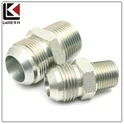
First off, let's understand what JIC and BSP adapters are. JIC, which stands for Joint Industry Council, is a type of hydraulic fitting commonly used in North America. It has a 37-degree flare seat and is known for its reliable sealing performance. On the other hand, BSP, or British Standard Pipe, is a family of standard screw thread types for pipes and pipe fittings. There are two main types: BSPP (Parallel) and BSPT (Tapered). These adapters are used to connect components with different types of fittings, allowing for a seamless transition between systems.
Now, let's talk about cryogenic applications. Cryogenics deals with extremely low temperatures, typically below -150°C (-238°F). These applications can be found in various industries, such as aerospace, medical, and scientific research. In these environments, materials and components need to be able to withstand the harsh conditions, including thermal contraction, embrittlement, and high pressure.
So, can a JIC to BSP adapter be used in a cryogenic application? The answer is, it depends. There are several factors to consider before using these adapters in such extreme conditions.
Material Compatibility
One of the most crucial factors is the material of the adapter. In cryogenic applications, the adapter needs to be made of materials that can withstand low temperatures without becoming brittle or losing their mechanical properties. Common materials used for cryogenic applications include stainless steel, brass, and certain types of plastics. Stainless steel is often a popular choice due to its excellent corrosion resistance and low-temperature performance. However, not all stainless steels are suitable for cryogenic use. For example, some austenitic stainless steels, like 304 and 316, can maintain their ductility at low temperatures, while others may become brittle.
When choosing a JIC to BSP adapter for a cryogenic application, make sure to select one made from a material that is specifically designed for low-temperature use. This will help ensure the adapter can withstand the thermal stresses and maintain its integrity over time.
Sealing Performance
Another important consideration is the sealing performance of the adapter. At low temperatures, the materials can contract, which may affect the sealing ability of the adapter. The 37-degree flare seat of the JIC fitting and the thread design of the BSP fitting need to be able to maintain a tight seal even as the temperature drops.
Some adapters may use additional sealing elements, such as O-rings or gaskets, to enhance the sealing performance. These sealing elements also need to be made of materials that can withstand cryogenic temperatures. For example, Viton O-rings are commonly used in cryogenic applications due to their excellent chemical resistance and low-temperature flexibility.
Pressure Rating
Cryogenic applications often involve high pressures, so the adapter needs to have a sufficient pressure rating. The pressure rating of the adapter should be carefully considered based on the specific requirements of the application. Make sure to choose an adapter with a pressure rating that exceeds the maximum operating pressure of the system.
Installation and Maintenance
Proper installation and maintenance are also essential for the successful use of JIC to BSP adapters in cryogenic applications. During installation, make sure to follow the manufacturer's instructions carefully. This may include proper torque values for tightening the fittings and ensuring the alignment of the adapter.
Regular maintenance is also important to detect any potential issues early on. Inspect the adapter for signs of wear, damage, or leakage regularly. If any problems are found, replace the adapter immediately to prevent system failures.
Advantages of Using JIC to BSP Adapters in Cryogenic Applications
Despite the challenges, there are some advantages to using JIC to BSP adapters in cryogenic applications. One of the main advantages is the versatility they offer. These adapters allow you to connect components with different types of fittings, which can be very useful in systems that use a combination of North American and European standards.


Another advantage is the availability of a wide range of sizes and configurations. This makes it easier to find an adapter that meets the specific requirements of your cryogenic application.
Alternatives to JIC to BSP Adapters in Cryogenic Applications
If you're not sure if a JIC to BSP adapter is the right choice for your cryogenic application, there are some alternatives you can consider. For example, JIC To JIC Adapter can be used if all the components in your system use JIC fittings. This can simplify the installation process and reduce the risk of leakage.
Another alternative is to use Flange Joint or Flange Joint. Flange joints are known for their high-pressure and high-temperature performance, making them suitable for cryogenic applications. However, they may be more expensive and require more space compared to adapters.
In conclusion, while a JIC to BSP adapter can be used in a cryogenic application, it's important to carefully consider the material compatibility, sealing performance, pressure rating, and installation and maintenance requirements. If you're unsure whether a JIC to BSP adapter is the right choice for your specific application, don't hesitate to reach out to us. We're here to help you find the best solution for your cryogenic needs. Whether you need advice on product selection or have any other questions, we're just a message away. Contact us to start a discussion about your procurement requirements and let's work together to ensure the success of your cryogenic project.
References
- ASME B31.3 Process Piping Code
- ISO 1127 Stainless Steel Tubes for General and Structural Purposes
- ASTM A312 Standard Specification for Seamless, Welded, and Heavily Cold Worked Austenitic Stainless Steel Pipes