Can hydraulic fittings be used in food - grade applications? That's a question I get asked a lot as a hydraulic fitting supplier. In this blog, I'll dig deep into this topic, sharing my insights and experiences in the industry.
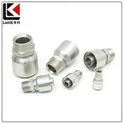
First off, let's understand what hydraulic fittings are. Hydraulic fittings are components used to connect hoses, pipes, and tubes in hydraulic systems. They come in various types, like DIN Adapter, Swivel Hose Fitting, and DKO Hydraulic Fittings. These fittings play a crucial role in ensuring the proper functioning of hydraulic systems, which are widely used in many industries, from construction to manufacturing.
Now, when it comes to food - grade applications, things get a bit more complicated. Food - grade applications require materials and components that meet strict safety and hygiene standards. The main concern is that any part that comes into contact with food must not contaminate it. This means the materials should be non - toxic, resistant to corrosion, and easy to clean.
So, can regular hydraulic fittings be used in food - grade applications? The short answer is usually no. Most standard hydraulic fittings are made from materials like steel, brass, or aluminum. While these materials are great for general hydraulic use, they may not be suitable for food - grade applications. For example, steel can rust over time, and brass may contain lead, which is a toxic substance. If these fittings are used in a food - processing environment, there's a risk of metal particles or other contaminants getting into the food.
However, there are some specialized hydraulic fittings designed specifically for food - grade applications. These fittings are made from food - safe materials such as stainless steel (usually 304 or 316 grade). Stainless steel is non - toxic, highly resistant to corrosion, and can be easily cleaned and sanitized. It meets the strict requirements of food - grade standards.


Another important factor to consider is the surface finish of the fittings. In food - grade applications, a smooth surface finish is essential. Rough surfaces can trap food particles and bacteria, making it difficult to clean and increasing the risk of contamination. Specialized food - grade hydraulic fittings are often polished to a smooth finish to prevent this.
Let's talk about the design of the fittings. In food - processing environments, there's a need for fittings that are easy to disassemble and reassemble for cleaning purposes. Some standard hydraulic fittings may have complex designs that make them difficult to clean thoroughly. Food - grade hydraulic fittings are designed with simplicity in mind, allowing for easy disassembly and cleaning.
Now, I know what you're thinking. "These specialized food - grade hydraulic fittings must be really expensive." Well, it's true that they can be more costly than standard fittings. But when you consider the potential risks of using non - compliant fittings in a food - processing environment, the investment is well worth it. A single contamination incident can lead to product recalls, legal issues, and damage to your brand's reputation.
As a hydraulic fitting supplier, I've seen many companies make the mistake of using standard fittings in food - grade applications to save money. In the long run, it always ends up costing them more. That's why I always recommend my customers to use the right fittings for the job.
If you're in the food - processing industry and need hydraulic fittings, here are some tips to keep in mind. First, always look for fittings that are certified for food - grade use. There are various certifications available, such as NSF (National Sanitation Foundation) certification. This certification ensures that the fittings meet the strict standards for food - contact materials.
Second, work with a reputable supplier. A good supplier will have a wide range of food - grade hydraulic fittings and can provide you with the right advice on which fittings are suitable for your specific application. They can also help you with installation and maintenance.
Finally, don't forget about regular maintenance and inspection. Even the best food - grade hydraulic fittings need to be inspected regularly to ensure they're in good condition. Check for signs of wear, corrosion, or damage, and replace any fittings that are no longer safe to use.
In conclusion, while standard hydraulic fittings are not suitable for food - grade applications, there are specialized fittings available that meet the strict requirements of the food - processing industry. As a hydraulic fitting supplier, I'm committed to providing my customers with the best solutions for their needs. Whether you're looking for DIN Adapter, Swivel Hose Fitting, or DKO Hydraulic Fittings for food - grade applications, I can help you find the right products.
If you're interested in learning more about our food - grade hydraulic fittings or have any questions about your specific application, I'd love to hear from you. Feel free to reach out to me, and we can start a conversation about your procurement needs. Let's work together to ensure your food - processing operations are safe and compliant.
References:
- "Food Safety and Sanitation in the Food Industry" - A textbook on food - safety standards and practices.
- "Hydraulic Systems: Design and Maintenance" - A resource on hydraulic system components and their applications.