Can I use a hose end for air applications?
As a supplier of hose ends, I often get asked whether a hose end can be used for air applications. This is a valid question, as the performance and safety of using a hose end in air - related scenarios depend on several factors. In this blog, I'll explore the feasibility of using hose ends for air applications, the considerations involved, and the types of hose ends that are suitable.
Understanding the Basics of Hose Ends
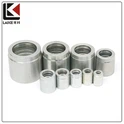
Before delving into air applications, it's essential to understand what hose ends are. Hose ends are the connectors at the end of a hose that allow it to be attached to various equipment or other hoses. They come in different materials, sizes, and designs, each tailored to specific applications. For instance, Reusable Hose Fitting is a popular option due to its reusability, which can save costs in the long run. These fittings can be easily disassembled and reassembled, making them convenient for maintenance and replacement.


Factors to Consider When Using Hose Ends for Air Applications
- Pressure Rating
One of the most critical factors is the pressure rating of the hose end. Air applications can involve different levels of pressure, from low - pressure systems like those used in airbrushing to high - pressure systems in industrial pneumatic tools. A hose end must be able to withstand the maximum pressure that the air system can generate. If the pressure rating of the hose end is too low, it can lead to leaks, bursts, or even dangerous failures. For example, in a high - pressure air compressor system, using a hose end with an inadequate pressure rating could result in an explosive failure, causing serious injury to operators. - Material Compatibility
The material of the hose end must be compatible with the air being transported. In most cases, air is relatively inert, but if the air contains contaminants such as moisture, oil, or chemicals, the hose end material needs to be resistant to these substances. For example, steel is a common material for Steel Hydraulic Fittings, and it can be suitable for many air applications. However, if the air is moist, steel may rust over time. In such cases, materials like brass or stainless steel might be more appropriate as they offer better corrosion resistance. - Sealing Performance
A good seal is crucial in air applications to prevent air leakage. Leaking air not only reduces the efficiency of the system but can also be a safety hazard in some environments. Hose ends with proper sealing mechanisms, such as O - rings or gaskets, are essential. For example, in a pneumatic control system, even a small air leak can cause inaccurate control of the equipment, leading to operational problems. - Flow Rate
The flow rate of air through the hose end is another important consideration. The size and design of the hose end can affect the flow rate. A hose end that is too small in diameter can restrict the air flow, reducing the performance of the air - powered equipment. On the other hand, an oversized hose end may not provide an efficient seal or may be more difficult to install.
Types of Hose Ends Suitable for Air Applications
- Push - to - Connect Fittings
Push - to - connect fittings are popular for air applications because of their ease of installation. They can be quickly connected and disconnected without the need for tools. These fittings often have good sealing performance and are available in a variety of materials, including plastic and metal. They are commonly used in low - to medium - pressure air systems, such as those found in home workshops for air - powered tools. - Threaded Fittings
Threaded fittings are widely used in air applications, especially in high - pressure systems. They provide a secure connection and can be tightened to ensure a good seal. Hydraulic Flange Fittings can also be adapted for air applications in some cases. These fittings are often made of metal and are designed to withstand high pressures. - Quick - Disconnect Couplings
Quick - disconnect couplings are ideal for applications where frequent connection and disconnection are required. They allow for fast and easy changes of hoses or equipment. In an industrial setting where multiple air - powered tools need to be used interchangeably, quick - disconnect couplings can significantly improve productivity.
Advantages of Using the Right Hose End for Air Applications
- Safety
Using a hose end that is suitable for air applications ensures the safety of operators and the equipment. A properly rated and installed hose end reduces the risk of leaks, bursts, and other failures that could lead to accidents. - Efficiency
A well - matched hose end allows for optimal air flow, which improves the efficiency of the air system. This can result in energy savings and better performance of air - powered equipment. - Longevity
Hose ends that are compatible with the air and the operating conditions will last longer. This reduces the need for frequent replacements, saving costs in the long term.
When Not to Use a Hose End for Air Applications
There are certain situations where using a hose end for air applications is not advisable. If the hose end is designed specifically for a different type of fluid, such as hydraulic oil, it may not be suitable for air. The pressure ratings, material compatibility, and sealing mechanisms may be different. Also, if the hose end is damaged or worn, it should not be used for air applications as it can pose a safety risk.
Conclusion
In conclusion, it is possible to use a hose end for air applications, but careful consideration must be given to factors such as pressure rating, material compatibility, sealing performance, and flow rate. As a hose end supplier, I can offer a wide range of products, including Reusable Hose Fitting, Hydraulic Flange Fittings, and Steel Hydraulic Fittings, that are suitable for various air applications. If you are in the market for hose ends for your air systems, I encourage you to reach out for more information and to discuss your specific requirements. We can help you select the right hose end to ensure the safety, efficiency, and longevity of your air applications.
References
- "Pneumatic Systems Handbook" by an industry expert.
- Manufacturer's specifications for various hose end products.