Hose fittings are crucial components in various industries, serving as the interface between hoses and other equipment. They ensure a secure and leak - free connection, enabling the efficient transfer of fluids, gases, or other materials. As a leading hose fitting supplier, I've had the privilege of working with a wide range of end types, each designed to meet specific application requirements. In this blog, I'll explore the different end types of hose fittings in detail.
Threaded Ends
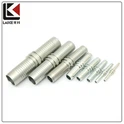
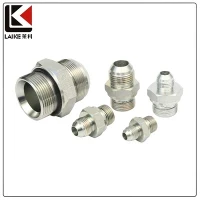
Threaded ends are one of the most common types of hose fitting ends. They work by screwing the fitting onto a corresponding threaded port or component. There are several thread standards in use, such as NPT (National Pipe Tapered), BSP (British Standard Pipe), and metric threads.
NPT threads are widely used in North America. They have a tapered design, which means the diameter of the thread decreases along the length of the fitting. This taper creates a tight seal when the fitting is tightened, as the threads compress against each other. For applications where a reliable, self - sealing connection is needed, NPT threaded hose fittings are an excellent choice. You can find a variety of NPT threaded One Piece Hose Fitting on our website, which are designed for durability and ease of installation.
BSP threads, on the other hand, are prevalent in Europe and other parts of the world. There are two types: BSPP (British Standard Pipe Parallel) and BSPT (British Standard Pipe Tapered). BSPP threads have a parallel design and usually require a sealing ring or gasket to prevent leakage. BSPT threads are tapered, similar to NPT, and provide a seal through the compression of the threads.
Metric threads are used in many countries that follow the metric system. They offer a high degree of precision and are available in a wide range of sizes. Metric threaded hose fittings are commonly used in hydraulic and pneumatic systems, where precise connections are essential.
Flanged Ends
Flanged ends are used for high - pressure applications and large - diameter hoses. A flange is a flat, circular disc with holes around the perimeter. The hose fitting is attached to the flange, and the flange is then bolted to a corresponding flange on the equipment. This creates a strong, rigid connection that can withstand high pressures.
Flanged hose fittings are often used in industrial piping systems, such as those in chemical plants, oil refineries, and power generation facilities. They provide a large sealing surface, which helps to prevent leaks even under extreme conditions. There are different types of flanges, including weld - neck flanges, slip - on flanges, and socket - weld flanges. Each type has its own advantages and is suitable for specific applications.
Quick - Connect Ends
Quick - connect ends are designed for easy and rapid connection and disconnection of hoses. They are commonly used in applications where frequent hose changes are required, such as in automotive maintenance, agricultural equipment, and some industrial processes.
There are several types of quick - connect fittings, including push - to - connect, cam and groove, and dry break couplings. Push - to - connect fittings are the simplest type. They work by pushing the hose onto the fitting, which then locks in place. These fittings are easy to use and require no tools for installation or removal.
Cam and groove couplings consist of a male adapter with two cam arms and a female coupler. To connect the fitting, the male adapter is inserted into the female coupler, and the cam arms are then closed over the ears of the female coupler, creating a secure connection. Cam and groove couplings are widely used in the transfer of liquids, such as fuel, water, and chemicals.
Dry break couplings are designed to minimize spillage when disconnecting hoses. They have a valve mechanism that closes automatically when the coupling is disconnected, preventing the loss of fluid. Dry break couplings are commonly used in applications where environmental protection and safety are a concern, such as in the transfer of hazardous chemicals.
Compression Ends
Compression ends are used to create a tight seal by compressing a ferrule or sleeve onto the hose. The fitting consists of a body, a nut, and a ferrule. When the nut is tightened, it compresses the ferrule onto the hose, creating a leak - proof connection.

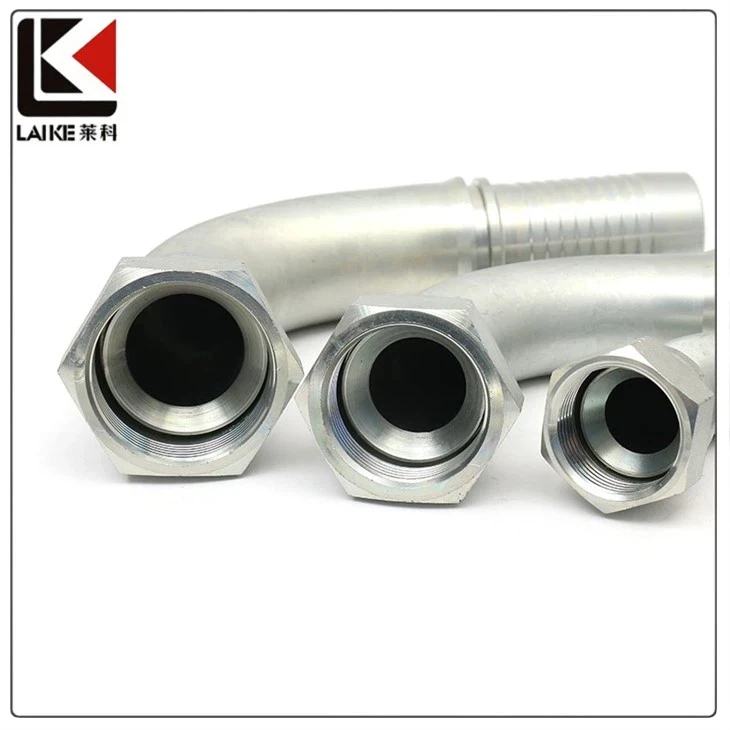
Compression fittings are commonly used in plumbing, pneumatic, and low - pressure hydraulic systems. They are easy to install and can be used with a variety of hose materials, including plastic, rubber, and metal. Compression fittings are available in different sizes and configurations to suit different applications.
Barbed Ends
Barbed ends have a series of ridges or barbs on the outside surface. The hose is pushed onto the barbed end, and the barbs grip the inside of the hose, holding it in place. Barbed fittings are commonly used with flexible hoses, such as rubber and plastic hoses.
They are relatively simple and inexpensive, making them a popular choice for low - pressure applications, such as in garden hoses, air hoses, and some small - scale plumbing systems. However, barbed fittings may not be suitable for high - pressure applications, as the hose may slip off the fitting under high pressure.
Hydraulic Fluid Connectors
Hydraulic Fluid Connectors are specifically designed for use in hydraulic systems. These systems require high - pressure, leak - free connections to ensure the efficient transfer of hydraulic fluid. There are several types of hydraulic fluid connectors, including O - ring face seal (ORFS) fittings, JIC (Joint Industry Council) fittings, and SAE (Society of Automotive Engineers) fittings.
ORFS fittings use an O - ring to create a seal between the fitting and the mating surface. They are known for their excellent sealing performance and are commonly used in high - pressure hydraulic systems. JIC fittings have a 37 - degree flare on the end of the fitting, which provides a metal - to - metal seal. SAE fittings are similar to JIC fittings but have a 45 - degree flare.
FJX Fitting
FJX Fitting is a specialized type of hose fitting. It is designed to provide a reliable and high - performance connection in specific applications. FJX fittings are often used in applications where a combination of high pressure, vibration resistance, and ease of installation is required. They are engineered with precision to ensure a perfect fit and a long - lasting seal.
As a hose fitting supplier, I understand that choosing the right end type is crucial for the success of your application. Each end type has its own advantages and limitations, and the selection should be based on factors such as pressure requirements, fluid type, hose material, and installation requirements.
If you're in the market for hose fittings, I encourage you to contact us for a detailed consultation. Our team of experts can help you select the most appropriate end type and fitting for your specific needs. We offer a wide range of high - quality hose fittings at competitive prices. Whether you need a simple barbed fitting for a garden hose or a complex hydraulic fluid connector for an industrial application, we have the solution for you. Let's work together to ensure your projects run smoothly and efficiently.
References
- ASME B16.5 - Pipe Flanges and Flanged Fittings
- ISO 80369 - Small - bore connectors for liquids and gases in healthcare applications
- Parker Hannifin Corporation - Hose Fitting Handbook