Hey there! As a supplier of Jis Fittings, I've been getting a lot of questions lately about the different flange types of Jis Fittings. So, I thought I'd take the time to break it down for you all.
First off, let's talk about what Jis Fittings are. JIS stands for Japanese Industrial Standards, and Jis Fittings are designed and manufactured according to these standards. They're commonly used in a variety of industries, including hydraulics, pneumatics, and general machinery.
Now, let's dive into the different flange types.
Weld Neck Flanges
Weld neck flanges are one of the most common types of flanges used in Jis Fittings. They have a long, tapered neck that is welded to the pipe. This design provides a strong and durable connection, making it suitable for high-pressure and high-temperature applications. The long neck also helps to reduce stress concentration at the weld joint, which can improve the overall reliability of the system.
One of the benefits of weld neck flanges is that they can be easily inspected for weld quality. Since the neck is welded to the pipe, it's possible to visually inspect the weld for any signs of defects. This can help to prevent leaks and other issues down the line.
Slip-On Flanges
Slip-on flanges are another popular type of flange used in Jis Fittings. They are designed to slide over the end of the pipe and are then welded in place. Unlike weld neck flanges, slip-on flanges have a relatively short hub, which makes them easier to install.
Slip-on flanges are typically used in low-pressure applications where the cost is a major consideration. They are less expensive than weld neck flanges and are also easier to align during installation. However, they are not as strong as weld neck flanges and may not be suitable for high-pressure or high-temperature applications.

Socket Weld Flanges
Socket weld flanges are similar to slip-on flanges in that they are designed to slide over the end of the pipe. However, instead of being welded around the outside of the flange, the pipe is inserted into a socket in the flange and then welded in place. This design provides a strong and leak-proof connection, making it suitable for high-pressure applications.
Socket weld flanges are often used in applications where the pipe size is relatively small. They are also commonly used in applications where the flow of the fluid needs to be smooth and uninterrupted, as the socket weld design helps to reduce turbulence.
Blind Flanges
Blind flanges are used to seal the end of a pipe or a vessel. They do not have a bore in the center, which means that they prevent the flow of fluid through the pipe. Blind flanges are typically used in applications where it's necessary to close off a section of the piping system for maintenance or repair.
Blind flanges can be made from a variety of materials, including carbon steel, stainless steel, and alloy steel. They are available in different sizes and pressure ratings to suit different applications.
Lap Joint Flanges
Lap joint flanges are used in applications where the piping system needs to be disassembled frequently. They consist of two parts: a stub end and a loose flange. The stub end is welded to the pipe, while the loose flange can be easily removed and reinstalled.
Lap joint flanges are commonly used in applications where the pipe needs to be rotated or adjusted. They are also used in applications where the flange needs to be aligned with other components in the system.
Threaded Flanges
Threaded flanges are designed to be screwed onto the end of a threaded pipe. They are typically used in low-pressure applications where the installation is relatively simple. Threaded flanges are available in different sizes and pressure ratings to suit different applications.
One of the advantages of threaded flanges is that they can be easily installed and removed without the need for welding. This makes them a popular choice for applications where the piping system needs to be modified or repaired frequently.
Now that we've covered the different flange types of Jis Fittings, let's talk about some of the factors you should consider when choosing the right flange for your application.
Pressure Rating
The pressure rating of the flange is one of the most important factors to consider. You need to make sure that the flange you choose can withstand the pressure of the fluid or gas that will be flowing through the pipe. The pressure rating is typically indicated on the flange by a number, such as 150, 300, or 600.
Temperature Rating
In addition to the pressure rating, you also need to consider the temperature rating of the flange. Different materials have different temperature limits, so you need to make sure that the flange you choose can withstand the temperature of the fluid or gas that will be flowing through the pipe.
Material
The material of the flange is also an important consideration. Different materials have different properties, such as corrosion resistance, strength, and durability. You need to choose a material that is suitable for the application and the environment in which the flange will be used.
Size
The size of the flange is another important factor to consider. You need to make sure that the flange you choose is the right size for the pipe. The size of the flange is typically indicated by the nominal pipe size (NPS), which is a standard measurement used in the piping industry.
As a Jis Fittings supplier, I can help you choose the right flange for your application. Whether you need a weld neck flange for a high-pressure application or a slip-on flange for a low-pressure application, I've got you covered.
If you're interested in learning more about our Jis Fittings or if you have any questions about the different flange types, feel free to contact me for a chat. I'd be happy to help you find the right solution for your needs.
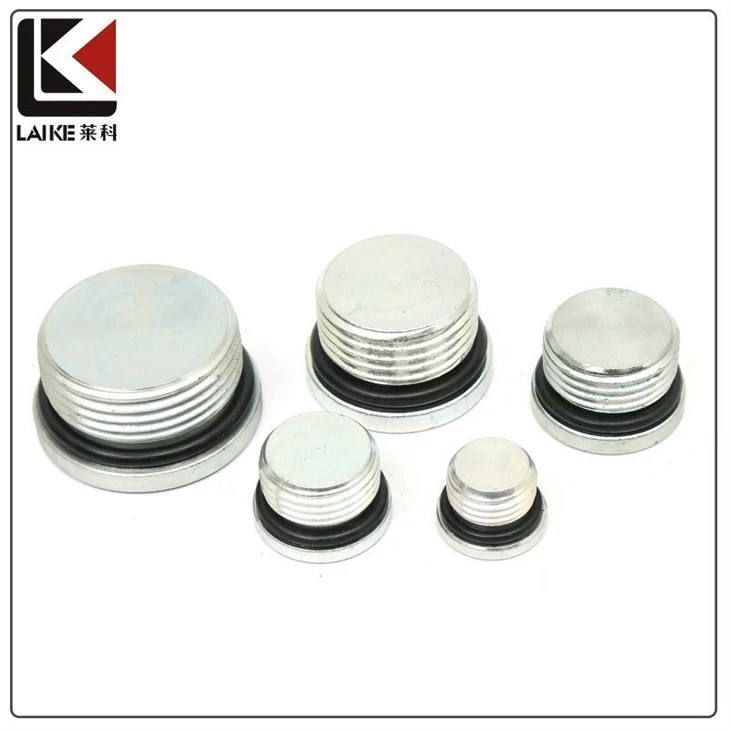
And if you're also looking for other hydraulic components, we also offer Hydraulic Plugs and Caps, METRIC Adapter, and Kumatsu Adapter. These products are of high quality and can meet your various hydraulic system requirements.
Let's work together to ensure your projects run smoothly with the best Jis Fittings and related hydraulic components.
References
- "Handbook of Piping Design" by Mohit Jain
- "Piping Engineering: Design, Fabrication, and Installation" by S.K. Mondal