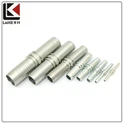
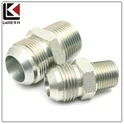
Hey there! As a supplier of Jis Fittings, I've been getting a lot of questions lately about the flow restrictions of these fittings. So, I thought I'd take a few minutes to break it down for you.
First off, let's talk about what Jis Fittings are. Jis, which stands for Japanese Industrial Standards, are a set of specifications for hydraulic fittings used in various industries. These fittings are known for their high quality, precision, and reliability. They're used in a wide range of applications, from automotive to industrial machinery.
Now, let's get into the flow restrictions. Flow restrictions in Jis Fittings can occur due to several factors. One of the main factors is the size of the fitting. Just like with any other type of fitting, the smaller the internal diameter of the Jis Fitting, the more it will restrict the flow of fluid. This is because a smaller diameter means there's less space for the fluid to pass through, which can slow down the flow rate.
For example, if you're using a Jis Fitting with a very narrow bore, the fluid will have to squeeze through that small space. This creates a kind of bottleneck effect, where the fluid has to work harder to get through. As a result, the flow rate will be reduced. It's a bit like trying to pour a large amount of water through a small straw - it just doesn't work very well!
Another factor that can cause flow restrictions is the design of the fitting. Some Jis Fittings have complex internal geometries, such as sharp bends or sudden changes in diameter. These features can disrupt the smooth flow of fluid, causing turbulence and reducing the overall flow efficiency. Turbulence is like a whirlwind inside the fitting, and it makes it difficult for the fluid to move in a straight line. This not only slows down the flow but can also increase the pressure drop across the fitting.
The material of the fitting can also play a role in flow restrictions. If the inner surface of the Jis Fitting is rough or has imperfections, it can create friction as the fluid flows through. This friction acts as a resistance to the flow, making it harder for the fluid to move. Think of it like trying to slide a box across a rough floor - it's going to be a lot more difficult than sliding it across a smooth surface.
Now, you might be wondering how these flow restrictions can affect your application. Well, in many cases, reduced flow can lead to decreased performance. For example, in a hydraulic system, if the flow rate is too low, the actuators might not move as quickly or as powerfully as they should. This can result in slower operation of machinery, reduced productivity, and even potential damage to the system over time.
But don't worry! There are ways to minimize these flow restrictions. One option is to choose the right size of Jis Fitting for your application. By selecting a fitting with a larger internal diameter, you can increase the flow capacity. You can find a wide range of Jis Fittings on our website Jis Fittings.


Another solution is to look for fittings with a more streamlined design. Fittings with smooth, gradual bends and consistent diameters can help to maintain a more laminar flow of fluid, reducing turbulence and improving flow efficiency.
If you need to connect Jis Fittings to other types of fittings, such as SAE or American fittings, we also offer a variety of adapters. Check out our SAE Flange Adapter and American Adapter options. These adapters are designed to ensure a seamless connection between different types of fittings, minimizing flow disruptions.
In addition to choosing the right fittings and adapters, proper installation is also crucial. Make sure that the fittings are installed correctly, with no leaks or misalignments. A poorly installed fitting can create additional flow restrictions and cause other problems in the system.
So, if you're in the market for Jis Fittings or need help with flow restrictions in your hydraulic system, don't hesitate to reach out. We're here to provide you with the best products and advice to ensure that your system runs smoothly and efficiently. Whether you're a small business or a large industrial operation, we have the expertise and the products to meet your needs.
In conclusion, understanding the flow restrictions of Jis Fittings is essential for optimizing the performance of your hydraulic system. By considering factors such as size, design, and material, and taking steps to minimize these restrictions, you can ensure that your system operates at its best. If you have any questions or need further information, feel free to contact us. We're always happy to help you find the right solutions for your application.
References
- Hydraulic Fittings Handbook: A comprehensive guide to understanding the principles and applications of hydraulic fittings.
- Japanese Industrial Standards (JIS) documentation: Provides detailed specifications for Jis Fittings.