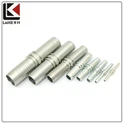
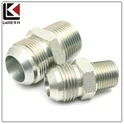
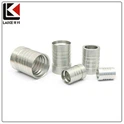
Hey there! As a supplier of Hose Assembly, I've gotten tons of questions about the differences between stainless-steel hose assemblies and rubber hose assemblies. People are always looking for the best option for their specific needs, and that's where I come in to break it all down for you.
First off, let's talk about what each type is made of. A stainless-steel hose assembly is, well, made of stainless steel. This material is known for its durability and strength. It can resist corrosion, which is a huge plus in many applications. Whether it's exposure to water, chemicals, or harsh environments, stainless steel holds up pretty well. On the other hand, a rubber hose assembly is made from rubber. Rubber is a flexible and elastic material. It can bend and stretch without breaking easily, which gives it an edge in some situations.
Performance in Different Environments
When it comes to performance in different environments, these two types of hose assemblies have their own strengths. Stainless-steel hose assemblies are great for high-temperature and high-pressure applications. For example, in industrial settings where there are hot fluids or gases flowing through the hoses, stainless steel can handle the heat without degrading. It also has high resistance to pressure, so it can be used in systems that require a lot of force, like hydraulic systems. You can check out our Hydraulic Hose Assembly for more details on how stainless steel works in these scenarios.
Rubber hose assemblies, however, are more suitable for applications where flexibility is key. They can be easily bent and routed around obstacles. This makes them a popular choice in automotive and pneumatic systems. In a car engine, for instance, rubber hoses can be used to transfer coolant or fuel because they can adapt to the tight spaces under the hood. And in pneumatic systems, which rely on air pressure to operate, rubber hoses are flexible enough to connect different components without causing stress on the joints. For more info on pneumatic applications, take a look at our Pneumatic Quick Coupling.
Durability and Longevity
Durability is another important factor to consider. Stainless-steel hose assemblies have a long lifespan. As I mentioned earlier, they're resistant to corrosion, which means they won't rust or deteriorate over time when exposed to moisture or chemicals. This makes them a great investment in the long run, especially in industries where the hoses are used constantly.
Rubber hose assemblies, while flexible, are not as durable as stainless steel. They can degrade over time due to factors like UV exposure, heat, and chemicals. For example, if a rubber hose is left out in the sun for a long time, the UV rays can cause the rubber to become brittle and crack. However, if the rubber hoses are properly maintained and used in suitable environments, they can still last a reasonable amount of time.
Cost Comparison
Cost is always a consideration when choosing between different types of hose assemblies. Generally speaking, stainless-steel hose assemblies are more expensive upfront. The cost of the stainless-steel material itself is higher, and the manufacturing process is more complex. But when you think about the long-term savings, such as not having to replace the hoses as often due to their durability, they can be a cost-effective option.
Rubber hose assemblies are usually cheaper to buy initially. They're easier to manufacture, and the raw material cost is lower. However, because they may need to be replaced more frequently, the overall cost over time could be higher depending on the usage.
Maintenance Requirements
Maintenance is also different for these two types of hose assemblies. Stainless-steel hose assemblies are relatively low-maintenance. You just need to make sure they're clean and free from any debris that could cause blockages. If there's a small scratch or dent, it usually doesn't affect the performance too much because of the material's strength.
Rubber hose assemblies, on the other hand, require more attention. You need to check them regularly for signs of wear and tear, such as cracks, leaks, or bulges. If you notice any of these issues, it's important to replace the hose as soon as possible to avoid any potential problems.


Applications in Different Industries
Let's take a look at how these hose assemblies are used in different industries. In the chemical industry, stainless-steel hose assemblies are commonly used because of their resistance to chemicals. They can transport various chemicals safely without getting damaged. In the food and beverage industry, stainless steel is also a popular choice because it's hygienic and easy to clean.
Rubber hose assemblies are often used in the construction and HVAC industries. In construction, they're used for pneumatic tools and equipment because of their flexibility. In the HVAC (heating, ventilation, and air conditioning) industry, rubber hoses are used to connect different parts of the system and transfer air or coolant.
Which One to Choose?
So, which one should you choose? Well, it depends on your specific needs. If you need a hose assembly for high-temperature, high-pressure, or corrosive environments, a stainless-steel hose assembly is probably the way to go. But if you need flexibility and a lower upfront cost, a rubber hose assembly might be more suitable.
If you're still not sure which type of hose assembly is best for your application, don't hesitate to reach out to us. We have a team of experts who can help you make the right decision based on your requirements. And if you're interested in making a purchase, we're here to provide you with the best quality products at competitive prices. Contact us today to start the procurement process and let's find the perfect hose assembly solution for you!
References
- Hose and Tubing Handbook, Third Edition by Thomas A. O'Malley
- Handbook of Plasticizer Technology, Third Edition by George Wypych