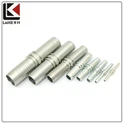
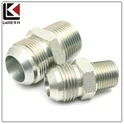
As a JIC Hose Fittings supplier, I often encounter customers who are confused about the differences between JIC and Metric hose fittings. In this blog post, I'll delve into the key distinctions, helping you understand which type is best suited for your specific needs.
Thread Design
One of the most fundamental differences between JIC and Metric hose fittings lies in their thread designs. JIC fittings use a 37-degree flare seat, a design that has been a staple in the hydraulic industry in North America for decades. The 37-degree flare provides a reliable seal when the fitting is tightened onto the mating component. This design is well-suited for high-pressure applications, as the angled seat distributes the pressure evenly, reducing the risk of leaks.
On the other hand, Metric hose fittings use a variety of thread profiles, with the most common being a straight thread and an O-ring seal. The straight thread provides a simple and secure connection, while the O-ring ensures a tight seal. This design is prevalent in European and Asian markets, where standards and regulations often favor the use of Metric measurements. The O-ring seal in Metric fittings is particularly effective in preventing leaks, especially in applications where vibration or movement is common.
Size and Measurement Standards
The size and measurement standards for JIC and Metric hose fittings are also quite different. JIC fittings are typically measured in inches, following the American National Pipe Taper (NPT) or SAE (Society of Automotive Engineers) standards. This system can be somewhat complex, as it involves different measurements for the thread diameter, pitch, and flare angle. For example, a common JIC fitting might be specified as a -6 JIC, which refers to the size of the hose barb or tube that the fitting connects to.
In contrast, Metric hose fittings are measured in millimeters, adhering to the ISO (International Organization for Standardization) standards. This system is more straightforward and easier to understand, as it uses a single unit of measurement. Metric fittings are often designated by their outer diameter (OD) and thread pitch, such as M16x2.0, which indicates a 16mm outer diameter with a 2.0mm thread pitch.
Compatibility
Compatibility is another crucial factor to consider when choosing between JIC and Metric hose fittings. Due to their different thread designs and size standards, JIC and Metric fittings are generally not interchangeable. Attempting to connect a JIC fitting to a Metric component can result in a poor seal, leaks, and potential damage to the equipment.
However, there are some situations where adapters can be used to connect JIC and Metric fittings. These adapters are designed to bridge the gap between the two systems, allowing for a secure connection. It's important to note that using adapters can introduce additional points of potential failure, so they should be used with caution and only when necessary.
Application Suitability
The choice between JIC and Metric hose fittings often depends on the specific application. JIC fittings are commonly used in industries such as automotive, aerospace, and heavy machinery in North America. Their high-pressure capabilities and reliable sealing make them ideal for applications where safety and performance are critical. For example, in a hydraulic system on a construction vehicle, JIC fittings can ensure that the system operates smoothly and without leaks, even under extreme conditions.
Metric hose fittings, on the other hand, are widely used in European and Asian industries, including manufacturing, agriculture, and transportation. Their simple design and effective sealing make them well-suited for a variety of applications, especially those that require resistance to vibration and movement. For instance, in an agricultural tractor, Metric fittings can provide a reliable connection for the hydraulic lines, ensuring that the equipment functions properly in the field.
Advantages and Disadvantages
Each type of fitting has its own set of advantages and disadvantages. JIC fittings offer excellent sealing performance under high pressure, making them a popular choice for demanding applications. They are also widely available in North America, which can make sourcing and replacement easier. However, the complex measurement system and the lack of compatibility with Metric fittings can be a drawback in some situations.
Metric hose fittings, on the other hand, are known for their simplicity and ease of use. The straightforward measurement system and the effective O-ring seal make them a practical choice for many applications. They are also more commonly used in international markets, which can be an advantage for companies with a global presence. However, their availability in North America may be more limited compared to JIC fittings.

Related Products
If you're interested in exploring other types of hydraulic fittings, I'd like to introduce some related products. Hydraulic Flange Fittings offer a high-pressure connection solution, ideal for applications where large amounts of fluid need to be transferred. ORFS Hydraulic Fittings are designed with an O-ring face seal, providing a leak-free connection in high-pressure systems. And Hydraulic Hose Connector are essential for joining hoses in hydraulic systems, ensuring a secure and reliable connection.
Conclusion
In conclusion, understanding the differences between JIC and Metric hose fittings is crucial for making the right choice for your hydraulic system. Whether you're working on a project in North America or overseas, considering factors such as thread design, size standards, compatibility, application suitability, and the advantages and disadvantages of each type will help you select the most appropriate fittings.
If you're in the market for JIC hose fittings or have any questions about which type of fitting is best for your application, I encourage you to contact me for a consultation. We can discuss your specific requirements and find the perfect solution for your needs.
References
- Fluid Power Handbook, edited by the International Fluid Power Society
- SAE Standards Handbook, Society of Automotive Engineers
- ISO Standards for Hydraulic Fittings, International Organization for Standardization