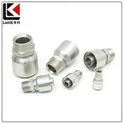
Hey there! As a tube fitting supplier, I often get asked about the differences between stainless steel and brass tube fittings. So, I thought I'd break it down for you in this blog post.
Let's start with the basics. Stainless steel and brass are two of the most common materials used for tube fittings, and each has its own set of unique properties that make it suitable for different applications.
Material Composition
First off, let's talk about what these materials are made of. Stainless steel is an alloy that primarily consists of iron, chromium, and nickel. The chromium in stainless steel forms a thin, protective oxide layer on the surface of the metal, which gives it its corrosion - resistant properties. This layer is self - healing, meaning that if it gets scratched, it will reform as long as oxygen is present.
On the other hand, brass is an alloy of copper and zinc. The proportion of copper and zinc can vary, which affects the properties of the brass. Generally, brass has good malleability and electrical conductivity, and it also has a certain level of corrosion resistance, especially in non - aggressive environments.
Corrosion Resistance
One of the most significant differences between stainless steel and brass tube fittings is their corrosion resistance. Stainless steel is well - known for its excellent corrosion resistance, especially in harsh environments. It can withstand exposure to water, chemicals, and even saltwater without rusting or corroding easily. This makes it a great choice for applications in the marine, chemical, and food processing industries.
Brass, while it does have some corrosion resistance, is not as resistant as stainless steel. In environments with high humidity or exposure to certain chemicals, brass can develop a patina or corrode over time. However, in less aggressive environments like residential plumbing, brass fittings can last for a long time.
Strength and Durability
When it comes to strength, stainless steel is the clear winner. Stainless steel tube fittings are stronger and more durable than brass fittings. They can withstand higher pressures and temperatures without deforming or breaking. This makes stainless steel fittings ideal for high - pressure applications such as hydraulic systems.
Brass fittings, although they are relatively strong, are not as robust as stainless steel. They are more likely to deform under high pressure or in high - stress situations. However, for low - pressure applications like household plumbing, brass fittings are perfectly sufficient.
Cost
Cost is always a factor when choosing between different materials. Generally, brass tube fittings are less expensive than stainless steel fittings. The raw materials for brass are more readily available and less costly to produce. So, if you're on a tight budget and your application doesn't require the high - end properties of stainless steel, brass might be the way to go.
However, you need to consider the long - term costs as well. Stainless steel fittings may have a higher upfront cost, but their durability and corrosion resistance mean that they may last longer and require less maintenance, which can save you money in the long run.
Appearance
Appearance can also be a consideration, especially in applications where the fittings are visible. Stainless steel has a modern, sleek look that is often preferred in contemporary designs. It has a shiny, metallic finish that can enhance the aesthetic of a project.
Brass, on the other hand, has a warm, golden - yellow color that gives it a more traditional and elegant appearance. It is often used in decorative applications or in projects where a classic look is desired.
Applications
Now, let's talk about where you might use each type of fitting.
Stainless Steel Tube Fittings:


- Hydraulic Systems: As mentioned earlier, stainless steel's high strength and corrosion resistance make it perfect for hydraulic systems. It can handle the high pressures and harsh conditions often found in these systems. For example, in heavy machinery and industrial equipment, stainless steel fittings ensure reliable performance. You can check out NPT Adapters for some great stainless - steel options for hydraulic applications.
- Food and Beverage Industry: The corrosion resistance and hygienic properties of stainless steel make it a top choice in the food and beverage industry. It won't contaminate the products and can be easily cleaned and sanitized.
- Marine Applications: The ability to resist saltwater corrosion makes stainless steel fittings essential in marine environments. Whether it's on boats or offshore platforms, stainless steel fittings can withstand the harsh conditions.
Brass Tube Fittings:
- Residential Plumbing: Brass is a popular choice for residential plumbing because it's affordable and easy to work with. It can handle the normal water pressures and temperatures found in homes. You can find a wide range of Pipe Fittings made of brass for your plumbing needs.
- Decorative Applications: Due to its attractive appearance, brass is often used in decorative applications such as lighting fixtures, furniture hardware, and architectural elements.
- Low - Pressure Pneumatic Systems: In low - pressure pneumatic systems, brass fittings can provide a cost - effective solution. They are lightweight and easy to install.
Machinability
Brass is generally more machinable than stainless steel. Machinability refers to how easily a material can be cut, drilled, or shaped. Brass can be machined quickly and with less tool wear, which makes it easier to manufacture complex fittings. This is one of the reasons why brass fittings are often less expensive, as the manufacturing process is more efficient.
Stainless steel, on the other hand, is more difficult to machine. It requires specialized tools and techniques, and the machining process is often slower and more costly. However, advancements in machining technology have made it more feasible to produce high - quality stainless steel tube fittings.
Compatibility
It's important to consider the compatibility of the tube fittings with other materials in your system. Stainless steel is generally compatible with a wide range of materials, including other metals and plastics. However, in some cases, there may be a risk of galvanic corrosion when stainless steel is in contact with certain metals.
Brass also has good compatibility with many materials. But like stainless steel, it can also be subject to galvanic corrosion if paired with the wrong metals. For example, when brass is in contact with aluminum in the presence of an electrolyte (such as water), galvanic corrosion can occur.
Conclusion
In conclusion, both stainless steel and brass tube fittings have their own advantages and disadvantages. Stainless steel is the go - to choice for applications that require high strength, excellent corrosion resistance, and durability, especially in harsh environments. On the other hand, brass is a great option for applications where cost is a major factor, and the requirements for strength and corrosion resistance are not as high.
If you're still not sure which type of tube fitting is right for your project, don't hesitate to reach out. As a tube fitting supplier, I have the expertise to help you make the best choice. Whether you need Kumatsu Adapter or any other type of tube fitting, I can provide you with high - quality products at competitive prices. Contact me to start a procurement discussion and find the perfect tube fittings for your needs.
References
- ASM Handbook Volume 1: Properties and Selection: Irons, Steels, and High - Performance Alloys
- The Metals Handbook Desk Edition