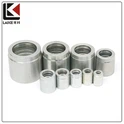
Hey there! As a supplier of Hose Assembly, I've come across a lot of questions about the different components that make up these assemblies. One of the most crucial parts that often gets overlooked is the hose nipple. In this blog, I'm going to chat about the many roles a hose nipple plays in a hose assembly.
First off, let's talk about what a hose nipple actually is. A hose nipple is a short piece of pipe, usually with male threads on one or both ends. It's designed to connect a hose to another component, like a valve, a pump, or another hose. It might seem like a small and simple part, but it's super important for the overall functionality of the hose assembly.
One of the primary roles of a hose nipple is to provide a secure connection. When you're working with hoses, you need to make sure that the connection between the hose and other parts is tight and leak - proof. The threads on the hose nipple are designed to fit snugly into the corresponding female threads on the other component. This creates a seal that prevents fluid or gas from leaking out. For example, in a Hydraulic Hose Assembly, a good connection is essential. Hydraulic systems operate under high pressure, and even a small leak can lead to a loss of efficiency or, in some cases, a complete system failure. A well - fitted hose nipple ensures that the hydraulic fluid stays where it's supposed to be, inside the system.


Another important role is in terms of flexibility. Hose nipples come in different lengths and configurations. This allows for a certain degree of flexibility in the hose assembly. You can choose a nipple that is just the right length to fit your specific application. Maybe you need to connect a hose to a component that is a bit far away, or perhaps you need to make a connection in a tight space. By selecting the appropriate hose nipple, you can customize the hose assembly to meet your needs. For instance, in a complex industrial setup where there are multiple hoses and components, the ability to use different types of hose nipples helps in creating a more organized and efficient system.
Hose nipples also play a role in adapting different types of hoses and components. Sometimes, you might have a hose with a certain type of connection and a component with a different type. A hose nipple can act as an adapter, allowing you to connect these two incompatible parts. This is especially useful in situations where you're trying to retrofit an existing system or use parts from different manufacturers. For example, if you have an older hose with a non - standard connection and a new component with a standard connection, a properly chosen hose nipple can bridge the gap and make the connection possible.
In a Pneumatic Quick Coupling system, hose nipples are also key. Pneumatic systems rely on the flow of compressed air. A good connection provided by the hose nipple ensures that the air flows smoothly through the system. The quick - coupling feature allows for easy and fast connection and disconnection of hoses. The hose nipple is an integral part of this process, as it provides the stable base for the coupling to work effectively. Without a reliable hose nipple, the quick - coupling mechanism might not function properly, leading to air leaks and reduced system performance.
Let's talk about the materials used in hose nipples. They can be made from a variety of materials, such as brass, stainless steel, or plastic. Each material has its own advantages. Brass is a popular choice because it's relatively inexpensive, corrosion - resistant, and easy to machine. Stainless steel, on the other hand, is more durable and resistant to high temperatures and harsh chemicals. Plastic hose nipples are lightweight and often used in applications where weight is a concern or where there is no need for high - strength connections. The choice of material depends on the specific requirements of the hose assembly. For example, in a food - processing industry, stainless steel hose nipples are preferred because they are hygienic and can withstand the cleaning agents used in the industry.
Maintenance is also an area where hose nipples play a role. They are relatively easy to replace if they get damaged. Over time, the threads on a hose nipple can wear out, or it might get corroded. Since they are a separate component, you can simply remove the old nipple and install a new one. This is much easier and less expensive than replacing the entire hose assembly. Regular inspection of the hose nipples can also help in detecting potential problems early. If you notice any signs of wear or damage, you can replace the nipple before it causes a major issue in the system.
In addition to all these technical roles, hose nipples also contribute to the overall safety of the hose assembly. A properly installed and functioning hose nipple reduces the risk of accidents. As I mentioned earlier, in high - pressure systems like hydraulic or pneumatic systems, a leak can be dangerous. It can cause fluid or air to spray out, which might harm nearby workers or damage equipment. By ensuring a secure connection, hose nipples help in maintaining a safe working environment.
Now, if you're in the market for high - quality hose assemblies or just need some advice on hose nipples, I'd love to have a chat with you. Whether you're working on a small DIY project or a large industrial application, we have the expertise and the products to meet your needs. Feel free to reach out to us to discuss your requirements and start a procurement process. We can offer you a wide range of hose nipples and hose assemblies that are designed to perform reliably in various conditions.
References
- "Industrial Hose Handbook"
- "Hydraulic Systems Design and Maintenance Guide"
- "Pneumatic System Basics"