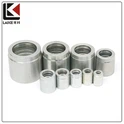
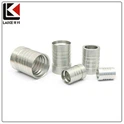
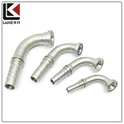
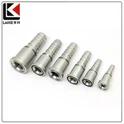
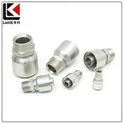
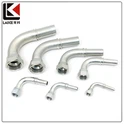
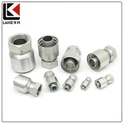
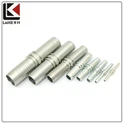
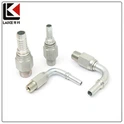
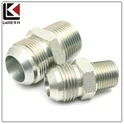
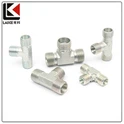
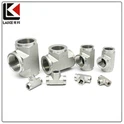
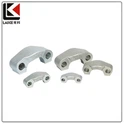
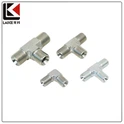
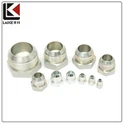
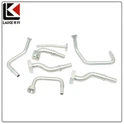
You can find China hydraulic fitting factory almost in every industry. They offer secure, leak-free connections between hoses, pipes, and other components in hydraulic system. But with a wide range of types and sizes, navigating the world of hydraulic fittings can be tricky. This article will help you with the knowledge to choose, install, and connect these crucial components.

China hydraulic fitting manufacturer hope this comprehensive hydraulic hose fittings article can help readers understand the different types of hydraulic hose fittings, their materials, and how to install and maintain them.

The hydraulic system uses the properties of pressurized fluid to move mechanical energy. The energy is transferred from one point to another by fluid inside hydraulic hoses, which are connected with machinery by hydraulic fittings.
Hydraulic fitting have to attach strongly to the machinery and hose and must withstand high pressure and temperatures. Fittings are in different sizes, materials, with types of seals, and temperature and pressure tolerances.
Some fittings are fluid flow, others prevent it, and some are designed to do both. The most important function of fitting is a tight seal that keeps fluid in and contaminants out.
Crimped Hydraulic Fittings & Field Attachable Fittings
Fittings can be crimped with hoses either permanently or with a field connection.
Crimped Fittings
A permanently attached fitting is crimped fitting. Crimped fittings are secured onto the hose with crimping machine which crimps the fitting to ensure a strong connection that is difficult to break.
In traditional, crimped fittings needed to be brought to a workshop to be crimped with the hose, but with tool advancements, there are now portable crimpers which can be used in the field.
Hydraulic Coupler
Field-connection hydraulic fitting, known as a hydraulic coupler, can be installed anywhere without crimping tool and used in many times. It is comprised of a ferrule and a nipple, and it can allow for a blend of convenience and adaptability when immediate adjustment or replacements are required.
However, field connections are not generally recommended because they offer limited pressure capabilities and are often points of hose failure. We advice using crimped fittings in all hydraulic systems.

Materials of Hydraulic Hose Fitting
Hydraulic hose fittings are manufactured in different materials, it depends on the application and budget. Follow are the most common hydraulic hose fitting materials and their characteristics:
- Steel Hydraulic Fitting: These fittings are made from steel and are impressively strong and durable.
○ Carbon Steel fitting: Carbon steel can withstand extreme temperatures ranging from -63.4 degrees Fahrenheit to 500 degrees Fahrenheit (-53°C to 260°C). With good surface treatment, the carbon steel fittings is corrosion-resistant, also it is often more affordable.
○ Stainless Steel Fitting: Stainless steel fittings can be made to extreme temperatures from -423.4 degrees Fahrenheit to 1198 degrees Fahrenheit (-253 °C up to 648 °C). The pressure of stainless steel fittings can be rated for up to 10,000 psi, even with special designs, they can withstand up to an incredible 20,000 psi. While stainless steel fittings can offer the best strength and durability, but they are also expensive.
- Brass Fittings: Brass hydraulic fittings are popular for their excellent mix of corrosion resistance, durability, affordability. Brass has a temperature tolerance of -63.4 degrees Fahrenheit to 399 degrees Fahrenheit (-53°C to 204°C).
Choosing the right material of hydraulic fitting for your application is first important for a long-lasting, safe solution.
Types of Hydraulic Hose Fitting
There are so many different types of hydraulic fittings. Different countries have different standards and types of fittings, but some machines and equipment may also favor one type over another.
Follow are the main types of hydraulic hose fittings:
American Hydraulic Fittings Standard
- NPT (National Pipe Tapered): A time-tested standard which seal by using tapered threads. Also available in various materials to handle different pressure needs. Size from 1/4 inch to 2 inch.
- NPTF (National Pipe Tapered Fuel): Popular for good leak-proof connections in hydraulic systems. Tightening creates a seal with metal-to-metal and the threads deform to create a permanent seal. Size is similar to NPT, from 1/4 inch to 2 inch.
- NPSM (National Pipe Straight Mechanical): Seal by straight threads with a 30° seat. If chamfered correctly, it is compatible with NPTF males in some place.
- SAE Standards (Society of Automotive Engineers): A comprehensive range of fitting types, it include ORB, JIC, and ORFS and so on, which catering to diverse pressure and sealing requirements.
○ ORB Fittings (O-Ring Boss): Mainly for high-pressure applications, these fittings use a straight thread and an O-ring to provide a secure and good seal.
○ JIC Fittings (Joint Industry Council 37° Flare): The most popular and widely used fitting in hydraulics which is our main product. Seal by a 37° cone on the male part mating with the female's flared tube.
○ ORFS Fittings (O-Ring Face Seal): The go-to choice for superior leak-proof, our main product, especially in high-vibration place. Features a flat sealing surface with an O-ring on the male fitting.
British & ISO Fitting Standards
- British Standard Pipe (BSP): Includes BSPT and BSPP threads. BSPT is tapered and BSP is parallel. BSPT seal with thread deformation and sealants, while BSPP seal with metal-to-metal contact or O-rings. Threads are marked with "G" for BSP (parallel) or "R" for BSPT(tapered) to help with identification.
- ISO (Metric) Standards: Includes ISO 6162 (4-bolt flange) and ISO 6149 (metric threads). Sealing is achieved using O-rings compressed into a chamfer, similar with SAE ORB.
German Fitting Standards
- DIN 7631: A metric fitting with a 60° cone on the male part. Sealing is achieved using the cone and the female's tapered nose.
- DIN 3902: Offers different kinds of female connection options like compression and flareless swivel. The male part has a 24° angle, and some female include O-rings.
- DIN 3852: DIN 3852 fittings are popular in hydraulic applications globally, setting a standard for connector and port designs. Their versatility makes them compatible with different hose sizes and metric threads.
Japanese Fitting Standards
- JIS Tapered Pipe (PT) and 30° Seat Connections: These are similar to BSP and BPST in Japanese standards.
- JIS 4-Bolt Flange: This flanged head have grooves for O-rings and 4 bolts provides a secure connection. It is for high-pressure series.
3 Hydraulic Hose Fitting Connection Types
There are three main types of hydraulic hose fitting connections:
- O-Ring Face Seal Fittings (ORF): There is an O-ring is on the face of the fitting. The seal is formed When the side with the O-ring connects with the flat face of the female. ORFS are for high-pressure applications with pressure up to 6,000 psi. They are popular because of less over or under-tightened.
- Mated Angle Fittings: These fittings have thread, there are also flare in the end of fittings. The threads do not form the seal, the male and female sides are threaded together, the flares meet up and create a seal. Like SAE 45° and JIC 37°, they rely on the wedge effect of the angled surfaces for a tight seal without requiring any additional sealants like O-rings. This makes them suitable for high-pressure applications (up to 9,000 psi).
- Tapered Thread Fittings: In a tapered thread fitting, the male has threads on the outside, while the female has threads on the inside. The threads deform when tightened to create a seal. Tapered thread fittings are used in low- to medium-pressure systems.

How to Select the Right Hydraulic Fitting
Choose the right hydraulic fitting is important for a safe and efficient hydraulic system. Follow are the key factors to consider.
- Size: The diameter and the thread type of the fitting. Choose right diameter according to hose, and choose correct thread include NPT, BSP, and metric (ISO) to connect with your equipment.
- Temperature: Consider both the operating temperature of your system and the ambient temperature where the fitting will be used is very important.
- Application: It is important to consider the fitting's function within the system. Example, quick-connect options might be ideal for easy assembly and disassembly, while Fittings designed to handle high-vibration environments may be required.
- Assembly: According to the application, consider where and how will the fitting be attached to the hose or tubing. For examples, reusable fittings are more flexible, Crimped fittings are permanent and durable.
- Material: The fitting material needs to be choosed according to the hydraulic fluid being used and withstand the system's pressure.
- Pressure: The working pressure rating of fitting must exceed the maximum pressure your hydraulic system will generate.
You can select the most appropriate hydraulic fitting for your application By carefully evaluating these factors. If you still have any doubts about the selection process, kindly contact with us
Hydraulic Hose Fitting Installation & Maintenance Guide
Proper installation and maintenance is the key to a long-lasting hydraulic hose system.
Installing a Hydraulic Hose Fitting
Pay careful attention on details to ensure a leak-free, secure connection. Here are five steps to installing a hydraulic hose fitting:
Considering the hose size, fitting type, connection type, and hydraulic system's psi and temperature ratings, and Choose the right fitting. The fitting should be rated for higher pressure and temperature than the hydraulic system's rating.
Cutting the hose according to required length, and crimp a hydraulic hose. Make sure the cut is clean and straight and remove debris inside and outside of the cut end to ensure the hose is contaminate-free,
According to the manufacturer's instructions on crimping your fitting. Choose the correct crimper diameter die set, and put the fitting all the way on the hose and crimp the ferrule with the fitting tightly.
After crimping the fittings and ferrule, inspect the assembly to ensure everything is properly aligned.
After crimping with the hose, use protective plugs to prevent contaminants from entering the hose assembly. Then, a pressure test will be performed to check for leaks or other problems.
Hydraulic Fitting Maintenance
Follows are some key hydraulic fitting maintenance practices to keep your fittings in top shape:
-
Regular Inspections: Inspect the appearance of the hose assembly, pay close attention to areas around the threads and where the fitting connects to the hose or tubing.
-
Cleaning: Clean your fittings using a mild soap solution and warm water regularly.
-
Tightening: Use a torque wrench to periodically check and tighten fittings according to the manufacturer's recommended specifications.
-
Hose Condition: Inspect hoses for signs of wear, damage, or bulging regularly.
-
Fluid Monitoring: Maintain a regular fluid change schedule according to recommended by your system's manual.
-
Storage: Keep them in a clean, dry environment away from direct sunlight and extreme temperatures.
Visually inspect the fitting for damage, deformations, cracks, or corrosion. Remove the O-ring and thoroughly clean the fitting, then replace the O-ring with a new one, keep the O-ring always new. Check the threads run well and the fitting is ready to be reused!
Please note: the permanently crimped hydraulic hose fittings are designed for one use only and cannot be reused.