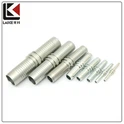
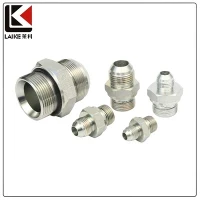
As a supplier of NPTF Adapters, I often encounter inquiries from customers regarding the suitability of these adapters for high - temperature applications. This blog aims to comprehensively explore whether NPTF Adapters can be used in high - temperature environments, taking into account various factors such as material properties, design features, and industry standards.
Understanding NPTF Adapters
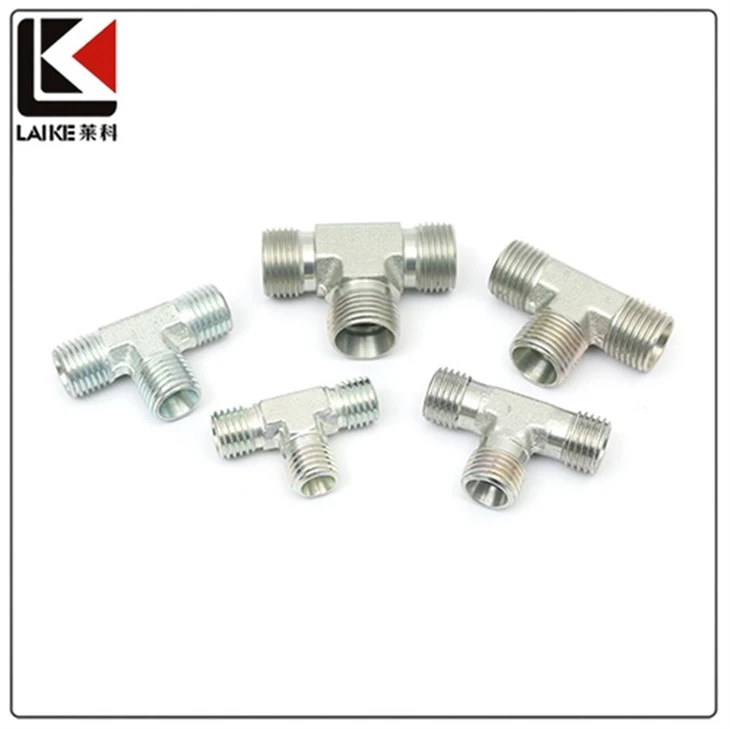
NPTF (National Pipe Taper Fuel) adapters are a type of threaded pipe fitting commonly used in fluid systems. They are designed to provide a tight seal by means of the tapered threads that wedge together when tightened. The NPTF standard was developed to address issues related to leakage in fuel and other fluid transfer applications. These adapters are widely used in industries such as automotive, aerospace, and manufacturing due to their reliability and ease of installation. For more information on different types of adapters, you can visit American Adapter.
Material Considerations for High - Temperature Use
The material of an NPTF adapter plays a crucial role in determining its performance in high - temperature applications. Common materials for NPTF adapters include brass, stainless steel, and carbon steel.
Brass is a popular choice for NPTF adapters due to its good machinability and corrosion resistance. However, brass has a relatively low melting point compared to other metals, typically around 900 - 940°C (1652 - 1724°F). In high - temperature applications where the operating temperature exceeds 200 - 300°C (392 - 572°F), brass may start to lose its mechanical strength and dimensional stability. This can lead to leakage and failure of the adapter over time.
Stainless steel, on the other hand, is known for its excellent corrosion resistance and high - temperature performance. Austenitic stainless steels, such as 304 and 316, can withstand temperatures up to 800 - 900°C (1472 - 1652°F) without significant loss of strength. The chromium content in stainless steel forms a protective oxide layer on the surface, which prevents oxidation and corrosion at high temperatures. This makes stainless steel NPTF adapters a better choice for high - temperature applications compared to brass.
Carbon steel is another option for NPTF adapters. It has high strength and is relatively inexpensive. However, carbon steel is prone to corrosion, especially in high - temperature and high - humidity environments. To improve its corrosion resistance, carbon steel adapters can be coated with protective layers such as zinc or epoxy. In terms of high - temperature performance, carbon steel can withstand temperatures up to around 500 - 600°C (932 - 1112°F), but it may experience some oxidation and loss of strength at these temperatures.
Design Features and Their Impact on High - Temperature Performance
The design of NPTF adapters also affects their performance in high - temperature applications. The tapered thread design of NPTF adapters is intended to create a tight seal by wedging the threads together. However, at high temperatures, thermal expansion can cause changes in the dimensions of the threads. If the thermal expansion is not properly accounted for, it can lead to loosening of the threads and leakage.
Some NPTF adapters are designed with additional features to improve their high - temperature performance. For example, some adapters may have a double - sealing design, which includes both a threaded seal and an O - ring seal. The O - ring can provide an additional barrier against leakage and can compensate for some of the dimensional changes caused by thermal expansion.
Another design consideration is the wall thickness of the adapter. A thicker wall can provide better mechanical strength and resistance to thermal stress. However, increasing the wall thickness also increases the weight and cost of the adapter. Therefore, a balance needs to be struck between strength and cost when designing NPTF adapters for high - temperature applications.
Industry Standards and Guidelines
There are several industry standards and guidelines that govern the use of NPTF adapters in high - temperature applications. For example, the American Society of Mechanical Engineers (ASME) has developed standards for pipe fittings, including NPTF adapters. These standards specify the material requirements, dimensional tolerances, and performance criteria for different types of pipe fittings.
In addition, some industries have their own specific requirements for high - temperature applications. For example, the aerospace industry has strict standards for the use of pipe fittings in aircraft engines, where temperatures can reach extremely high levels. Adapters used in these applications must meet rigorous testing and certification requirements to ensure their safety and reliability.
Case Studies: NPTF Adapters in High - Temperature Applications
To illustrate the real - world performance of NPTF adapters in high - temperature applications, let's look at a few case studies.
In a chemical processing plant, NPTF adapters made of stainless steel were used in a high - temperature steam system. The operating temperature of the system was around 350°C (662°F). The stainless steel adapters were able to maintain a tight seal and withstand the high - temperature and high - pressure conditions for several years without any significant issues. This demonstrates the suitability of stainless steel NPTF adapters for high - temperature applications in the chemical industry.
In an automotive engine, brass NPTF adapters were initially used in a cooling system. However, due to the high operating temperatures in the engine compartment, the brass adapters started to show signs of leakage after a few months of use. The brass had lost its strength and dimensional stability at the high temperatures, leading to loosening of the threads. The plant then replaced the brass adapters with stainless steel ones, which resolved the leakage problem and improved the overall reliability of the cooling system.

Conclusion
In conclusion, whether NPTF adapters can be used in high - temperature applications depends on several factors, including the material, design, and industry requirements. While brass NPTF adapters may not be suitable for very high - temperature applications due to their low melting point and limited strength at elevated temperatures, stainless steel and carbon steel adapters can offer better performance.
Stainless steel NPTF adapters are often the preferred choice for high - temperature applications due to their excellent corrosion resistance and high - temperature strength. Design features such as double - sealing and appropriate wall thickness can also enhance the performance of NPTF adapters in high - temperature environments.
If you are looking for high - quality NPTF adapters for your high - temperature applications, we are here to help. We offer a wide range of NPTF adapters made from different materials and with various design features to meet your specific needs. If you are also interested in other types of adapters, you can check out JIC To JIC Adapter and Pipe Fittings. Contact us to discuss your requirements and start a procurement negotiation today.
References
- ASME B1.20.3 - 2018, "Pipe Threads, Dryseal (NPTF)"
- "Handbook of Stainless Steels" by George E. Totten and D. Scott MacKenzie
- "Corrosion Resistance of Metals and Alloys" by L. L. Shreir, R. A. Jarman, and G. T. Burstein