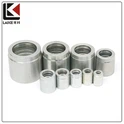
Can tube fittings be welded? This is a question that often arises in the industrial and engineering sectors. As a tube fitting supplier, I've encountered this query numerous times from clients, and it's a topic worth delving into.
Understanding Tube Fittings
Before we discuss welding tube fittings, it's essential to understand what tube fittings are. Tube fittings are components used to connect, control, and direct the flow of fluid in a tube or piping system. They come in various shapes, sizes, and materials, each designed for specific applications. Some common types of tube fittings include elbows, tees, couplings, and adapters. These fittings are crucial in ensuring the integrity and functionality of a fluid system, whether it's for hydraulic, pneumatic, or other industrial processes.
The Case for Welding Tube Fittings
Welding tube fittings can offer several advantages. One of the primary benefits is the creation of a permanent and leak - tight connection. When a tube fitting is welded properly, it forms a strong bond that can withstand high pressures and harsh operating conditions. This is particularly important in applications where fluid leakage could lead to safety hazards, environmental damage, or significant operational disruptions.
In high - pressure hydraulic systems, for example, welded tube fittings can provide the reliability needed to maintain the system's performance. The welded joint can handle the intense forces exerted by the hydraulic fluid, reducing the risk of joint failure. Additionally, welding can eliminate the need for additional sealing materials, such as gaskets or O - rings, which can degrade over time and cause leaks.
Another advantage of welding tube fittings is the potential for a more streamlined and compact design. Welded joints can be made with a minimum of protrusions, allowing for a more efficient use of space in the piping system. This is especially beneficial in applications where space is limited, such as in the aerospace or automotive industries.
The Challenges of Welding Tube Fittings
However, welding tube fittings is not without its challenges. One of the main issues is the risk of distortion. Welding generates heat, which can cause the tube and fitting to expand and contract unevenly. This can lead to dimensional changes in the components, affecting the overall fit and functionality of the system. To mitigate this risk, proper pre - heating and post - welding heat treatment may be required, as well as careful control of the welding parameters.
Material compatibility is another critical factor. Different tube fitting materials have different welding characteristics. For instance, stainless steel tube fittings require a different welding process compared to carbon steel fittings. Using the wrong welding technique or filler material can result in a weak joint or even cause corrosion over time. It's essential to select the appropriate welding method and materials based on the specific tube fitting material.
Welding also requires a high level of skill and expertise. A poorly welded tube fitting can lead to defects such as porosity, cracks, or incomplete fusion. These defects can compromise the integrity of the joint and increase the likelihood of failure. Therefore, it's crucial to have trained and certified welders perform the welding operations.
Alternatives to Welding Tube Fittings
Given the challenges associated with welding tube fittings, there are several alternatives available. One common alternative is the use of mechanical connections. Mechanical tube fittings, such as compression fittings or flare fittings, offer a quick and easy way to connect tubes without the need for welding. These fittings rely on mechanical force to create a seal, and they can be easily disassembled and reassembled if necessary.


Compression fittings, for example, work by compressing a ferrule onto the tube, creating a tight seal. They are relatively simple to install and can be used with a variety of tube materials. Flare fittings, on the other hand, use a flared end on the tube to create a seal against the fitting. They are commonly used in high - pressure applications and are known for their reliability.
Another alternative is the use of adhesive bonding. Adhesive bonding can provide a strong and durable connection between tube fittings and tubes. It is a suitable option for applications where welding is not feasible or where a non - metallic connection is required. Adhesive bonding can also be used to seal joints and prevent leakage.
Applications and Considerations
When deciding whether to weld tube fittings, it's important to consider the specific application. In some industries, such as the oil and gas sector, welding may be the preferred method due to the high pressures and harsh environments. Welded tube fittings can provide the long - term reliability needed in these applications.
In other industries, such as the food and beverage industry, mechanical connections may be more appropriate. These industries often require easy disassembly for cleaning and maintenance, and mechanical fittings can be easily removed and reinstalled without the need for specialized welding equipment.
As a tube fitting supplier, I can offer a wide range of products to meet different application needs. We provide Hydraulic Plugs and Caps for sealing hydraulic systems, METRIC Adapter for connecting tubes of different sizes, and Pipe Fittings for various piping applications.
Conclusion
In conclusion, tube fittings can be welded, but it's a decision that should be made carefully, taking into account the specific application, the materials involved, and the available resources. Welding offers several advantages, such as a permanent and leak - tight connection, but it also comes with challenges, including distortion and material compatibility issues. Alternatives like mechanical connections and adhesive bonding can provide viable solutions in many cases.
If you're in the process of selecting tube fittings for your project or need advice on the best connection method, I encourage you to reach out. Our team of experts is ready to assist you in making the right choice. Whether you require welded tube fittings or prefer an alternative connection method, we can provide the high - quality products and support you need. Contact us to start a discussion about your tube fitting requirements and explore the best solutions for your application.
References
- ASME Boiler and Pressure Vessel Code
- AWS Welding Handbook
- Manufacturer's specifications for tube fittings