Hey there! As a hose ferrule supplier, I'm super stoked to spill the beans on how these nifty little components work. Hose ferrules might seem like small fry, but they play a huge role in making sure hoses do their job right.
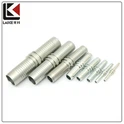
First off, let's talk about what a hose ferrule is. It's a ring - usually made of metal, but sometimes plastic - that's used to secure a hose to a fitting. Think of it as the glue that holds the whole hose - fitting combo together. When you're dealing with hoses in different applications, like in industrial machinery, automotive systems, or even in your garden, the ferrule makes sure there's a tight and reliable connection.


So, how does it actually work? Well, it all starts with the installation process. When you want to attach a hose to a fitting, you first slide the ferrule onto the hose. This might seem simple, but it's crucial to get it in the right position. You need to make sure it's placed at the end of the hose where it will connect to the fitting.
Once the ferrule is in place, you then insert the hose and the ferrule onto the fitting. The fitting has a specific design that works in tandem with the ferrule. There are usually ridges or grooves on the fitting that match up with the inner part of the ferrule. When you push the hose and ferrule onto the fitting, these ridges and grooves help to grip the hose and the ferrule tightly.
Now, here comes the key part - crimping. Crimping is the process where you use a special tool to squeeze the ferrule around the hose and the fitting. This squeezing action deforms the ferrule slightly, making it grip the hose and the fitting even more securely. The crimping tool applies a precise amount of pressure to the ferrule, ensuring that it creates a leak - proof seal.
Different types of applications require different levels of crimping. For example, in high - pressure hydraulic systems, you need a really tight crimp. The high pressure in these systems means that if the connection isn't secure, you could have leaks, which can be a huge problem. Leaks not only waste fluid but can also cause damage to the machinery and even pose a safety risk.
On the other hand, in low - pressure applications like a garden hose, the crimping doesn't need to be as tight. But it still needs to be enough to keep the hose attached to the fitting without any issues.
Let's talk a bit about the materials used in hose ferrules. As I mentioned earlier, metal is a popular choice. Stainless steel, brass, and aluminum are commonly used metals. Stainless steel is great because it's corrosion - resistant. This makes it perfect for applications where the hose might be exposed to moisture or chemicals. Brass is also a good option as it's relatively soft, which makes it easier to crimp. Aluminum is lightweight, which can be an advantage in some applications where weight is a concern.
Plastic ferrules are also available. They're often used in applications where cost is a major factor or where there's no need for high - strength connections. Plastic ferrules are generally cheaper to produce and can be a good choice for low - pressure and non - critical applications.
Now, let's look at some of the different types of hose ferrules and their uses. There are hydraulic hose ferrules, which are designed specifically for hydraulic systems. These systems require high - pressure resistance and leak - proof connections. Hydraulic hoses are used in a wide range of equipment, from construction machinery to industrial robots. You can find more about Hydraulic Hose Connector.
Socketless hose ferrules are another type. These are used with Socketless Hose Fitting. Socketless fittings are designed to be easier to install and remove compared to traditional fittings. They're often used in applications where quick disassembly and assembly are required, like in some maintenance and repair tasks.
Caterpillar hydraulic fittings use specialized hose ferrules. Caterpillar is a well - known brand in the construction and heavy - equipment industry. Their hydraulic systems are highly sophisticated, and the Caterpillar Hydraulic Fittings require ferrules that can withstand high pressures and extreme conditions.
In addition to the installation process and the materials, maintenance is also important when it comes to hose ferrules. Regular inspections are a must. You need to check for any signs of wear and tear, such as cracks or corrosion. If you notice any issues, it's important to replace the ferrule as soon as possible. A worn - out ferrule can lead to leaks and other problems, which can end up costing you a lot more in the long run.
When it comes to replacing a hose ferrule, the process is relatively straightforward. You first need to remove the old ferrule. This usually involves using a tool to cut or pry it off the hose. Once the old ferrule is removed, you can then install a new one following the same installation process I described earlier.
So, why should you choose us as your hose ferrule supplier? Well, we have a wide range of ferrules to suit different applications. Whether you need high - pressure hydraulic ferrules or simple plastic ones for a garden hose, we've got you covered. Our ferrules are made from high - quality materials, and we ensure that they meet all the necessary standards.
We also have a team of experts who can help you choose the right ferrule for your specific needs. If you're not sure which type of ferrule is best for your application, just give us a shout. We can provide you with all the information and advice you need.
If you're interested in purchasing hose ferrules, or if you have any questions about our products, don't hesitate to get in touch. We're always happy to have a chat and help you find the perfect solution for your hose connection needs. Whether you're a small business owner looking for a few ferrules or a large industrial company in need of bulk orders, we can work with you.
References
- "Handbook of Hose Fittings and Connectors"
- "Hydraulic Systems: Design and Maintenance"
- "Industrial Hose Applications and Solutions"