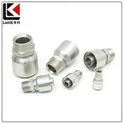
Hydraulic hoses are essential components in a wide range of industries, providing a flexible and reliable means of transferring hydraulic fluid under high pressure. As a leading hose supplier, I've witnessed firsthand the diverse applications of hydraulic hoses across various sectors. In this blog post, I'll explore some of the most common applications of hydraulic hoses and discuss the key factors to consider when selecting the right hose for your specific needs.
Construction Industry
The construction industry is one of the largest consumers of hydraulic hoses. Hydraulic systems are used in a variety of construction equipment, including excavators, bulldozers, loaders, and cranes. These systems rely on hydraulic hoses to transfer hydraulic fluid from the pump to the actuators, such as cylinders and motors, which power the equipment's movements.
For example, in an excavator, hydraulic hoses are used to control the movement of the boom, arm, and bucket. The high-pressure hydraulic fluid flowing through the hoses provides the force necessary to lift heavy loads and perform precise digging operations. Similarly, in a crane, hydraulic hoses are used to control the movement of the boom and the winch, allowing the crane to lift and move heavy objects with ease.
When selecting hydraulic hoses for construction equipment, it's important to choose hoses that can withstand the harsh operating conditions typically encountered on construction sites. This includes exposure to high temperatures, abrasion, and chemicals. Hoses with a high-pressure rating and a durable outer cover are recommended to ensure long-term reliability and performance. Some of the suitable hoses for construction applications include the R13 Wire Spiral Hose (GB/T 10544 R13-EN 856 R13) and the R15 Wire Spiral Hose (GB/T 10544 R15-EN 856 R15), which are designed to handle high pressures and provide excellent resistance to abrasion and corrosion.
Agriculture Industry
The agriculture industry also makes extensive use of hydraulic hoses in a variety of equipment, such as tractors, combines, and sprayers. Hydraulic systems are used to power the equipment's various functions, including steering, lifting, and operating implements.


For instance, in a tractor, hydraulic hoses are used to control the movement of the three-point hitch, which is used to attach and operate implements such as plows, cultivators, and mowers. The hydraulic system provides the force necessary to lift and lower the implements, as well as to adjust their position and angle. In a combine harvester, hydraulic hoses are used to control the movement of the header, which cuts and collects the crops, as well as the threshing and separating mechanisms.
When selecting hydraulic hoses for agricultural equipment, it's important to consider the specific requirements of the application. This includes the operating pressure, temperature, and fluid compatibility. Hoses with a moderate pressure rating and a good resistance to oil and chemicals are typically suitable for most agricultural applications. The 4SP Wire Spiral Hose (GB/T 10544 4SP-EN 856 4SP) is a popular choice for agricultural equipment, as it offers a good balance of pressure rating, flexibility, and durability.
Manufacturing Industry
In the manufacturing industry, hydraulic hoses are used in a wide range of machinery and equipment, including presses, injection molding machines, and automated production lines. Hydraulic systems are used to provide the power and control necessary to operate these machines efficiently and accurately.
For example, in a hydraulic press, hydraulic hoses are used to transfer hydraulic fluid from the pump to the cylinders, which apply the force necessary to shape and form metal parts. The high-pressure hydraulic fluid flowing through the hoses ensures that the press can apply the required force consistently and precisely. In an injection molding machine, hydraulic hoses are used to control the movement of the mold, as well as the injection and ejection of the plastic material.
When selecting hydraulic hoses for manufacturing equipment, it's important to choose hoses that can meet the specific performance requirements of the application. This includes the pressure rating, flow rate, and temperature range. Hoses with a high-pressure rating and a low-pressure drop are recommended to ensure efficient operation and minimize energy consumption. Additionally, hoses with a smooth inner surface are preferred to reduce the risk of fluid turbulence and pressure fluctuations.
Mining Industry
The mining industry is another major user of hydraulic hoses. Hydraulic systems are used in a variety of mining equipment, such as drills, loaders, and haul trucks, to provide the power and control necessary to extract and transport minerals.
In a mining drill, hydraulic hoses are used to control the movement of the drill bit and the feed mechanism. The high-pressure hydraulic fluid flowing through the hoses provides the force necessary to penetrate hard rock and extract minerals. In a mining loader, hydraulic hoses are used to control the movement of the bucket and the lifting mechanism, allowing the loader to scoop and transport large amounts of ore and waste material.
When selecting hydraulic hoses for mining equipment, it's crucial to choose hoses that can withstand the extreme operating conditions typically encountered in mines. This includes high pressures, high temperatures, and exposure to abrasive materials and chemicals. Hoses with a high-pressure rating, a thick outer cover, and a good resistance to abrasion and corrosion are essential to ensure long-term reliability and safety.
Transportation Industry
The transportation industry also relies on hydraulic hoses in a variety of applications, such as in trucks, buses, and trains. Hydraulic systems are used in these vehicles to provide power steering, braking, and suspension functions.
In a truck, hydraulic hoses are used to transfer hydraulic fluid from the power steering pump to the steering gear, allowing the driver to turn the wheels with ease. In a bus, hydraulic hoses are used in the braking system to transfer hydraulic pressure from the brake pedal to the brake calipers, ensuring reliable and efficient braking. In a train, hydraulic hoses are used in the suspension system to provide a smooth and comfortable ride for passengers.
When selecting hydraulic hoses for transportation applications, it's important to consider the safety and reliability requirements of the vehicles. Hoses with a high-pressure rating and a good resistance to vibration and fatigue are essential to ensure the proper functioning of the hydraulic systems. Additionally, hoses that meet the relevant industry standards and regulations are preferred to ensure compliance and safety.
Key Factors to Consider When Selecting Hydraulic Hoses
When selecting hydraulic hoses for any application, there are several key factors to consider to ensure that you choose the right hose for your specific needs. These factors include:
- Pressure Rating: The pressure rating of the hose is one of the most important factors to consider. It indicates the maximum pressure that the hose can safely withstand without bursting or leaking. Make sure to choose a hose with a pressure rating that is higher than the maximum operating pressure of your hydraulic system.
- Temperature Range: The temperature range of the hose is another important consideration. It indicates the minimum and maximum temperatures at which the hose can operate safely. Make sure to choose a hose that can withstand the temperature extremes typically encountered in your application.
- Fluid Compatibility: The fluid compatibility of the hose is crucial to ensure that the hose does not react with the hydraulic fluid and cause damage or failure. Make sure to choose a hose that is compatible with the type of hydraulic fluid used in your system.
- Outer Cover: The outer cover of the hose provides protection against abrasion, corrosion, and environmental factors. Choose a hose with a durable outer cover that can withstand the operating conditions of your application.
- Length and Diameter: The length and diameter of the hose are important factors to consider to ensure that the hose can be installed properly and that it provides the required flow rate and pressure drop. Make sure to choose a hose with the appropriate length and diameter for your application.
Conclusion
Hydraulic hoses are versatile components that play a crucial role in a wide range of industries. From construction and agriculture to manufacturing and mining, hydraulic hoses are used to provide the power and control necessary to operate various equipment and machinery. As a hose supplier, I understand the importance of choosing the right hose for your specific application. By considering the key factors discussed in this blog post, you can ensure that you select a hydraulic hose that meets your performance requirements and provides long-term reliability and safety.
If you're in need of high-quality hydraulic hoses for your application, I invite you to contact me for more information and to discuss your specific requirements. I'm committed to providing my customers with the best products and services, and I look forward to helping you find the perfect hose solution for your needs.
References
- "Hydraulic Hoses: A Comprehensive Guide." Hydraulics & Pneumatics Magazine.
- "Selection and Application of Hydraulic Hoses." Parker Hannifin Corporation.
- "Hydraulic Hose Standards and Specifications." International Organization for Standardization (ISO).