What are the nuclear - grade requirements for NPTF Adapters?
As a supplier of NPTF (National Pipe Taper Fuel) Adapters, I understand the critical importance of meeting the stringent requirements for nuclear - grade applications. Nuclear facilities demand the highest level of safety, reliability, and performance from all components, including NPTF Adapters. In this blog, we will explore the nuclear - grade requirements for NPTF Adapters in detail.
1. Material Selection
The first and foremost requirement for nuclear - grade NPTF Adapters is the selection of appropriate materials. These materials must be able to withstand the harsh environment of a nuclear power plant, including high radiation levels, extreme temperatures, and corrosive chemicals.
Stainless steel is a commonly used material for nuclear - grade NPTF Adapters. Grades such as 304L and 316L are popular due to their excellent corrosion resistance and mechanical properties. These steels contain low carbon content to prevent sensitization and intergranular corrosion, which can be accelerated by radiation.
In addition to stainless steel, other materials like nickel - based alloys may also be used in certain nuclear applications. Alloys such as Inconel 600 or Hastelloy C - 276 offer superior resistance to corrosion and high - temperature oxidation, making them suitable for areas with more severe operating conditions.
2. Manufacturing Precision
Nuclear - grade NPTF Adapters must be manufactured with extremely high precision. The thread dimensions, taper, and surface finish are critical factors that ensure a proper seal and connection.
The thread form of NPTF Adapters is designed to provide a self - sealing joint. In nuclear applications, any leakage can have catastrophic consequences. Therefore, the threads must be machined to exact specifications, with tight tolerances on the major diameter, minor diameter, and pitch.
The taper of the NPTF threads is also crucial. A consistent and accurate taper ensures a tight fit between the adapter and the mating component, preventing fluid or gas leakage. Advanced machining techniques, such as CNC (Computer Numerical Control) machining, are often employed to achieve the required precision.
Surface finish is another important aspect. A smooth surface finish on the threads and the sealing surfaces reduces the risk of leakage and improves the overall performance of the adapter. The surface roughness should be within the specified range to ensure proper contact and sealing.


3. Quality Control and Testing
Quality control is an integral part of producing nuclear - grade NPTF Adapters. Every adapter must undergo a series of rigorous tests to ensure it meets the strict nuclear standards.
Non - destructive testing (NDT) methods are commonly used to detect any internal flaws or defects in the adapters. Techniques such as ultrasonic testing (UT), magnetic particle testing (MT), and liquid penetrant testing (PT) can identify cracks, porosity, or other discontinuities that could compromise the integrity of the adapter.
Pressure testing is also essential. The adapters are subjected to high - pressure tests to verify their ability to withstand the operating pressures in a nuclear system. These tests are conducted at pressures well above the normal operating levels to ensure a safety margin.
In addition to these tests, chemical analysis is performed to confirm the composition of the materials used. This ensures that the adapters are made from the correct alloys and that they meet the specified chemical requirements.
4. Traceability
Traceability is a key requirement in nuclear - grade manufacturing. Every NPTF Adapter must have a complete record of its manufacturing process, including the source of the raw materials, the manufacturing steps, and the results of all tests.
This traceability allows for easy identification and tracking of the adapter throughout its lifecycle. In case of any issues or failures, it enables quick and accurate investigation to determine the root cause. It also provides assurance to the nuclear facility operators that the adapter has been manufactured and tested to the highest standards.
5. Compliance with Standards
Nuclear - grade NPTF Adapters must comply with a variety of national and international standards. In the United States, the American Society of Mechanical Engineers (ASME) Boiler and Pressure Vessel Code (BPVC) provides guidelines for the design, fabrication, and testing of nuclear components.
The International Organization for Standardization (ISO) also has relevant standards that may apply to NPTF Adapters used in nuclear applications. Compliance with these standards ensures that the adapters are designed and manufactured to a recognized and accepted level of quality and safety.
6. Comparison with Other Adapters
When considering nuclear - grade applications, it's important to compare NPTF Adapters with other types of adapters. For example, Hydraulic Fitting Adapters are commonly used in hydraulic systems. While they share some similarities in terms of sealing and connection, hydraulic fitting adapters may not meet the specific requirements of nuclear environments.
SAE Flange Adapter is another type of adapter. SAE flange adapters are often used in high - pressure hydraulic systems, but they also have different design and performance characteristics compared to NPTF Adapters.
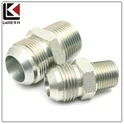
NPT Adapters are similar to NPTF Adapters, but NPTF is specifically designed for fuel and fluid applications where a better seal is required. In nuclear applications, the enhanced sealing properties of NPTF Adapters make them a preferred choice.
7. Conclusion and Call to Action
In conclusion, nuclear - grade NPTF Adapters must meet a wide range of requirements, from material selection and manufacturing precision to quality control and compliance with standards. These requirements ensure the safety and reliability of nuclear systems.
As a supplier of NPTF Adapters, we are committed to producing high - quality products that meet all the nuclear - grade requirements. Our team of experts has extensive experience in the nuclear industry and uses the latest manufacturing and testing techniques to ensure the best performance of our adapters.
If you are in the nuclear industry and are looking for reliable NPTF Adapters, we invite you to contact us for a detailed discussion. We can provide you with more information about our products, their specifications, and how they can meet your specific needs. Whether you are building a new nuclear facility or maintaining an existing one, our NPTF Adapters are the right choice for your nuclear - grade applications.
References
- American Society of Mechanical Engineers (ASME). Boiler and Pressure Vessel Code.
- International Organization for Standardization (ISO) relevant standards.
- Technical literature on nuclear component manufacturing and quality control.