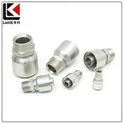
Hey there! As a supplier of SAE flange adapters, I've gotten a ton of questions about how they stack up against other types of adapters. So, I thought I'd break it down in this blog post.
Let's start by getting a basic understanding of what adapters are. In the world of hydraulics and fluid systems, adapters are like the translators. They connect different components that might have different sizes, shapes, or connection types. Without them, we'd have a real headache trying to make everything work together.
SAE Flange Adapters
SAE, or the Society of Automotive Engineers, has set some pretty strict standards for flange adapters. These adapters are designed to provide a reliable and leak - free connection in high - pressure hydraulic systems. They're made to handle a lot of stress and are commonly used in heavy - duty applications like construction equipment, agricultural machinery, and industrial hydraulic systems.
One of the key features of SAE flange adapters is their flange design. The flange provides a large surface area for connection, which distributes the pressure evenly across the joint. This helps to prevent leaks and ensures a long - lasting connection. Also, SAE flange adapters are available in different sizes and configurations to fit various hydraulic components.
Comparing with Other Types of Adapters
JIC To JIC Adapter
JIC, or Joint Industry Council, adapters are another popular type in the hydraulic world. You can check out more about JIC To JIC Adapter. JIC adapters use a 37 - degree flare for sealing. They're known for their ease of installation and are often used in medium - pressure hydraulic systems.


Compared to SAE flange adapters, JIC adapters are generally smaller and lighter. They're a great choice for applications where space is limited. However, they might not be as suitable for high - pressure applications as SAE flange adapters. The 37 - degree flare seal can sometimes be prone to leakage under extremely high pressures, while the flange design of SAE adapters provides a more robust sealing solution.
Jis Fittings
Jis Fittings follow the Japanese Industrial Standards. These fittings are common in Japanese - made machinery and equipment. JIS fittings use a different sealing mechanism compared to SAE flange adapters. They often rely on a combination of O - rings and tapered threads for sealing.
JIS fittings are designed to be compatible with Japanese hydraulic systems, so they might not be the best fit for non - Japanese equipment without some modifications. SAE flange adapters, on the other hand, are more widely recognized and used globally. They can be easily integrated into different types of hydraulic systems, regardless of the origin of the equipment. Also, in terms of pressure handling, SAE flange adapters are better equipped to handle high - pressure situations compared to many JIS fittings.
Hydraulic Fitting Adapters in General
Hydraulic Fitting Adapters is a broad term that encompasses all types of adapters used in hydraulic systems. There are many different styles and designs, such as NPT (National Pipe Tapered), BSP (British Standard Pipe), and more.
SAE flange adapters stand out in terms of their ability to handle high pressures and provide a reliable seal. Some other types of hydraulic fitting adapters might use thread - based sealing methods. While these can be effective in low - to medium - pressure applications, they might not be as secure as the flange - based sealing of SAE adapters under high - pressure conditions. Threaded connections can also be more prone to vibration - induced loosening, which is less of an issue with SAE flange adapters due to their large contact surface area.
When to Choose SAE Flange Adapters
If you're working with high - pressure hydraulic systems, SAE flange adapters are a no - brainer. Their design makes them ideal for applications where safety and reliability are top priorities. For example, in a large construction crane, the hydraulic system needs to be able to handle high pressures to lift heavy loads. Using SAE flange adapters in such a system ensures that there are no leaks that could lead to equipment failure or safety hazards.
Also, if you're looking for a long - term solution, SAE flange adapters are a great choice. Their robust construction and reliable sealing mean that they'll last longer and require less maintenance compared to some other types of adapters.
Conclusion
In summary, SAE flange adapters have some distinct advantages over other types of adapters. Their ability to handle high pressures, provide a reliable seal, and their wide compatibility make them a popular choice in many industries. Whether you're in the construction, agriculture, or industrial sector, if you need a high - performance adapter for your hydraulic system, SAE flange adapters should be on your radar.
If you're interested in purchasing SAE flange adapters or have any questions about which adapter is right for your specific application, feel free to reach out. We're here to help you make the best choice for your hydraulic system needs.
References
- Hydraulic Fittings Handbook, various industry experts
- SAE Standards Publications, Society of Automotive Engineers
- JIC and JIS Standards Documentation, relevant industry associations