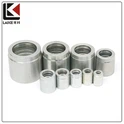
Quick couplings are essential components in various industries, enabling the rapid connection and disconnection of fluid lines. As a leading quick coupling supplier, I have witnessed firsthand the diverse requirements and applications of different types of quick couplings. In this blog post, I will explore the key differences between various types of quick couplings, highlighting their unique features, advantages, and typical use cases.
Hydraulic Quick Connect Couplings
Hydraulic quick connect couplings are designed for use in hydraulic systems, where they provide a reliable and efficient way to connect and disconnect hydraulic hoses. These couplings are commonly used in construction equipment, agricultural machinery, and industrial applications.
One of the primary advantages of hydraulic quick connect couplings is their ability to withstand high pressures. They are typically made from high-strength materials such as steel or brass, which can handle pressures ranging from a few hundred to several thousand pounds per square inch (psi). This makes them suitable for use in demanding hydraulic applications where leaks or failures could have serious consequences.
Another key feature of hydraulic quick connect couplings is their ease of use. They are designed to be quickly and easily connected and disconnected, often with a simple push or twist action. This allows for fast and efficient maintenance and repair of hydraulic systems, reducing downtime and increasing productivity.
Hydraulic quick connect couplings come in a variety of designs, including threaded, flat face, and poppet-style couplings. Threaded couplings are the most common type and are typically used in low-pressure applications. Flat face couplings, on the other hand, are designed to minimize fluid loss and contamination when connecting and disconnecting hydraulic lines. They are commonly used in high-pressure applications where cleanliness is critical. Poppet-style couplings feature a spring-loaded valve that closes when the coupling is disconnected, preventing fluid from leaking out.
For more information on hydraulic quick connect couplings, please visit Hydraulic Quick Connect Couplings.
Flat Face Hydraulic Quick Coupler
Flat face hydraulic quick couplers are a specialized type of hydraulic quick connect coupling that is designed to provide a leak-free connection in high-pressure hydraulic systems. These couplings feature a flat face design that eliminates the need for a seal between the coupling halves, reducing the risk of leakage and contamination.
One of the main advantages of flat face hydraulic quick couplers is their ability to maintain a clean and efficient hydraulic system. The flat face design prevents dirt, debris, and other contaminants from entering the hydraulic lines when the coupling is connected or disconnected. This helps to extend the life of the hydraulic system and reduce the risk of component failure.
Flat face hydraulic quick couplers are also designed to be easy to use and maintain. They typically feature a simple push-to-connect and pull-to-disconnect mechanism, which allows for fast and efficient connection and disconnection of hydraulic lines. In addition, the flat face design makes it easy to clean the coupling surfaces, ensuring a reliable and leak-free connection.
Another advantage of flat face hydraulic quick couplers is their compatibility with a wide range of hydraulic fluids. They are designed to work with both mineral-based and synthetic hydraulic fluids, making them suitable for use in a variety of applications.
To learn more about flat face hydraulic quick couplers, please visit Flat Face Hydraulic Quick Coupler.
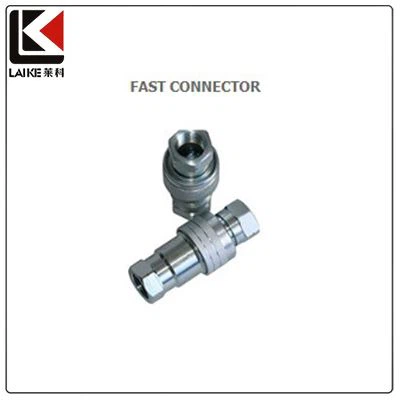

Fast Connector
Fast connectors are a type of quick coupling that is designed for use in applications where speed and ease of connection are critical. These connectors are commonly used in pneumatic systems, water systems, and other low-pressure applications.
One of the primary advantages of fast connectors is their ability to provide a quick and secure connection. They are typically designed to be connected and disconnected with a simple push or twist action, which allows for fast and efficient installation and removal. This makes them ideal for use in applications where time is of the essence, such as in assembly lines or maintenance operations.
Fast connectors are also designed to be lightweight and compact, making them easy to handle and install. They are typically made from materials such as plastic or aluminum, which are lightweight and corrosion-resistant. This makes them suitable for use in a variety of environments, including outdoor and harsh industrial settings.
Another advantage of fast connectors is their versatility. They are available in a variety of sizes and configurations, which allows them to be used in a wide range of applications. They can be used to connect hoses, tubes, and other components, and can be used with a variety of fluids, including air, water, and oil.
For more information on fast connectors, please visit Fast Connector.
Key Differences Between Different Types of Quick Couplings
While all quick couplings are designed to provide a fast and efficient way to connect and disconnect fluid lines, there are several key differences between different types of quick couplings. These differences include:
- Pressure Rating: Different types of quick couplings are designed to handle different pressure ratings. Hydraulic quick connect couplings, for example, are typically designed to handle high pressures, while fast connectors are designed for use in low-pressure applications.
- Material: Quick couplings are made from a variety of materials, including steel, brass, plastic, and aluminum. The material used depends on the application and the requirements of the system. For example, hydraulic quick connect couplings are typically made from high-strength materials such as steel or brass, while fast connectors are often made from lightweight materials such as plastic or aluminum.
- Design: Quick couplings come in a variety of designs, including threaded, flat face, and poppet-style couplings. The design of the coupling depends on the application and the requirements of the system. For example, flat face hydraulic quick couplers are designed to minimize fluid loss and contamination when connecting and disconnecting hydraulic lines, while threaded couplings are the most common type and are typically used in low-pressure applications.
- Fluid Compatibility: Different types of quick couplings are designed to work with different types of fluids. Hydraulic quick connect couplings, for example, are designed to work with hydraulic fluids, while fast connectors can be used with a variety of fluids, including air, water, and oil.
Conclusion
In conclusion, different types of quick couplings offer unique features and advantages that make them suitable for a variety of applications. As a quick coupling supplier, I understand the importance of choosing the right coupling for your specific needs. Whether you are looking for a high-pressure hydraulic quick connect coupling, a leak-free flat face hydraulic quick coupler, or a fast and easy-to-use fast connector, I can help you find the perfect solution.
If you have any questions or need further information about quick couplings, please do not hesitate to contact me. I would be happy to discuss your requirements and provide you with a customized solution that meets your needs.
References
- "Hydraulic Quick Couplings: A Guide to Selection and Use." Hydraulics & Pneumatics, 2023.
- "Flat Face Hydraulic Quick Couplers: Benefits and Applications." Fluid Power Journal, 2022.
- "Fast Connectors: The Key to Quick and Easy Fluid Connections." Industrial Equipment News, 2021.