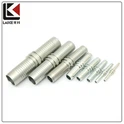
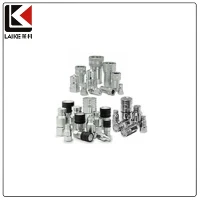
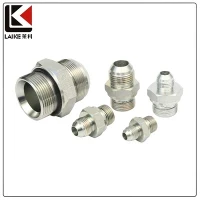
As a supplier of quick couplings, I've witnessed firsthand the pivotal role these components play in various industries. Quick couplings are essential in enabling the rapid connection and disconnection of fluid transfer lines, streamlining operations and enhancing efficiency. In this blog, we'll delve into the dynamic performance of quick couplings, exploring what it encompasses and why it matters.
Understanding Dynamic Performance
The dynamic performance of a quick coupling refers to its ability to function effectively under varying operating conditions, including changes in pressure, flow rate, temperature, and vibration. Unlike static performance, which focuses on the coupling's behavior at rest or under steady - state conditions, dynamic performance evaluates how well the coupling copes with real - world scenarios where conditions are constantly in flux.
Key Aspects of Dynamic Performance
Pressure Resistance
One of the most critical aspects of dynamic performance is pressure resistance. Quick couplings are often used in systems where the fluid pressure can fluctuate significantly. For example, in hydraulic systems, sudden pressure spikes can occur due to rapid valve closures or changes in load. A high - quality quick coupling must be able to withstand these pressure variations without leaking or failing.
Our Hydraulic Quick Connect Couplings are designed with advanced materials and engineering techniques to ensure excellent pressure resistance. The internal seals and components are carefully selected to maintain a tight seal even under high - pressure conditions. This not only prevents fluid leakage, which can be costly and hazardous, but also ensures the overall integrity of the hydraulic system.
Flow Rate Capability
Another important factor in dynamic performance is the coupling's ability to handle different flow rates. In applications where large volumes of fluid need to be transferred quickly, such as in industrial manufacturing or mobile equipment, the quick coupling must allow for a smooth and unrestricted flow.
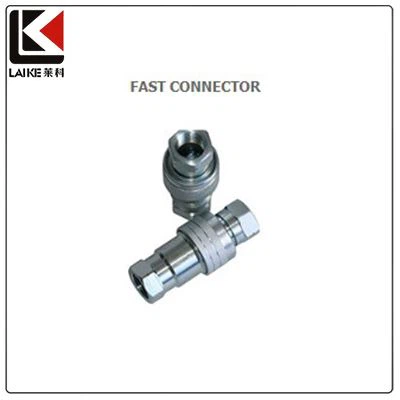
A well - designed quick coupling minimizes flow restrictions, which can cause pressure drops and reduce system efficiency. Our Fast Connector series is optimized for high - flow applications. The internal bore of the coupling is carefully sized and shaped to promote laminar flow, reducing turbulence and pressure losses. This allows for faster fluid transfer, which can significantly improve the productivity of the entire system.
Temperature Adaptability
Temperature variations can have a significant impact on the performance of quick couplings. In some applications, the fluid being transferred may be extremely hot or cold, and the coupling must be able to maintain its functionality across a wide temperature range.
For example, in aerospace applications, quick couplings may be exposed to extreme temperatures during flight. Our quick couplings are made from materials with high thermal stability, ensuring that they can operate reliably in both high - and low - temperature environments. The seals are also designed to maintain their elasticity and sealing properties over a broad temperature spectrum, preventing leaks due to thermal expansion or contraction.
Vibration Resistance
Vibration is a common challenge in many industrial and mobile applications. Constant vibration can cause wear and tear on the coupling components, leading to premature failure and leaks. A quick coupling with good dynamic performance must be able to resist the effects of vibration.
We use robust construction techniques and high - quality materials in our quick couplings to enhance their vibration resistance. The coupling bodies are often fabricated from durable metals that can absorb and dampen vibrations. Additionally, the internal components are securely fastened to prevent rattling and loosening, ensuring long - term reliability in vibrating environments.
Testing and Quality Assurance
To ensure that our quick couplings meet the highest standards of dynamic performance, we conduct extensive testing. Our testing facilities are equipped with state - of - the - art equipment that can simulate real - world operating conditions.
We subject our couplings to pressure cycling tests, where the pressure is rapidly increased and decreased to mimic pressure spikes. Flow rate tests are also performed to verify the coupling's ability to handle different flow rates without significant pressure drops. Temperature and vibration tests are carried out to assess the coupling's performance under extreme conditions.
Only after passing these rigorous tests are our quick couplings approved for production and sale. This commitment to quality assurance gives our customers the confidence that they are getting a product that will perform reliably in their applications.

Importance of Dynamic Performance in Different Industries
The dynamic performance of quick couplings is crucial in a wide range of industries.
Manufacturing Industry
In the manufacturing industry, quick couplings are used in various production processes, such as in hydraulic presses, injection molding machines, and automated assembly lines. A coupling with poor dynamic performance can lead to production delays, increased maintenance costs, and product quality issues. For example, a leaky coupling in a hydraulic press can cause inconsistent pressure, resulting in defective parts. Our high - performance quick couplings ensure smooth and reliable operation, minimizing downtime and improving product quality.
Mobile Equipment Industry
In the mobile equipment industry, including construction machinery, agricultural equipment, and material handling vehicles, quick couplings are exposed to harsh operating conditions. Vibration, temperature variations, and pressure changes are common in these applications. A coupling that can withstand these conditions is essential for the safe and efficient operation of the equipment. Our quick couplings are designed to meet the demanding requirements of the mobile equipment industry, providing reliable fluid connections even in the most challenging environments.
Energy Industry
In the energy industry, quick couplings are used in oil and gas exploration, power generation, and renewable energy systems. In offshore oil rigs, for example, quick couplings must be able to withstand high pressures, corrosive environments, and extreme temperatures. Our couplings are engineered with corrosion - resistant materials and advanced sealing technologies to ensure long - term performance in these harsh conditions.
Choosing the Right Quick Coupling for Your Application
When selecting a quick coupling, it's important to consider the specific dynamic performance requirements of your application. Factors such as the maximum pressure, flow rate, temperature range, and vibration levels should all be taken into account.
Our Hydraulic Coupling Types page provides detailed information about the different types of quick couplings we offer, along with their performance specifications. Our technical support team is also available to assist you in choosing the right coupling for your needs.
Conclusion
The dynamic performance of a quick coupling is a complex and multi - faceted concept that encompasses pressure resistance, flow rate capability, temperature adaptability, and vibration resistance. As a supplier of quick couplings, we are committed to providing products that meet the highest standards of dynamic performance.
Whether you're in the manufacturing, mobile equipment, or energy industry, our quick couplings are designed to enhance the efficiency, reliability, and safety of your systems. If you're looking for high - quality quick couplings with excellent dynamic performance, we invite you to contact us for a detailed discussion about your requirements and to explore our product offerings. Our team of experts is ready to assist you in finding the perfect solution for your application.
References
- Hydraulic Systems Handbook, by E. O. Doebelin
- Fluid Power Technology, by George Ellis
- Handbook of Pneumatic and Hydraulic Actuators, by J. Paulo Davim