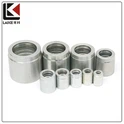
Can a JIC to JIC adapter be used in a high - frequency vibration application?
As a supplier of JIC to JIC adapters, I often encounter inquiries from customers about the suitability of our products in various applications, especially high - frequency vibration scenarios. This blog aims to delve into the question of whether a JIC to JIC adapter can be used in high - frequency vibration applications and provide a comprehensive analysis.
Understanding JIC to JIC Adapters
JIC (Joint Industry Council) fittings are a type of hydraulic fitting commonly used in fluid power systems. A JIC to JIC adapter is designed to connect two JIC - type ports. These adapters are known for their reliable sealing performance and are widely used in a range of hydraulic applications due to their ability to handle high - pressure situations. They feature a 37 - degree flare seat, which provides a tight seal when properly installed.
High - Frequency Vibration Applications
High - frequency vibration applications are characterized by rapid and repeated oscillations. These vibrations can come from various sources, such as machinery, engines, or other equipment in industrial settings. In such environments, components are subjected to continuous stress, which can lead to wear, fatigue, and potential failure if they are not designed to withstand these conditions.
Factors Affecting the Use of JIC to JIC Adapters in High - Frequency Vibration
Material and Construction
The material of the JIC to JIC adapter plays a crucial role in its performance under high - frequency vibration. High - quality materials, such as stainless steel or alloy steel, offer better resistance to fatigue and corrosion. The construction of the adapter, including the manufacturing process and the precision of the 37 - degree flare, also affects its ability to maintain a seal under vibration. For example, adapters with well - machined flares are more likely to provide a consistent and reliable seal, reducing the risk of leakage caused by vibration - induced movement.
Sealing Mechanism
The sealing mechanism of JIC to JIC adapters relies on the contact between the 37 - degree flare surfaces. In high - frequency vibration applications, the constant movement can cause the flare surfaces to shift slightly, potentially compromising the seal. To mitigate this risk, some adapters may incorporate additional sealing elements, such as O - rings or gaskets, to enhance the sealing performance. However, these additional elements also need to be able to withstand the vibration and not degrade over time.
Installation and Torque
Proper installation is essential for the performance of JIC to JIC adapters in high - frequency vibration applications. Incorrect installation, such as over - or under - tightening, can lead to uneven stress distribution on the flare surfaces, increasing the likelihood of leakage or failure. It is important to follow the manufacturer's recommended torque specifications during installation to ensure a proper seal. Additionally, regular inspection and re - tightening may be necessary to account for any loosening that may occur due to vibration.


Advantages of Using JIC to JIC Adapters in High - Frequency Vibration
Despite the challenges, there are several advantages to using JIC to JIC adapters in high - frequency vibration applications. Firstly, their robust design and reliable sealing performance make them suitable for high - pressure hydraulic systems, which are often found in environments with high - frequency vibration. Secondly, the wide availability of JIC to JIC adapters in the market allows for easy replacement and maintenance, reducing downtime in case of a failure.
Limitations and Considerations
However, it is important to note that JIC to JIC adapters may not be suitable for all high - frequency vibration applications. In extremely harsh environments with very high vibration frequencies and amplitudes, additional measures may be required. For example, using vibration - dampening mounts or flexible hoses in conjunction with the adapters can help reduce the stress on the adapters and improve their overall performance.
Related Hydraulic Adapters
In addition to JIC to JIC adapters, there are other types of hydraulic adapters that may be considered depending on the specific requirements of the application. For instance, BSPT Adapter is a type of adapter that uses British Standard Pipe Taper threads and can be used in certain hydraulic systems. JIC To BSP Adapter is useful when connecting JIC - type ports to BSP - type ports. And METRIC Adapter is suitable for systems that use metric - sized ports.
Conclusion
In conclusion, a JIC to JIC adapter can be used in high - frequency vibration applications, but careful consideration of factors such as material, construction, sealing mechanism, and installation is necessary. While they offer many advantages, their performance may be limited in extremely harsh vibration environments. By understanding the specific requirements of the application and taking appropriate measures, such as using additional vibration - dampening components, the reliability and longevity of JIC to JIC adapters in high - frequency vibration applications can be improved.
If you are interested in our JIC to JIC adapters or have any questions about their suitability for your high - frequency vibration application, please feel free to contact us for further discussion and potential procurement. We are committed to providing high - quality products and professional technical support to meet your needs.
References
- Hydraulic Fitting Handbook, various industry publications
- Manufacturer's specifications and guidelines for JIC to JIC adapters