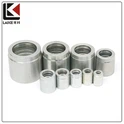
Can a JIC to JIC adapter be used in a space application? This is a question that often arises in the aerospace industry, especially when considering the unique requirements and challenges of space missions. As a supplier of JIC to JIC adapters, I am well - versed in the capabilities and limitations of these components, and I will delve into this topic in detail.
Understanding JIC to JIC Adapters
First, let's understand what JIC to JIC adapters are. JIC, or Joint Industry Council, is a standard for hydraulic fittings in the United States. JIC to JIC adapters are used to connect two JIC - compatible hydraulic lines or components. They are designed with a 37 - degree flare seating surface, which provides a reliable and leak - resistant connection. These adapters are commonly used in various industries, including automotive, industrial machinery, and aerospace.
The construction of JIC to JIC adapters typically involves high - quality materials such as stainless steel, brass, or carbon steel. Stainless steel is often preferred for its corrosion resistance, strength, and durability, making it suitable for harsh environments. The manufacturing process ensures precise dimensions and a smooth surface finish, which are crucial for a proper seal.
Space Application Requirements
Space applications present a set of extremely demanding requirements. The environment in space is vastly different from that on Earth. There are extreme temperatures, ranging from very cold in the shadow of celestial bodies to extremely hot when exposed to direct sunlight. Radiation is also a major concern, as it can damage electronic and mechanical components over time. Additionally, the lack of atmosphere means that there is no air to help dissipate heat, and there is no protection against micrometeoroids and orbital debris.
In terms of fluid systems, which is where JIC to JIC adapters might be used, the requirements are also stringent. Leakage is not an option, as even a small leak can lead to the loss of valuable fluids, such as hydraulic fluids or coolants, which can compromise the functionality of critical systems. The adapters need to maintain their integrity under high - pressure conditions and over long periods of time.
Advantages of Using JIC to JIC Adapters in Space
There are several reasons why JIC to JIC adapters could be considered for space applications.
Reliable Sealing
The 37 - degree flare design of JIC to JIC adapters provides an excellent seal. This design is proven to work well in high - pressure hydraulic systems, which are common in space vehicles for functions such as actuation of control surfaces, landing gear operation, and deployment of scientific instruments. The seal is less likely to fail under pressure fluctuations, which can occur during launch, orbit maneuvers, and re - entry.
Compatibility
JIC fittings are widely used in the aerospace industry on Earth. This means that there is a large pool of available components and a well - established supply chain. When designing a space vehicle, engineers can take advantage of this existing infrastructure, reducing the need for custom - designed and potentially more expensive fittings.
Durability
As mentioned earlier, JIC to JIC adapters are often made from high - quality materials like stainless steel. These materials can withstand the harsh conditions in space, including radiation and temperature extremes. Stainless steel has a high melting point and good resistance to thermal expansion and contraction, which is important in an environment with large temperature variations.
Challenges and Limitations
However, there are also challenges and limitations to using JIC to JIC adapters in space.
Outgassing
Outgassing is the release of gas from a solid material in a vacuum environment. In space, outgassing can be a significant problem as the released gases can contaminate sensitive optical or electronic components. Some materials used in JIC to JIC adapters may outgas, and it is necessary to select materials that have been tested and certified for low outgassing.


Vibration and Shock
Space vehicles experience significant vibration and shock during launch and re - entry. These forces can cause loosening of fittings over time. JIC to JIC adapters need to be properly secured and their design may need to be optimized to withstand these mechanical stresses.
Long - Term Performance
Space missions can last for years or even decades. The long - term performance of JIC to JIC adapters needs to be carefully evaluated. Factors such as material degradation due to radiation exposure and fatigue from repeated pressure cycles need to be considered.
Mitigation Strategies
To overcome the challenges and limitations, several mitigation strategies can be employed.
Material Selection
For outgassing concerns, materials with low outgassing properties should be selected. There are specialized grades of stainless steel and other alloys that have been developed for space applications with minimal outgassing. These materials are often more expensive, but the cost is justified by the need for reliability.
Design Optimization
The design of the adapters can be optimized to improve their resistance to vibration and shock. This can include features such as locking mechanisms or additional support structures. For example, using self - locking nuts or adding vibration - damping pads can help keep the adapter in place.
Testing and Certification
Before being used in a space application, JIC to JIC adapters need to undergo extensive testing. This includes testing for outgassing, pressure cycling, temperature cycling, and radiation exposure. Certification from relevant aerospace authorities is essential to ensure that the adapters meet the required standards.
Other Adapter Options in Space Applications
In addition to JIC to JIC adapters, there are other types of adapters that are also used in space applications. For example, Hydraulic Flange Adapters are often used for high - flow applications. They provide a large connection area and can handle higher pressures. NPT Adapters are another option, which are known for their tapered threads that create a tight seal. BRITISH Adapter also have their own unique features and are used in some specific applications.
Conclusion
In conclusion, JIC to JIC adapters have the potential to be used in space applications. They offer reliable sealing, compatibility, and durability, which are important factors in the aerospace industry. However, they also face challenges such as outgassing, vibration, and long - term performance. By carefully selecting materials, optimizing the design, and conducting thorough testing, these challenges can be mitigated.
If you are involved in a space project or any other application where reliable hydraulic fittings are required, I encourage you to reach out to discuss your specific needs. Our company has a wide range of JIC to JIC adapters and can provide customized solutions to meet the most demanding requirements. Contact us to start a procurement discussion and find the best adapter for your project.
References
- "Aerospace Hydraulic Systems Handbook"
- "Materials Science for Space Applications"
- Industry standards and guidelines related to space vehicle design and hydraulic fittings.