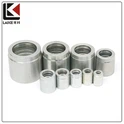
Hey there! I'm a supplier of NPT Adapters, and while these little guys are pretty popular, they're not without their downsides. In this blog, I'm gonna take you through some of the disadvantages of NPT Adapters.
1. Sealing Challenges
One of the major headaches with NPT Adapters is the sealing issue. NPT, or National Pipe Taper, threads are tapered, which means the diameter of the thread gets smaller as it goes deeper into the fitting. This is supposed to create a tight seal when the adapter is threaded into place. But in reality, it's not always that simple.
The tapered threads rely on the deformation of the threads themselves to create a seal. This often requires a lot of torque to get a proper fit. If you don't apply enough torque, you're likely to end up with a leak. And if you over - torque, you can damage the threads, causing even bigger problems down the line.
For example, in a high - pressure hydraulic system, a small leak from an NPT Adapter can lead to a significant loss of fluid. This not only wastes resources but can also cause the system to underperform. And let's not forget the mess it creates. Hydraulic fluid leaks can be a real pain to clean up and can even pose safety hazards in some environments.
In contrast, METRIC Adapter often use a parallel thread design. This means they can rely more on gaskets or O - rings for sealing, which can provide a more consistent and reliable seal with less risk of thread damage.
2. Compatibility Issues
NPT Adapters are mainly used in North America, and the thread standards here are different from those in other parts of the world. This can lead to compatibility issues when you're working on international projects or trying to integrate components from different regions.
For instance, if you're building a machine that has parts sourced from Europe, where BSPT Adapter are more commonly used, you'll find that NPT Adapters won't fit directly. BSPT (British Standard Pipe Taper) threads have a different pitch and angle compared to NPT threads. So, you either have to find a way to convert the threads or use a different type of adapter altogether.
This lack of global standardization can be a real hassle for engineers and manufacturers. It adds extra time and cost to projects, as they have to source additional conversion parts or modify existing components to make them compatible.
3. Limited Reusability
Another drawback of NPT Adapters is their limited reusability. As I mentioned earlier, the sealing mechanism of NPT Adapters relies on the deformation of the threads. Every time you install and remove an NPT Adapter, the threads get a little bit more worn out.
After a few cycles of installation and removal, the threads may no longer be able to create a proper seal. This means you have to replace the adapter, which can be costly, especially if you're dealing with a large - scale project.
On the other hand, SAE Flange Adapter are designed in a way that they can often be reused multiple times. The flanged design provides a more stable connection, and the sealing elements can be easily replaced without damaging the main body of the adapter.
4. Difficulty in Installation
Installing NPT Adapters can be a bit of a pain. As I've already talked about the torque issue, getting the right amount of torque is crucial for a proper seal. But how do you know if you've applied the right amount? Well, there's no easy way to tell.
You can't just rely on a torque wrench reading because the amount of torque required can vary depending on factors like the material of the adapter, the surface finish of the threads, and whether or not you're using a thread - sealing compound.
This makes the installation process more time - consuming and requires a higher level of skill. If you're a DIYer or someone who's not very experienced with plumbing or hydraulic systems, you could easily make a mistake during the installation, leading to leaks or other problems.
5. Corrosion and Thread Galling
NPT Adapters are often made of metals like steel or brass. These metals are prone to corrosion, especially in harsh environments. Corrosion can damage the threads, making it difficult to achieve a proper seal and eventually leading to leaks.
In addition, thread galling is a common problem with NPT Adapters. Thread galling occurs when the metal on the threads gets stuck or fused together during the tightening process. This can happen when the threads are made of the same material, and there's a lot of friction between them.
When thread galling occurs, it can be very difficult to remove the adapter without damaging the surrounding components. In some cases, you may even have to cut the adapter off, which is a time - consuming and messy process.
6. Pressure Limitations
While NPT Adapters are suitable for many applications, they do have some limitations when it comes to high - pressure systems. The tapered thread design, which is supposed to create a seal, can actually become a weak point under very high pressures.
The forces acting on the tapered threads can cause them to expand or deform, which can lead to leaks. In high - pressure hydraulic or pneumatic systems, you may need to use a different type of adapter that's specifically designed to handle the high pressures.
Conclusion
So, there you have it - some of the main disadvantages of NPT Adapters. But don't get me wrong, NPT Adapters still have their place in many applications, especially in North American markets where they're the standard. However, it's important to be aware of these drawbacks so that you can make an informed decision when choosing the right adapter for your project.
If you're still considering using NPT Adapters or have any questions about other types of adapters like METRIC Adapter, BSPT Adapter, or SAE Flange Adapter, feel free to reach out. I'd be more than happy to have a chat with you about your specific needs and help you find the best solution. Let's start a conversation and see how we can work together to solve your adapter challenges!


References
- Engineering textbooks on fluid power systems
- Industry standards documents related to pipe threads and adapters