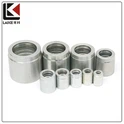
Hey there! As a supplier of JIC to JIC adapters, I often get asked about the standards for these nifty little components. So, I thought I'd take a moment to break it all down for you in a way that's easy to understand.
First off, let's talk about what JIC stands for. JIC is short for Joint Industry Council. These adapters are widely used in the hydraulic industry, and they've got some pretty strict standards to meet.
Thread Standards
One of the most important aspects of JIC to JIC adapters is the thread. The thread on a JIC adapter is designed to provide a leak - free connection. The most common thread type for JIC adapters is the 37 - degree flare thread. This specific angle is crucial because it allows for a tight seal when the adapter is properly installed.
The thread pitch also matters. It's standardized, and if the pitch isn't right, you're going to have a hard time getting a good connection. You see, if the pitch is too loose, there'll be leaks, and if it's too tight, you might damage the threads during installation.
Material Standards
The materials used in JIC to JIC adapters are also subject to standards. Most of the time, these adapters are made from high - quality metals like steel, stainless steel, or brass.
Steel adapters are strong and durable, making them a great choice for high - pressure applications. They can handle a lot of stress without deforming. Stainless steel, on the other hand, is corrosion - resistant. This is super important if your adapter is going to be used in an environment where it's exposed to moisture or chemicals. Brass adapters are known for their good conductivity and are often used in applications where electrical conductivity is a factor.
Pressure Rating Standards
Another key standard is the pressure rating. Every JIC to JIC adapter has a maximum pressure it can handle. This rating is determined by factors like the material, the thread design, and the overall construction of the adapter.
For example, if you're working in a high - pressure hydraulic system, you need an adapter with a high pressure rating. Using an adapter with a lower pressure rating than what your system requires can lead to serious problems, like burst adapters and fluid leaks. So, always make sure to check the pressure rating before you make a purchase.
Quality Control Standards
As a supplier, we take quality control very seriously. We test every JIC to JIC adapter we produce to make sure it meets all the relevant standards. This includes pressure testing, leak testing, and dimensional checks.
We use advanced testing equipment to ensure that each adapter has the correct thread pitch, the right 37 - degree flare angle, and the proper dimensions. Only after passing these rigorous tests do our adapters get approved for sale.
Compatibility with Other Adapters
Sometimes, you might need to connect a JIC to JIC adapter to other types of adapters. That's where things like the JIC To BSP Adapter come in handy. The compatibility between different types of adapters is also an important consideration.
When you're looking for an adapter to connect to a JIC to JIC adapter, you need to make sure that the thread types, sizes, and pressure ratings are compatible. For example, if you're using a Tube Fitting with your JIC to JIC adapter, they need to be able to connect properly without any issues.
Application - Specific Standards
Different applications might have their own unique standards for JIC to JIC adapters. For instance, in the aerospace industry, the requirements for adapters are extremely strict. The adapters need to be lightweight, yet strong enough to handle high - pressure and high - vibration environments.
In the automotive industry, adapters need to be able to withstand the rigors of daily use, including temperature changes and mechanical stress. So, when you're choosing a JIC to JIC adapter, you need to consider the specific requirements of your application.
Installation Standards
Proper installation is just as important as the adapter itself. There are standards for how to install a JIC to JIC adapter correctly. You need to use the right tools, like a torque wrench, to ensure that the adapter is tightened to the correct torque specification.
Over - tightening can damage the threads and the adapter, while under - tightening can lead to leaks. So, make sure you follow the installation instructions carefully.
Certification and Compliance
Many JIC to JIC adapters are required to be certified to certain industry standards. For example, they might need to meet ISO (International Organization for Standardization) standards or other regulatory requirements.
Certification is a sign that the adapter has been tested and meets the necessary quality and safety standards. When you're buying an adapter, always look for the relevant certifications to ensure that you're getting a high - quality product.
Why Choose Our JIC to JIC Adapters
As a supplier, we've been in the business for a long time, and we've built a reputation for providing high - quality JIC to JIC adapters. We source the best materials, use advanced manufacturing processes, and have a strict quality control system in place.
Our adapters are designed to meet all the relevant standards, whether it's thread standards, pressure ratings, or material quality. We also offer a wide range of sizes and configurations to meet the diverse needs of our customers.
If you're in the market for a JIC to JIC adapter, don't hesitate to reach out. Whether you're working on a small DIY project or a large - scale industrial application, we've got the right adapter for you. And if you need help choosing the right one, our team of experts is here to assist you.
We also have a great selection of other types of adapters, like the BRITISH Adapter, which can be useful if you need to connect different types of hydraulic components.
So, if you're looking for reliable, high - quality JIC to JIC adapters, give us a shout. We're ready to help you with all your adapter needs. Contact us today to start the purchasing and洽谈 (I'll just say "discussion" here as we avoid non - English words) process and get the best adapter for your application.


References
- "Hydraulic Fittings Handbook" - A comprehensive guide on hydraulic fittings and their standards.
- ISO standards related to hydraulic adapters and fittings.
- Industry publications on hydraulic systems and components.