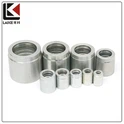
Hey there! As a supplier of Jis Fittings, I often get asked about the bending radius of these fittings. So, let's dive right into it and figure out what the bending radius of Jis Fittings really means.
First off, what are Jis Fittings? Well, Jis Fittings are a type of hydraulic fittings that follow the Japanese Industrial Standards (JIS). These standards ensure that the fittings are of high quality and meet specific requirements for use in various hydraulic systems. They're used in a wide range of applications, from industrial machinery to automotive systems.
Now, let's talk about the bending radius. The bending radius of a fitting is the minimum radius at which the fitting can be bent without causing damage to it. It's a crucial factor because if you bend a fitting beyond its bending radius, it can lead to a whole bunch of problems. For example, it might cause the fitting to crack or deform, which can then lead to leaks in the hydraulic system. And let's face it, leaks in a hydraulic system are no joke - they can cause a loss of pressure, reduced efficiency, and even damage to other components.
So, how do you determine the bending radius of Jis Fittings? Well, it depends on a few factors. One of the main factors is the size of the fitting. Generally speaking, larger fittings have a larger bending radius. This is because the material in larger fittings is more rigid and needs more space to bend without being damaged. Another factor is the material of the fitting. Different materials have different levels of flexibility, which can affect the bending radius. For instance, a fitting made of a more flexible material might have a smaller bending radius compared to one made of a more rigid material.
The manufacturing process also plays a role in determining the bending radius. Fittings that are precision - manufactured tend to have more consistent and predictable bending radii. At our place, we use state - of - the - art manufacturing techniques to ensure that our Jis Fittings have the appropriate bending radii for their intended applications.
Let's take a look at some common scenarios where the bending radius of Jis Fittings matters. In a hydraulic system where space is limited, you might need to bend the fittings to fit them into the available area. But you can't just bend them any which way. You need to make sure that you're within the acceptable bending radius. Otherwise, you could end up with a fitting that doesn't work properly or fails prematurely.
Another scenario is when you're installing a new hydraulic system. You need to plan ahead and consider the bending radius of the fittings when designing the layout of the pipes and hoses. This will help you avoid any last - minute problems and ensure that the system is installed correctly from the start.
Now, I want to mention some related products that you might be interested in. If you're in the market for other types of hydraulic adapters, we've got you covered. Check out our BSPT Adapter page. These adapters are great for connecting different types of pipes and hoses in your hydraulic system. And if you're looking for a wider range of Pipe Fittings, we have a variety of options to choose from. They're all designed to meet high - quality standards and work well with Jis Fittings. Also, don't forget to take a look at our American Adapter section. These adapters are perfect for those who need to connect components that follow American standards.
When it comes to working with Jis Fittings and their bending radii, it's always a good idea to have some guidelines. First, always refer to the manufacturer's specifications. These will give you the exact bending radius for each type and size of fitting. Second, use the right tools for bending. Specialized bending tools can help you achieve a smooth and accurate bend within the acceptable radius. And third, if you're not sure about something, don't hesitate to ask for help. Our team of experts is always ready to assist you with any questions you might have about Jis Fittings and their bending radii.
In conclusion, understanding the bending radius of Jis Fittings is essential for anyone working with hydraulic systems. It can save you a lot of headaches in the long run by preventing leaks, reducing the risk of component failure, and ensuring the overall efficiency of your system. Whether you're a professional installer or a DIY enthusiast, knowing how to handle these fittings correctly is key.
If you're interested in purchasing Jis Fittings or any of our other related products, we'd love to hear from you. We offer high - quality products at competitive prices, and our customer service is top - notch. Just reach out to us, and we'll be more than happy to discuss your needs and help you find the right fittings for your project.


References:
- Japanese Industrial Standards (JIS) documentation
- Hydraulic Fittings Handbook