Hey there! As a supplier of JIC hose fittings, I often get asked about the flow capacity of these nifty little parts. So, I figured I'd sit down and write this blog to shed some light on the topic.
First off, let's quickly explain what JIC hose fittings are for those who might not be in the know. JIC stands for Joint Industry Council. These fittings are used in hydraulic systems, and they're known for their 37-degree flare design. This design gives them a tight seal and makes them super reliable, which is crucial in hydraulic applications where leaks can be a real pain in the... well, you know.
Now, onto the main question: What is the flow capacity of JIC hose fittings? Flow capacity is kind of like the speed limit for fluid in a hose fitting. It tells you how much fluid can pass through the fitting in a given amount of time. And just like speed limits on the road, it's important to know the flow capacity of your JIC hose fittings to make sure your hydraulic system runs smoothly.
There are a few factors that can affect the flow capacity of JIC hose fittings. One of the biggest factors is the size of the fitting. Just like a bigger pipe can carry more water, a larger JIC hose fitting can handle a higher flow rate. Common sizes for JIC hose fittings range from -4 (which is pretty small) to -32 (which is much larger). The number represents the nominal size in 1/16-inch increments. So, a -4 fitting has a nominal size of 4/16 or 1/4 inch.
Another factor that affects flow capacity is the design of the fitting. Some JIC hose fittings have a straight-through design, which means the fluid can flow through without any major obstructions. These fittings generally have a higher flow capacity compared to fittings with a more complex design, like those with bends or branches.
The viscosity of the fluid also plays a role. Viscosity is a measure of how thick or thin a fluid is. Thicker fluids, like some types of hydraulic oil, have a harder time flowing through a fitting compared to thinner fluids. So, if you're using a thick fluid in your hydraulic system, you might need to choose a JIC hose fitting with a higher flow capacity to make sure the fluid can flow freely.
Let's talk a bit about how to calculate the flow capacity of JIC hose fittings. There are some formulas and charts available, but they can get a bit technical. In general, the flow capacity is measured in gallons per minute (GPM) or liters per minute (LPM). The manufacturers usually provide flow capacity charts for their JIC hose fittings, which take into account the size, design, and other factors. These charts are a really handy tool when you're trying to figure out which fitting is right for your application.
Now, let's say you're in the market for JIC hose fittings. You want to make sure you're getting the right ones with the appropriate flow capacity for your hydraulic system. That's where we come in! As a supplier, we've got a wide range of JIC hose fittings to choose from. Whether you need a small -4 fitting for a compact hydraulic system or a large -32 fitting for a heavy-duty application, we've got you covered.
And it's not just about the JIC hose fittings. We also offer other related products. For example, if you're looking for Yanmar Hydraulic Fittings, we can provide you with high-quality options. These fittings are designed to work well with Yanmar equipment, and they're built to last.
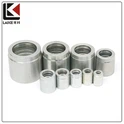
We also have Hose Ferrule in our inventory. Hose ferrules are used to connect hoses to fittings, and they're an important part of any hydraulic system. Our hose ferrules are made from top - quality materials to ensure a secure and leak - free connection.
And if you need something a bit different, we've got Interlock Hose Fitting. These fittings offer a unique interlocking design that provides extra strength and stability, making them a great choice for applications where reliability is key.
When it comes to choosing the right JIC hose fittings and related products for your needs, we're here to help. Our team of experts is knowledgeable about the products and can answer any questions you might have. We can help you figure out the right flow capacity for your system and recommend the best fittings for your specific application.
If you're interested in purchasing JIC hose fittings, Yanmar hydraulic fittings, hose ferrules, or interlock hose fittings, we'd love to talk to you. Whether you're a small business working on a DIY project or a large industrial operation, we can provide you with the products you need at a competitive price. Don't hesitate to reach out if you have any questions or if you're ready to start your order.


In conclusion, understanding the flow capacity of JIC hose fittings is crucial for the proper functioning of your hydraulic system. By considering factors like size, design, and fluid viscosity, you can choose the right fittings that will ensure your system runs smoothly and efficiently. And as a supplier, we're here to provide you with high - quality products and expert advice to make your hydraulic system a success. So, if you're in the market for these types of products, give us a shout!
References
- Hydraulic Fittings Handbook
- Industry Standards for JIC Fittings
- Manufacturer's Product Catalogs