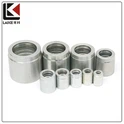
Yo, folks! As a supplier of BSPT Adapters, I often get asked about the magnetic property of these little but super - important components. So, in this blog, I'm gonna break it all down for you.
First off, let's quickly understand what BSPT Adapters are. BSPT stands for British Standard Pipe Tapered. These adapters are used a lot in the plumbing and hydraulic industries. They're designed to connect pipes and fittings, ensuring a tight and leak - free seal. They come in different sizes and shapes, depending on the specific application. Whether it's for a small home plumbing project or a large - scale industrial hydraulic system, BSPT Adapters play a crucial role.
Now, onto the magnetic property. The magnetic property of BSPT Adapters mainly depends on the material they're made of. Most BSPT Adapters are crafted from materials like brass, stainless steel, or carbon steel.
Brass is one of the most common materials for BSPT Adapters. Brass is an alloy made up of copper and zinc. And guess what? Brass is non - magnetic. That means if you take a magnet and bring it close to a brass BSPT Adapter, there won't be any attraction. This non - magnetic property of brass is actually a big advantage in many applications. For example, in electronic or electrical systems, a non - magnetic adapter won't interfere with the magnetic fields that are often present. It ensures the smooth operation of the equipment and reduces the risk of any electromagnetic interference.
On the other hand, stainless steel BSPT Adapters are a bit more complex when it comes to magnetism. Stainless steel is an alloy of iron, chromium, and other elements. There are different grades of stainless steel, and their magnetic properties can vary. Austenitic stainless steels, which are very common, are generally non - magnetic. These types of stainless steel have a crystal structure that doesn't allow for strong magnetic interactions. But some martensitic and ferritic stainless steels are magnetic. Martensitic stainless steels can be made magnetic through heat treatment, and ferritic stainless steels are naturally magnetic due to their crystal structure. If you're in an application where you need a non - magnetic environment, you gotta be careful and choose the right grade of stainless steel for your BSPT Adapters.
Carbon steel BSPT Adapters are magnetic. Carbon steel is mainly composed of iron with a small amount of carbon. Iron is a ferromagnetic material, which means it can be strongly attracted to a magnet. In many industrial settings, the magnetic property of carbon steel BSPT Adapters can be useful. For example, in some manufacturing processes where parts need to be held in place using magnetic fixtures, a carbon steel adapter can be easily secured.
So, why does the magnetic property matter? Well, it all boils down to the application. If you're working in an environment where magnetic fields can cause problems, like in a medical device or a high - precision electronic instrument, you'll want to go for non - magnetic BSPT Adapters, such as those made of brass or certain grades of stainless steel. On the flip side, if you need an adapter that can be held in place magnetically or you're in an environment where magnetism isn't an issue, a carbon steel adapter might be the way to go.

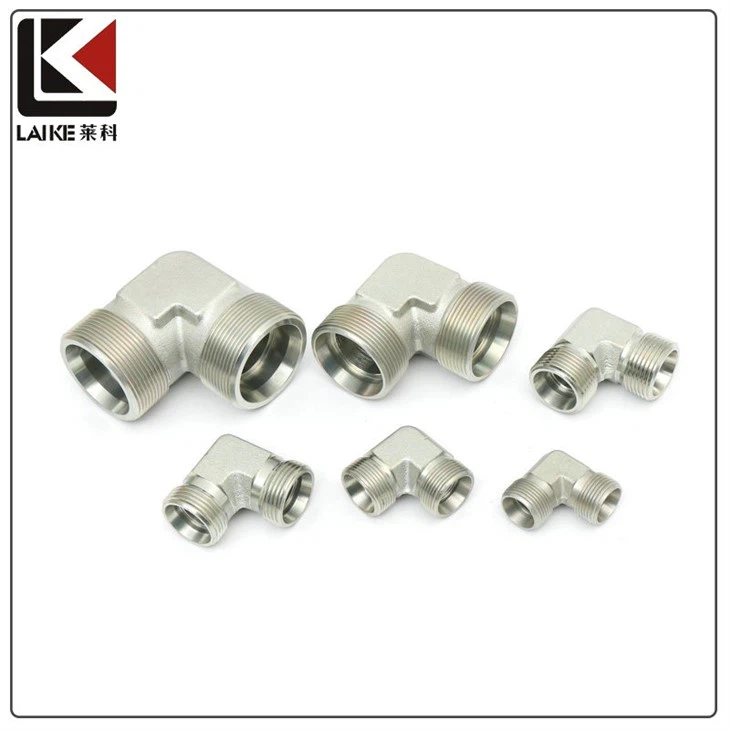
Now, if you're in the market for BSPT Adapters, we've got you covered. But we also offer a wide range of other products. Check out our METRIC Adapter options. They're great for those applications that require metric - sized connections. And if you're looking for more general Pipe Fittings, we've got a diverse selection to meet your needs. Our Hydraulic Fitting Adapters are also top - notch and are used in all sorts of hydraulic systems.
If you're interested in purchasing BSPT Adapters or any of our other products, don't hesitate to reach out. We're always here to help you find the right product for your specific requirements. Whether you're a DIY enthusiast working on a home project or a professional in the industry, we've got the expertise and the products to support you. So, let's start a conversation and get you the best adapters for your job.
References
- "Materials Science and Engineering: An Introduction" by William D. Callister Jr. and David G. Rethwisch
- "Handbook of Hydraulic Fluid Technology" by George E. Totten and Michael S. McNabb