Hey there! I'm a supplier of hydraulic fittings, and today I wanna chat about where these nifty little things are used. Hydraulic fittings might seem like small components, but they play a huge role in a whole bunch of industries. So, let's dive right in and explore the many places where hydraulic fittings are put to work.
Construction Industry
In the construction world, hydraulic systems are everywhere. Heavy machinery like excavators, bulldozers, and cranes rely on hydraulic power to get the job done. Hydraulic fittings are used to connect hoses, pipes, and other components in these machines. For example, in an excavator, hydraulic fittings connect the hydraulic cylinders to the hoses that supply pressurized fluid. This allows the cylinders to extend and retract, enabling the digging and lifting actions.
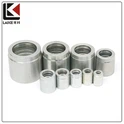
The Hydraulic Hose Ferrule is a crucial part in these setups. It's used to secure the hose to the fitting, ensuring a leak - free connection. Without a proper ferrule, the hydraulic system could lose pressure, leading to reduced performance or even complete failure of the machine. Construction sites are tough environments, with lots of vibrations, dirt, and extreme temperatures. That's why high - quality hydraulic fittings are a must to keep the machinery running smoothly.
Agriculture
Farmers also rely heavily on hydraulic systems. Tractors, combines, and other agricultural equipment use hydraulics for various functions. For instance, the lifting and tilting of the loader on a tractor are controlled by hydraulic cylinders. Hydraulic fittings are used to connect these cylinders to the hydraulic pump and reservoir.
The JIC Adaptor is commonly used in agricultural machinery. It provides a reliable connection between different types of hydraulic components. In the agricultural field, equipment often has to work in muddy and wet conditions. Good hydraulic fittings prevent water and dirt from entering the system, which could cause corrosion and damage to the internal components. This helps in maintaining the efficiency and longevity of the farm equipment.
Manufacturing
In manufacturing plants, hydraulic systems are used for a wide range of applications. Presses, injection molding machines, and automated assembly lines all use hydraulics to generate force and control movement. Hydraulic fittings are used to connect the different parts of these systems, such as valves, cylinders, and pumps.
The NPT Adapter Union is frequently used in manufacturing. It allows for easy connection and disconnection of hydraulic components during maintenance or when reconfiguring the system. Manufacturing processes often require precise control of hydraulic pressure and flow. High - quality hydraulic fittings ensure that the system operates accurately, which is essential for producing high - quality products.
Automotive Industry
The automotive industry also makes use of hydraulic fittings. In cars, hydraulic brakes are a common feature. The brake lines are connected using hydraulic fittings. When you press the brake pedal, hydraulic fluid is forced through the lines, causing the brake calipers to squeeze the brake pads against the rotors, which slows down the vehicle.
In addition to brakes, some cars also have hydraulic suspension systems. These systems use hydraulic cylinders and fittings to adjust the ride height and stiffness of the suspension. This provides a more comfortable and stable driving experience. Automotive hydraulic systems need to be extremely reliable, as any failure could have serious safety implications.
Aerospace
Aerospace is another industry where hydraulic fittings are critical. Aircraft use hydraulic systems for various functions, including landing gear operation, flight control surfaces, and braking. The hydraulic fittings in aerospace applications must meet extremely high standards of quality and reliability.


The environment in which aircraft operate is very different from other industries. There are extreme temperature variations, high altitudes, and the need for lightweight components. Specialized hydraulic fittings are designed to withstand these conditions while still providing a secure and leak - free connection.
Marine Industry
In the marine industry, hydraulic systems are used on boats and ships. They are used for steering, winches, and anchor handling. The marine environment is harsh, with saltwater corrosion being a major concern. Hydraulic fittings in this industry are often made from corrosion - resistant materials such as stainless steel.
The Hydraulic Hose Ferrule used in marine applications needs to be able to withstand the constant movement and vibrations of the vessel. A good ferrule ensures that the hose remains securely attached, even in rough seas.
Mining
Mining operations involve heavy - duty machinery that relies on hydraulic power. Loaders, haul trucks, and drilling equipment all use hydraulic systems. The mining environment is extremely tough, with dust, dirt, and high - impact forces. Hydraulic fittings need to be robust and durable to withstand these conditions.
The JIC Adaptor is useful in mining equipment as it can handle the high - pressure hydraulic systems commonly found in this industry. It helps in maintaining the integrity of the hydraulic connections, which is crucial for the safe and efficient operation of the mining machinery.
Conclusion
As you can see, hydraulic fittings are used in a wide variety of industries. From construction to aerospace, these small but important components are essential for the proper functioning of hydraulic systems. Whether it's in a high - tech aircraft or a simple farm tractor, the right hydraulic fittings can make all the difference in terms of performance, reliability, and safety.
If you're in need of high - quality hydraulic fittings for your business, I'm here to help. I've got a wide range of products, including the Hydraulic Hose Ferrule, JIC Adaptor, and NPT Adapter Union. I can provide you with the right fittings for your specific application. So, don't hesitate to reach out and start a conversation about your hydraulic fitting needs. Let's work together to keep your hydraulic systems running smoothly.
References
- "Hydraulic Systems Handbook" by John F. Watson
- "Industrial Hydraulics" by Paul H. Dietle
- Various industry - specific technical manuals and publications