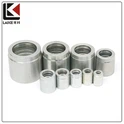
Hey there! As a supplier of JIC To BSP Adapters, I often get asked whether these adapters can be used in chemical processing applications. Well, let's dive right into it and find out.
First off, let's understand what JIC To BSP Adapters are. A JIC To BSP Adapter is a crucial component in fluid systems. JIC (Joint Industry Council) fittings are commonly used in hydraulic systems in North America, known for their 37-degree flare design. On the other hand, BSP (British Standard Pipe) fittings are widely used in Europe and other parts of the world, with either a parallel (BSPP) or tapered (BSPT) thread. These adapters bridge the gap between these two different fitting standards, allowing for seamless connection in fluid transfer setups.
Now, when it comes to chemical processing applications, there are several factors we need to consider to determine if a JIC To BSP Adapter is a good fit.
Compatibility with Chemicals
One of the most critical aspects is the compatibility of the adapter material with the chemicals being processed. Chemicals can range from mild solvents to highly corrosive acids and alkalis. In chemical processing plants, you might be dealing with substances like sulfuric acid, hydrochloric acid, or caustic soda. These aggressive chemicals can quickly eat away at certain materials, causing leaks and potential safety hazards.


Most JIC To BSP Adapters are made from materials like steel, stainless steel, brass, or aluminum. Stainless steel is a popular choice because of its excellent corrosion resistance. It can withstand a wide range of chemicals, including many acids and alkalis, making it suitable for a variety of chemical processing applications. For example, in a chemical plant that produces fertilizers, stainless steel adapters can be used to connect pipes carrying ammonia solutions, which are moderately corrosive.
However, brass adapters, while having good machinability and conductivity, may not be suitable for applications involving strong acids or certain chemicals that can cause dezincification. Aluminum adapters, although lightweight, are generally not recommended for highly corrosive chemical environments as they can react with many chemicals.
Pressure and Temperature Ratings
Chemical processing often involves high pressures and temperatures. The adapter must be able to handle the pressure and temperature conditions of the system without failing. In a chemical reactor, for instance, the pressure can build up significantly during a chemical reaction, and the temperature can also rise rapidly.
JIC To BSP Adapters come with specific pressure and temperature ratings. It's essential to choose an adapter with ratings that exceed the maximum pressure and temperature expected in the chemical processing application. For example, if your system operates at a maximum pressure of 2000 psi and a temperature of 150°C, you should select an adapter rated for at least 2500 psi and 200°C to ensure safety and reliability.
Seal Integrity
A proper seal is crucial in chemical processing to prevent leaks. Leaking chemicals can not only cause environmental pollution but also pose a serious risk to the health and safety of workers. JIC To BSP Adapters rely on various sealing mechanisms, such as O-rings or metal-to-metal seals.
O-rings are commonly used in these adapters to provide a tight seal. However, the material of the O-ring must be compatible with the chemicals in the system. For example, Viton O-rings are resistant to many chemicals, including fuels, oils, and most solvents, making them a good choice for a wide range of chemical processing applications. On the other hand, nitrile O-rings may not be suitable for applications involving strong solvents or fuels.
Industry Standards and Regulations
Chemical processing is a highly regulated industry, and there are strict standards and regulations regarding the use of equipment, including adapters. These standards ensure the safety and quality of the chemical processing operations.
When selecting a JIC To BSP Adapter for a chemical processing application, it's important to ensure that the adapter meets the relevant industry standards. For example, in the United States, the American Society of Mechanical Engineers (ASME) has standards for pressure vessels and piping systems. In Europe, the Pressure Equipment Directive (PED) sets out the requirements for equipment used in pressure systems.
Advantages of Using JIC To BSP Adapters in Chemical Processing
Despite the challenges, there are several advantages to using JIC To BSP Adapters in chemical processing applications.
- Versatility: These adapters allow for the integration of different piping systems, whether they are based on the JIC or BSP standards. This means that you can use equipment from different regions or manufacturers in your chemical processing plant without having to worry about compatibility issues.
- Easy Installation: JIC To BSP Adapters are relatively easy to install, which can save time and labor costs during the setup or maintenance of a chemical processing system. They can be quickly connected and disconnected, making it convenient for system modifications or repairs.
- Cost-Effective: Compared to custom-made adapters, JIC To BSP Adapters are generally more cost-effective. They are mass-produced, which reduces the manufacturing cost, and they are readily available in the market.
Other Adapter Options
In addition to JIC To BSP Adapters, there are other types of adapters that you might consider for chemical processing applications. METRIC Adapter is another option, especially if you are dealing with metric-sized pipes and fittings. Metric adapters are commonly used in European and Asian chemical processing plants.
American Adapter is also a choice, which can be useful if you are using equipment that follows the American standards. These adapters can help you connect different American-style fittings in your chemical processing system.
Conclusion
So, can a JIC To BSP Adapter be used in chemical processing applications? The answer is yes, but with careful consideration. You need to ensure that the adapter material is compatible with the chemicals, it can handle the pressure and temperature conditions, and it provides a reliable seal. By choosing the right adapter and following the industry standards, you can safely use JIC To BSP Adapters in your chemical processing operations.
If you're in the chemical processing industry and looking for high-quality JIC To BSP Adapters, feel free to reach out. We have a wide range of adapters that can meet your specific requirements. Whether you need stainless steel adapters for corrosive chemicals or adapters with high-pressure ratings, we've got you covered. Let's start a conversation and find the perfect solution for your chemical processing needs.
References
- ASME Boiler and Pressure Vessel Code
- Pressure Equipment Directive (PED)
- Chemical Compatibility Guides from material manufacturers