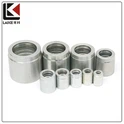
Hey there, folks! I'm a supplier of JIC to JIC adapters, and today I want to dig into a pretty important question: Can a JIC to JIC adapter be used in a corrosive gas environment?
First off, let's get a quick low - down on what JIC to JIC adapters are. JIC, which stands for Joint Industry Council, is a type of hydraulic fitting. These adapters are used to connect two hydraulic components with JIC fittings. They're super common in all sorts of hydraulic systems because they offer a reliable and leak - free connection.
Now, when it comes to corrosive gas environments, things get a bit tricky. Corrosive gases, like chlorine, sulfur dioxide, or ammonia, can really mess with metal components. They react with the metal, causing it to break down over time. This can lead to leaks, reduced performance, and even complete failure of the hydraulic system.
So, can our trusty JIC to JIC adapters handle these harsh conditions? Well, it depends on a few factors.
Material Matters
The material of the JIC to JIC adapter is crucial. Most standard JIC to JIC adapters are made of steel or stainless steel. Steel is strong and relatively inexpensive, but it's not the best choice for corrosive gas environments. It will rust when exposed to certain corrosive gases, especially in the presence of moisture.
Stainless steel, on the other hand, is a better option. It contains chromium, which forms a thin, protective oxide layer on the surface. This layer helps prevent the metal from reacting with the corrosive gases. However, not all stainless steels are created equal. For example, 304 stainless steel is commonly used, but it may not be sufficient in highly corrosive environments. In those cases, you might need a more corrosion - resistant grade like 316 stainless steel.
If you're dealing with extremely corrosive gases, you might even want to consider exotic materials like Hastelloy or titanium. These materials offer excellent corrosion resistance but come with a much higher price tag.


Surface Treatment
Even if you use a corrosion - resistant material, surface treatment can add an extra layer of protection. Some adapters are coated with a special paint or plating. For example, zinc plating can provide some protection against mild corrosion. However, in a corrosive gas environment, these coatings may not last long.
A more effective option is a passivation treatment. This process removes free iron from the surface of the stainless steel, enhancing the formation of the protective oxide layer. It can significantly improve the corrosion resistance of the JIC to JIC adapter.
Design and Sealing
The design of the JIC to JIC adapter also plays a role. A well - designed adapter with proper sealing can prevent corrosive gases from getting inside the fitting and attacking the internal components. The JIC fitting uses a cone - and - seat design, which provides a tight seal when properly tightened. But it's important to make sure the seal is intact and not damaged during installation or use.
Real - World Applications
Let's look at some real - world scenarios. In chemical plants, where there are often high concentrations of corrosive gases, using the right JIC to JIC adapter is a must. For example, in a chlorine production facility, the wrong adapter could quickly corrode, leading to leaks and potentially dangerous situations.
On the other hand, in a less severe environment, like a laboratory where there are only small amounts of corrosive gases, a well - chosen stainless - steel JIC to JIC adapter with proper surface treatment might work just fine.
Comparing with Other Adapters
It's also worth comparing JIC to JIC adapters with other types of adapters in a corrosive gas environment. For instance, NPTF Adapter is another common type of hydraulic adapter. NPTF (National Pipe Taper Fuel) adapters have a tapered thread design, which can be more prone to leaks in a corrosive environment. The threads can corrode, making it difficult to maintain a tight seal.
Tube Fitting is also an option. Tube fittings come in various designs, and some are more corrosion - resistant than others. However, they may not be as easy to install and replace as JIC to JIC adapters in some cases.
BSPT Adapter is a British Standard Pipe Tapered adapter. Similar to NPTF adapters, the tapered threads can be a weak point in a corrosive gas environment.
Making the Right Choice
So, how do you decide if a JIC to JIC adapter is suitable for your corrosive gas environment? Here are some steps:
- Assess the Gas: Figure out what kind of corrosive gas you're dealing with, its concentration, and the temperature and humidity of the environment.
- Choose the Material: Based on the assessment, select the appropriate material for the adapter. Consider factors like cost, availability, and performance.
- Check the Surface Treatment: Look for adapters with proper surface treatment to enhance corrosion resistance.
- Verify the Design and Sealing: Make sure the adapter has a good design and reliable sealing to prevent gas ingress.
If you're still not sure, don't hesitate to reach out to us. We've got a team of experts who can help you make the right choice for your specific situation.
Conclusion
In conclusion, a JIC to JIC adapter can be used in a corrosive gas environment, but it requires careful consideration of the material, surface treatment, design, and sealing. By making the right choices, you can ensure that your hydraulic system operates safely and efficiently in these challenging conditions.
If you're in the market for high - quality JIC to JIC adapters or need advice on choosing the right adapter for your corrosive gas environment, we're here to help. Just get in touch with us for a friendly chat and let's work together to find the best solution for your needs.
References
- ASME B16.11: Forged Fittings, Socket - Welding and Threaded
- ASTM A240: Standard Specification for Chromium and Chromium - Nickel Stainless Steel Plate, Sheet, and Strip for Pressure Vessels and for General Applications
- Hydraulic Fitting Handbook by Eaton Corporation