Hey there! As a supplier of JIC hose fittings, I've been getting a lot of questions lately about the effect of fluid viscosity on these fittings. So, I thought I'd take some time to break it down for you all.
First off, let's talk about what JIC hose fittings are. JIC, which stands for Joint Industry Council, is a standard for hydraulic fittings. These fittings are widely used in various industries, from automotive to aerospace, because they offer a reliable and leak - free connection for hydraulic hoses.
Now, fluid viscosity is a measure of a fluid's resistance to flow. You can think of it like how thick or thin a liquid is. For example, water has a relatively low viscosity, so it flows easily. On the other hand, honey has a high viscosity, and it's much thicker and flows more slowly.
So, how does fluid viscosity impact JIC hose fittings?
Flow Rate and Pressure Drop
One of the most significant effects of fluid viscosity on JIC hose fittings is on the flow rate and pressure drop. When you have a fluid with high viscosity flowing through a JIC hose fitting, it's going to face more resistance. This resistance causes a decrease in the flow rate of the fluid. You can picture it like trying to push honey through a small straw; it's going to take more effort, and the honey won't come out as quickly as water would.
As the fluid moves through the fitting, this increased resistance also leads to a higher pressure drop. Pressure drop is the difference in pressure between the inlet and the outlet of the fitting. A higher pressure drop means that more energy is being lost as the fluid moves through the fitting. In a hydraulic system, this can be a big deal because it can reduce the overall efficiency of the system. You might end up needing a more powerful pump to maintain the desired flow rate, which can increase energy consumption and costs.
Sealing Performance
Fluid viscosity also plays a crucial role in the sealing performance of JIC hose fittings. In a well - functioning fitting, the seal is designed to prevent fluid from leaking out. When the fluid has a low viscosity, it can more easily find its way through small gaps or imperfections in the seal. It's like water seeping through a tiny crack in a wall.
On the other hand, a high - viscosity fluid can actually help with sealing. The thick nature of the fluid makes it less likely to leak through small openings. It kind of fills in those gaps and provides an extra layer of protection against leaks. However, if the viscosity is too high, it can put additional stress on the seal. The fitting might need to be designed to handle the higher forces exerted by the thick fluid, or else the seal could fail over time.
Wear and Tear
Another aspect to consider is the wear and tear on the JIC hose fittings. High - viscosity fluids can cause more wear on the internal surfaces of the fitting. As the thick fluid moves through the fitting, it rubs against the walls, and this friction can lead to erosion and damage over time. This is especially true if the fluid contains abrasive particles.
In contrast, low - viscosity fluids generally cause less wear. But they can also allow small particles to move more freely through the fitting, which could potentially cause blockages or damage other components in the hydraulic system.
Compatibility with Materials
The viscosity of the fluid can also affect the compatibility of the fluid with the materials used in the JIC hose fittings. Some materials might be more suitable for high - viscosity fluids, while others work better with low - viscosity ones. For example, certain elastomers used in seals might swell or degrade when exposed to high - viscosity fluids over a long period. This can compromise the integrity of the seal and lead to leaks.
Impact on Installation and Maintenance
Fluid viscosity can even have an impact on the installation and maintenance of JIC hose fittings. When installing a fitting with a high - viscosity fluid, it might be more difficult to ensure a proper connection. The thick fluid can make it harder to align the parts correctly, and it might require more force to tighten the fitting.
During maintenance, high - viscosity fluids can be a pain to drain and clean out of the fitting. You might need special tools or solvents to get rid of all the thick residue. On the other hand, low - viscosity fluids are generally easier to handle during installation and maintenance.
Dealing with Different Viscosities
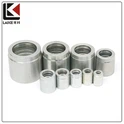
As a JIC hose fitting supplier, we understand the importance of dealing with different fluid viscosities. That's why we offer a variety of products to meet different needs. For example, if you're dealing with high - viscosity fluids, you might be interested in our Skive Ferrule. These ferrules are designed to provide a secure connection even under the high forces exerted by thick fluids.
If you need a fitting that can handle a wide range of viscosities and is also corrosion - resistant, our Stainless Steel Fitting is a great option. Stainless steel is a durable material that can withstand the wear and tear caused by different types of fluids.
And for applications where you're dealing with high - pressure and high - viscosity fluids, our High Pressure Ferrule is specifically engineered to provide a reliable seal under extreme conditions.


Conclusion
In conclusion, fluid viscosity has a significant impact on JIC hose fittings. It affects the flow rate, pressure drop, sealing performance, wear and tear, material compatibility, and even the installation and maintenance of the fittings. As a supplier, we're committed to providing you with the best - suited JIC hose fittings for your specific fluid viscosity requirements.
If you're in the market for JIC hose fittings and want to discuss how fluid viscosity might affect your application, don't hesitate to reach out. We're here to help you find the perfect solution for your hydraulic system. Whether you're dealing with a low - viscosity coolant or a high - viscosity lubricant, we've got the expertise and the products to meet your needs. Let's work together to ensure your hydraulic system runs smoothly and efficiently.
References
- "Hydraulic Fitting Handbook" by Hydraulics Institute
- "Fluid Mechanics and Hydraulic Machines" by R. K. Bansal
- Industry research reports on JIC hose fittings and fluid dynamics.