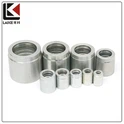
As a supplier of BSPT (British Standard Pipe Taper) adapters, I often receive inquiries from clients regarding the suitability of these adapters for food - grade applications. In this blog, I will delve into the technical aspects, regulatory requirements, and potential risks to provide a comprehensive answer to the question: Can BSPT Adapters be used in food - grade applications?
Technical Characteristics of BSPT Adapters
BSPT adapters are designed to create a tight seal in piping systems. They have a tapered thread, which means the diameter of the thread decreases along the length of the pipe. This design allows for a self - sealing effect when the adapter is tightened into a mating part. The taper angle of BSPT threads is 1:16, which is a standard specification for many industrial applications.
The materials commonly used for BSPT adapters include brass, stainless steel, and carbon steel. Brass is known for its good machinability and corrosion resistance. Stainless steel, on the other hand, offers excellent corrosion resistance, especially in harsh environments. Carbon steel is strong and cost - effective but may require additional surface treatments to prevent rusting.
In food - grade applications, the technical characteristics of the adapter play a crucial role. For example, the self - sealing property of BSPT adapters can prevent leakage, which is essential to maintain the integrity of the food - processing system. However, the choice of material is of utmost importance.
Regulatory Requirements for Food - Grade Applications
When it comes to using any component in food - grade applications, strict regulatory requirements must be met. In many countries, organizations such as the Food and Drug Administration (FDA) in the United States and the European Food Safety Authority (EFSA) in Europe set guidelines for materials that come into contact with food.
These regulations typically focus on two main aspects: the chemical composition of the material and its ability to withstand cleaning and sanitization processes. Materials used in food - grade applications should not release harmful substances into the food. For example, they should not contain heavy metals such as lead, cadmium, or mercury in quantities that exceed the permitted limits.
In terms of cleaning and sanitization, the material should be able to withstand the use of common cleaning agents and high - temperature sterilization processes without degrading or releasing contaminants.
Suitability of BSPT Adapter Materials for Food - Grade Applications
Brass BSPT Adapters
Brass is a popular choice for BSPT adapters due to its mechanical properties. However, traditional brass alloys may contain lead, which is a major concern in food - grade applications. Lead can leach into the food, posing a health risk, especially for vulnerable populations such as children and pregnant women.
Some manufacturers produce lead - free brass adapters, which are designed to meet food - grade requirements. These adapters are made from special brass alloys that have a low lead content and comply with relevant regulations. When considering brass BSPT adapters for food - grade applications, it is essential to ensure that they are certified as lead - free and meet the necessary regulatory standards.
Stainless Steel BSPT Adapters
Stainless steel is generally considered a more suitable material for food - grade applications. It has excellent corrosion resistance, which means it can withstand the acidic and alkaline environments often found in food - processing plants. Stainless steel also has a smooth surface finish, which makes it easy to clean and sanitize.
There are different grades of stainless steel, with 304 and 316 being the most commonly used in food - grade applications. Grade 304 stainless steel is a general - purpose material with good corrosion resistance. Grade 316 stainless steel, on the other hand, contains molybdenum, which enhances its corrosion resistance, especially in chloride - rich environments.
When using stainless steel BSPT adapters in food - grade applications, it is important to ensure that the surface finish is appropriate. A smooth, polished surface is preferred as it reduces the risk of bacteria and food particles adhering to the adapter.
Carbon Steel BSPT Adapters
Carbon steel is not typically recommended for direct contact with food in food - grade applications. Carbon steel is prone to rusting, and rust can contaminate the food. Even if the carbon steel adapter is coated with a protective layer, there is a risk of the coating wearing off over time, exposing the underlying steel to corrosion.
However, in some cases, carbon steel BSPT adapters may be used in non - food - contact parts of the food - processing system, such as in the support structure or in areas where there is no direct contact with the food.
Potential Risks of Using BSPT Adapters in Food - Grade Applications
Even if the BSPT adapter is made from a suitable material, there are still potential risks to consider. One of the main risks is the presence of crevices or gaps in the adapter. These areas can trap food particles and bacteria, creating a breeding ground for microorganisms. Regular cleaning and inspection are necessary to prevent the buildup of contaminants in these areas.
Another risk is the compatibility of the adapter with other components in the food - processing system. For example, if the adapter is used in a system where there are different types of materials, there may be a risk of galvanic corrosion. Galvanic corrosion occurs when two different metals are in contact with each other in the presence of an electrolyte, such as water or a food solution.
Alternative Adapter Options for Food - Grade Applications
In addition to BSPT adapters, there are other adapter options available for food - grade applications. For example, Kumatsu Adapter is a type of adapter that may be suitable for certain food - processing systems. These adapters are designed to provide a reliable connection and may be made from food - grade materials.


SAE Flange Adapter is another option. SAE flange adapters are known for their high - pressure performance and are often used in hydraulic systems. They can also be used in food - grade applications if they are made from suitable materials and meet the necessary regulatory requirements.
Flange Joint is a type of connection that can be used in food - grade piping systems. Flange joints provide a secure and leak - free connection, and they are easy to disassemble for cleaning and maintenance.
Conclusion
In conclusion, BSPT adapters can be used in food - grade applications, but careful consideration must be given to the material, regulatory compliance, and potential risks. Stainless steel BSPT adapters are generally the most suitable option due to their corrosion resistance and ease of cleaning. Lead - free brass adapters can also be used if they meet the necessary regulatory standards.
If you are in the food - processing industry and are looking for high - quality BSPT adapters or other adapter options for your food - grade applications, please feel free to contact us. We are committed to providing you with the best products that meet your specific requirements.
References
- Food and Drug Administration (FDA). Guidelines for Materials in Contact with Food.
- European Food Safety Authority (EFSA). Regulations for Food - Contact Materials.
- ASME B1.20.1 - Pipe Threads, General Purpose (Inch).
- ISO 7 - 1:2000 - Pipe threads where pressure - tight joints are made on the threads -- Part 1: Dimensions, tolerances and designation.