Figuring out if a hose fitting is compatible with your equipment can be a real head - scratcher. But don't worry, as a hose fitting supplier, I've got plenty of insights to share with you.
First off, let's talk about the basics. The size of the hose fitting is crucial. You need to match the inner diameter, outer diameter, and the thread size of the fitting to your equipment. For example, if your equipment has a specific inlet with a certain thread pitch and diameter, the fitting must have the exact same measurements. A common mistake people make is assuming that a close - enough size will work, but in reality, even a small mismatch can lead to leaks or inefficient operation. You can use a caliper to measure the dimensions accurately. If you're unsure about how to do this, there are plenty of online tutorials that can walk you through the process.


Another important aspect is the type of connection. Different equipment requires different connection types. There are compression fittings, flare fittings, and threaded fittings, just to name a few. Compression fittings are great when you need a tight seal without the need for a lot of force during installation. They work by squeezing the hose onto the fitting. Flare fittings, on the other hand, are often used in high - pressure applications. They involve creating a flared end on the hose, which then mates with the corresponding flare on the fitting.
Now, if your equipment deals with hydraulic systems, then Hydraulic Hose Connector is likely what you're looking for. Hydraulic systems operate under high pressure, so the fittings need to be able to withstand these forces. These connectors are designed to provide a leak - free connection, which is essential for the proper functioning of hydraulic equipment. They come in various shapes and sizes to fit different hydraulic setups.
The material of the hose fitting is also a major factor in determining compatibility. The fitting material must be able to withstand the conditions in which the equipment operates. For instance, if your equipment is used in a corrosive environment, like a chemical processing plant, you'll need fittings made from corrosion - resistant materials such as stainless steel or brass. Plastic fittings can be a cost - effective option, but they may not be suitable for high - pressure or high - temperature applications.
Let's not forget about the working pressure and temperature ratings. Every piece of equipment has its own operating pressure and temperature ranges. Your hose fitting must be able to handle these conditions. If the fitting is rated for a lower pressure than what your equipment operates at, it can burst, which is not only dangerous but can also cause significant damage to your equipment. Similarly, if the temperature range of the fitting is exceeded, it can lead to degradation of the material and loss of the seal. Always check the pressure and temperature ratings of both your equipment and the fitting before making a purchase.
When it comes to specific types of hydraulic fittings, JIC Hydraulic Fittings are quite popular. JIC stands for Joint Industry Council, and these fittings are widely used in the automotive, aerospace, and industrial sectors. They have a 37 - degree flare design, which provides a reliable seal under high pressure. They are available in a wide range of sizes and configurations, making it easier to find a match for your equipment.
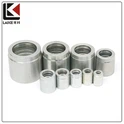
The hose ferrule is another component that plays a vital role in hose fitting compatibility. Hose Ferrule is used to secure the hose to the fitting. It's important to choose a ferrule that is the right size and shape for your hose and fitting. A poorly fitting ferrule can cause the hose to slip off the fitting, leading to leaks and potential hazards.
You might also want to consider the flow rate requirements of your equipment. The internal diameter of the hose fitting affects the flow rate of the fluid or gas passing through it. If the internal diameter is too small, it can restrict the flow and cause inefficiencies in your equipment. On the other hand, if it's too large, it might not provide the necessary pressure for the equipment to function properly.
So, how can you double - check the compatibility? One option is to consult the equipment's manual. Manufacturers usually provide detailed information about the compatible hose fittings in the manual. If you don't have the manual, you can contact the equipment manufacturer directly. They can give you accurate advice on the right fittings for your machine.
Another way is to reach out to us, your trusted hose fitting supplier. We have a team of experts who can help you find the perfect match for your equipment. We've dealt with all sorts of equipment and have in - depth knowledge of hose fittings. We can offer customized solutions based on your specific requirements.
In conclusion, determining if a hose fitting is compatible with your equipment involves considering multiple factors such as size, connection type, material, pressure and temperature ratings, and flow rate. It's not always straightforward, but with the right information and a bit of guidance, you can make the right choice.
If you're in the market for high - quality hose fittings or have questions about compatibility, don't hesitate to get in touch for a procurement discussion. We're here to help you find the best solutions for your equipment.
References
- "Fluid Power: Hydraulics and Pneumatics" by Donald B. Barker
- "Hose Fittings and Couplings Handbook" by various industry experts