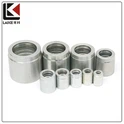
Hey there! As a long - time tube fitting supplier, I've had countless chances to see all kinds of tube fittings in action. One type that really stands out due to its unique design and functionality is the barbed tube fitting. In this blog, I'll walk you through how a barbed tube fitting works.
What is a Barbed Tube Fitting?
First things first, let's get familiar with what a barbed tube fitting actually is. These fittings are made up of a short tube usually with one or multiple barbs, which are small ridges or projections on the outside surface. They're crafted from different materials like plastic, brass, stainless steel, and even nylon, and each material has its own set of benefits. For example, plastic is lightweight and won't rust, brass is corrosion - resistant and has good conductivity, stainless steel is super strong and durable, while nylon is flexible and chemical - resistant.
How it Connects to Tubing
The main job of a barbed tube fitting is to connect different sections of tubing together or to a device. The process is pretty straightforward. You simply insert the barbed end of the fitting into the tubing. The barbs on the fitting play a crucial role here. As you push the fitting into the tube, the barbs grip the inner wall of the tubing. This creates a tight seal and keeps the fitting firmly in place.
The design of the barbs is no accident. They're angled in a way that they make it easy to insert the fitting into the tube but really hard to pull it out. It's like a one - way ticket. Once the fitting is in, it wants to stay there. This is especially important in systems where there's a lot of movement or vibration, as it prevents the fitting from coming loose and causing leaks.
Sealing Mechanism
Now, let's talk about how a barbed tube fitting seals. When the barbs dig into the tubing, they deform the inner wall of the tube slightly. This deformation creates a mechanical seal. The more barbs there are, the better the seal usually is because there are more contact points between the fitting and the tube.
In addition to the mechanical seal, sometimes a bit of lubricant or sealant is used. This can help to make the insertion process smoother and also enhance the sealing performance. For instance, in high - pressure applications, a sealant can fill any small gaps between the barbs and the tube, preventing fluid from leaking out.
Applications of Barbed Tube Fittings
Barbed tube fittings are used in a ton of different applications. In the automotive industry, they're often used in coolant systems to connect hoses and pipes. They can handle the constant flow of coolant and the vibrations that come with a running engine.
In the plumbing world, barbed tube fittings are great for connecting small - diameter pipes, especially for things like water filtration systems or in - home irrigation setups. They're easy to install and can provide a reliable connection for years.
In the medical field, these fittings are used in devices like IV lines and oxygen delivery systems. The materials used are often medical - grade, ensuring they're safe for use in contact with the human body. The tight seal is crucial here to prevent any contamination or leakage of fluids.


Choosing the Right Barbed Tube Fitting
When you're in the market for barbed tube fittings, there are a few things to keep in mind. First, think about the material. As I mentioned earlier, different materials have different properties, so you need to pick one that suits your specific application. If you're dealing with chemicals, for example, you'll want a material that's resistant to those chemicals.
The size of the fitting is also super important. You need to make sure the diameter of the barbed end matches the inner diameter of the tubing you're using. A too - small fitting won't create a good seal, and a too - large one might damage the tubing.
Another thing to consider is the number of barbs. More barbs usually mean a better seal, but it also makes the insertion a bit more difficult. So, you have to find a balance based on your needs.
Related Products
If you're involved in the world of tube fittings, you might also be interested in some related products. For instance, BSPT Adapter are great for adapting different types of threaded connections. They're very handy when you need to connect pipes or hoses with different thread standards.
Hydraulic Flange Adapters are used in hydraulic systems to connect pipes or hoses to flanges. They're designed to handle high - pressure applications and provide a reliable connection.
And don't forget about Hydraulic Plugs and Caps. These are simple but essential products for sealing off the ends of pipes or hoses to prevent leaks or contamination when the system is not in use.
Let's Talk Business
If you're in the market for barbed tube fittings or any of the related products I mentioned, I'd love to have a chat. As a tube fitting supplier, I've got a wide range of options to meet your needs. Whether you're a small - scale DIY enthusiast or part of a large industrial operation, I can help you find the right fittings. Get in touch and let's work out a solution that fits your requirements and budget.
References
- "Handbook of Fluid Power", Industrial Press Inc.
- "Piping Handbook", McGraw - Hill Education