When it comes to fluid transfer systems in various industrial applications, choosing the right quick coupling is crucial. As a seasoned quick coupling supplier, I've witnessed firsthand the impact that the correct coupling can have on the efficiency, safety, and overall performance of a system. In this blog, I'll share some key considerations to help you make an informed decision when selecting the right quick coupling for your needs.
Understanding Your Application Requirements
The first step in choosing the right quick coupling is to have a clear understanding of your application requirements. This includes factors such as the type of fluid being transferred, the operating pressure and temperature, the flow rate, and the environmental conditions in which the coupling will be used.
Fluid Type
Different fluids have different properties, such as viscosity, chemical composition, and corrosiveness. These properties can affect the compatibility of the quick coupling with the fluid. For example, if you're transferring a corrosive fluid, you'll need a coupling made from a material that is resistant to corrosion, such as stainless steel or brass. On the other hand, if you're transferring a high-viscosity fluid, you'll need a coupling with a larger bore size to ensure smooth flow.
Operating Pressure and Temperature
The operating pressure and temperature of your system are also important factors to consider. Quick couplings are designed to operate within specific pressure and temperature ranges. If you exceed these ranges, it can lead to leaks, failures, or even safety hazards. Make sure to choose a coupling that is rated for the maximum pressure and temperature of your system.
Flow Rate
The flow rate of your system determines the size of the quick coupling you need. A coupling with a smaller bore size will restrict the flow rate, while a coupling with a larger bore size will allow for higher flow rates. You'll need to calculate the required flow rate based on your system's specifications and choose a coupling that can handle that flow rate without causing excessive pressure drop.
Environmental Conditions
The environmental conditions in which the quick coupling will be used can also affect its performance and durability. For example, if the coupling will be exposed to extreme temperatures, moisture, dust, or chemicals, you'll need to choose a coupling that is designed to withstand these conditions. Some couplings are equipped with special seals or coatings to protect against corrosion and environmental damage.

Types of Quick Couplings
There are several types of quick couplings available on the market, each with its own unique features and benefits. Here are some of the most common types:
Flat Face Hydraulic Quick Coupler
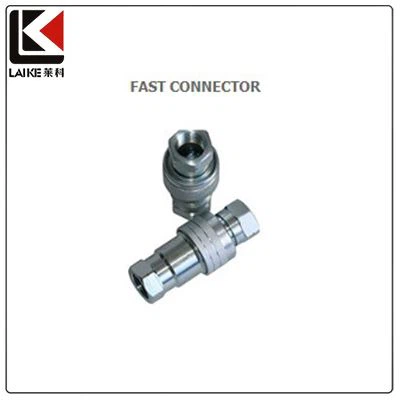
Flat face hydraulic quick couplers are designed to provide a leak-free connection in hydraulic systems. They feature a flat face design that prevents dirt and debris from entering the coupling when it is disconnected. This helps to maintain the cleanliness of the hydraulic fluid and reduce the risk of contamination. Flat Face Hydraulic Quick Coupler are commonly used in construction, agriculture, and industrial applications.
Hydraulic Quick Connect Couplings
Hydraulic quick connect couplings are used to quickly and easily connect and disconnect hydraulic lines. They are available in a variety of sizes and configurations to suit different applications. Hydraulic Quick Connect Couplings are typically made from high-quality materials such as steel or aluminum and are designed to withstand high pressures and temperatures.
Hydraulic Coupling Types
There are several different types of hydraulic couplings, including threaded couplings, push-to-connect couplings, and cam and groove couplings. Each type has its own advantages and disadvantages, depending on the application. Hydraulic Coupling Types can be used in a wide range of industries, including automotive, aerospace, and manufacturing.
Material Selection
The material used to manufacture the quick coupling is an important consideration, as it can affect the coupling's performance, durability, and compatibility with the fluid being transferred. Here are some common materials used in quick coupling manufacturing:
Steel
Steel is a strong and durable material that is commonly used in quick couplings. It is resistant to corrosion and can withstand high pressures and temperatures. Steel couplings are often used in heavy-duty applications, such as construction and mining.
Stainless Steel
Stainless steel is a corrosion-resistant material that is ideal for use in applications where the coupling will be exposed to harsh chemicals or environments. It is also easy to clean and maintain, making it a popular choice for food and beverage processing, pharmaceutical, and medical applications.
Brass
Brass is a relatively soft and malleable material that is easy to machine and form. It is also resistant to corrosion and has good electrical conductivity. Brass couplings are commonly used in low-pressure applications, such as plumbing and HVAC systems.
Aluminum
Aluminum is a lightweight and corrosion-resistant material that is commonly used in quick couplings. It is also easy to machine and form, making it a cost-effective option for many applications. Aluminum couplings are often used in automotive and aerospace industries.
Connection Type
The connection type of the quick coupling is another important consideration. There are several different connection types available, each with its own advantages and disadvantages. Here are some common connection types:
Threaded Connection
Threaded connections are the most common type of connection used in quick couplings. They are easy to install and remove and provide a secure and leak-free connection. Threaded connections are available in a variety of sizes and thread types to suit different applications.
Push-to-Connect Connection
Push-to-connect connections are designed to be easy to install and remove without the need for tools. They feature a simple push-on design that allows for quick and easy connection and disconnection. Push-to-connect connections are commonly used in applications where frequent connection and disconnection are required, such as in pneumatic systems.
Cam and Groove Connection
Cam and groove connections are a type of quick coupling that uses a cam and groove mechanism to provide a secure and leak-free connection. They are easy to install and remove and are commonly used in applications where a high flow rate is required, such as in fuel transfer and chemical processing.
Seal Selection
The seal is an important component of the quick coupling, as it helps to prevent leaks and ensure a tight connection. There are several different types of seals available, each with its own unique features and benefits. Here are some common seal materials:
Nitrile Rubber
Nitrile rubber is a commonly used seal material that is resistant to oil, fuel, and most chemicals. It has good flexibility and durability and is suitable for use in a wide range of applications.
Viton
Viton is a high-performance seal material that is resistant to extreme temperatures, chemicals, and fuels. It has excellent chemical resistance and is suitable for use in harsh environments.
EPDM
EPDM is a synthetic rubber material that is resistant to water, steam, and most chemicals. It has good weather resistance and is suitable for use in outdoor applications.
Conclusion
Choosing the right quick coupling is essential for the efficient and safe operation of your fluid transfer system. By considering factors such as your application requirements, the type of quick coupling, the material selection, the connection type, and the seal selection, you can ensure that you choose the right coupling for your needs. As a quick coupling supplier, I'm here to help you make the right decision. If you have any questions or need further assistance, please don't hesitate to contact me for a consultation and procurement discussion.
References
- "Quick Coupling Handbook" by XYZ Publishing
- "Fluid Power Systems and Components" by ABC Press
- Industry standards and guidelines related to quick couplings