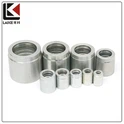
In the realm of fluid handling systems, NPT (National Pipe Taper) adapter unions play a crucial role. As a dedicated supplier of NPT adapter unions, I've encountered numerous inquiries regarding their performance under various conditions. One question that frequently surfaces is whether NPT adapter unions are prone to vibration - induced loosening. In this blog, I'll delve into this topic, exploring the factors at play and providing insights based on industry knowledge and experience.


Understanding NPT Adapter Unions
NPT adapter unions are designed to connect two pipes or components with different thread sizes or types. They are commonly used in a wide range of applications, including plumbing, hydraulic systems, and industrial machinery. The tapered threads of NPT fittings create a seal by wedging into the mating threads, providing a tight connection that can withstand high pressures.
However, the effectiveness of this connection can be challenged by external factors, such as vibration. Vibration is a common occurrence in many industrial environments, whether it's from the operation of machinery, the flow of fluids, or other sources. The constant movement and shaking can potentially cause the threads of NPT adapter unions to loosen over time.
Factors Contributing to Vibration - Induced Loosening
1. Thread Design
The tapered design of NPT threads, while effective for sealing, can also be a contributing factor to loosening under vibration. As the union is subjected to vibration, the lateral forces can cause the threads to gradually back out. Unlike parallel threads, which rely on a more uniform contact surface, the tapered nature of NPT threads means that the contact area changes along the length of the thread. This can lead to uneven stress distribution and make the union more susceptible to loosening.
2. Material Properties
The materials used in NPT adapter unions can also influence their resistance to vibration - induced loosening. For example, if the union is made of a relatively soft material, it may deform more easily under vibration, leading to a loss of thread engagement. On the other hand, a harder material may be more brittle and prone to cracking if the vibration causes excessive stress.
3. Installation Quality
Proper installation is crucial for the long - term performance of NPT adapter unions. If the union is not tightened to the correct torque, it may not form a secure connection. Additionally, if the threads are not clean or lubricated properly during installation, it can lead to galling or seizing, which can further compromise the integrity of the connection and make it more likely to loosen under vibration.
4. Vibration Frequency and Amplitude
The characteristics of the vibration itself, such as frequency and amplitude, play a significant role in determining whether an NPT adapter union will loosen. High - frequency vibrations can cause rapid cycling of the forces acting on the threads, increasing the likelihood of fatigue and loosening. Similarly, large - amplitude vibrations can generate greater lateral forces that can overcome the frictional forces holding the threads together.
Mitigating Vibration - Induced Loosening
1. Thread Locking Compounds
One effective way to prevent vibration - induced loosening is to use thread locking compounds. These compounds are applied to the threads before installation and harden to create a strong bond between the mating parts. There are different types of thread locking compounds available, ranging from low - strength compounds that can be easily removed for maintenance to high - strength compounds that provide a permanent bond.
2. Locking Washers
Locking washers can also be used to enhance the security of NPT adapter unions. They work by creating a spring - like force that resists the loosening of the nut or bolt. Split washers, for example, have a split in the circumference that causes them to bite into the mating surfaces when tightened, providing additional friction.
3. Proper Installation Techniques
As mentioned earlier, proper installation is key. Using a torque wrench to ensure that the union is tightened to the recommended torque value is essential. Additionally, cleaning the threads thoroughly and applying an appropriate lubricant can help prevent galling and ensure a more secure connection.
4. Design Modifications
In some cases, design modifications can be made to improve the vibration resistance of NPT adapter unions. For example, adding a locking feature, such as a set screw or a tab washer, can provide an extra layer of security. Another option is to use a different type of thread design in combination with NPT, such as a JIC Adaptor, which may offer better resistance to vibration in certain applications.
Industry Applications and Considerations
1. Hydraulic Systems
In hydraulic systems, where high pressures and vibrations are common, the reliability of NPT adapter unions is of utmost importance. Loose unions can lead to fluid leaks, which can not only cause a loss of efficiency but also pose a safety hazard. By implementing the mitigation strategies mentioned above, such as using thread locking compounds and proper installation techniques, the risk of vibration - induced loosening can be significantly reduced.
2. Plumbing Systems
In plumbing systems, vibration can be caused by the flow of water or the operation of pumps. While the pressures in plumbing systems are generally lower than in hydraulic systems, loose NPT adapter unions can still lead to leaks and water damage. Using NO Skive Ferrule or other reliable connection methods can help ensure a tight and secure connection.
3. Industrial Machinery
Industrial machinery often operates in environments with high levels of vibration. NPT adapter unions used in these applications need to be able to withstand the constant shaking without loosening. Design modifications and the use of appropriate locking mechanisms are crucial to maintaining the integrity of the fluid handling systems in industrial machinery.
Our Role as a Supplier
As a supplier of NPT adapter unions, we understand the importance of providing high - quality products that can perform well under various conditions. We offer a wide range of NPT adapter unions made from different materials, including stainless steel, brass, and carbon steel, to meet the diverse needs of our customers. Our products are manufactured to strict quality standards, and we provide detailed installation instructions to ensure proper use.
In addition, we can offer advice on the best ways to prevent vibration - induced loosening based on the specific application. Whether it's recommending the right thread locking compound or suggesting design modifications, our team of experts is here to support our customers.
If you're in the market for NPT adapter unions or have any questions about their performance under vibration, we encourage you to contact us. We're committed to providing the best solutions for your fluid handling needs and look forward to the opportunity to discuss your requirements. We also supply other types of hydraulic fittings, such as DIN Adapter, which may be suitable for your application.
Conclusion
In conclusion, while NPT adapter unions can be prone to vibration - induced loosening, there are several factors that can be managed to minimize this risk. By understanding the thread design, material properties, installation quality, and vibration characteristics, and by implementing appropriate mitigation strategies, the reliability of NPT adapter unions can be significantly improved. As a supplier, we're dedicated to providing high - quality products and expert advice to help our customers ensure the long - term performance of their fluid handling systems.
References
- "Fluid Power Engineering Handbook" by Fred Shearer
- "Mechanical Design of Machine Elements and Machines: A Failure - Prevention Perspective" by Robert C. Juvinall and Kurt M. Marshek
- Industry standards and guidelines related to NPT fittings and fluid handling systems.