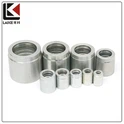
Hey there! I'm a supplier of JIC Adaptors, and today I want to chat about the requirements for JIC adaptors in cryogenic applications. Cryogenic applications involve extremely low temperatures, often below -150°C (-238°F), and these harsh conditions pose unique challenges for any components used, including JIC adaptors.
First off, let's talk about what JIC adaptors are. JIC, which stands for Joint Industry Council, is a type of hydraulic fitting known for its 37-degree flare seating surface. These adaptors are widely used in hydraulic systems to connect different types of hoses and tubes. You can find more about them on our JIC Adaptor page.
Material Selection
One of the most critical requirements for JIC adaptors in cryogenic applications is the right material selection. At low temperatures, materials can become brittle, which can lead to cracks and leaks. So, we need to choose materials that can maintain their mechanical properties in these frigid conditions.
Stainless steel is a popular choice. It has good corrosion resistance and retains its strength at low temperatures. For example, 316 stainless steel can withstand cryogenic temperatures without significant loss of toughness. Another option is aluminum alloys, which are lightweight and have good thermal conductivity. However, they may not be as strong as stainless steel, so they're more suitable for less demanding applications.
Sealing Performance
The sealing performance of JIC adaptors is also crucial in cryogenic applications. A poor seal can result in leaks, which can be not only a waste of valuable cryogenic fluids but also a safety hazard.
To ensure a proper seal, we need to pay attention to the surface finish of the 37-degree flare. A smooth and even surface is essential for a tight fit. Additionally, using high-quality sealing materials is a must. Some seals are specifically designed for cryogenic use, and they can maintain their elasticity and sealing properties at extremely low temperatures.
Thermal Expansion
Thermal expansion is another factor to consider. When materials are exposed to cryogenic temperatures, they contract. If the JIC adaptor and the connected components have different rates of thermal expansion, it can cause stress and potentially lead to failure.
We need to make sure that the materials of the JIC adaptor and the mating parts are compatible in terms of thermal expansion. This may involve careful selection of materials or using special designs to accommodate the differences in expansion.
Pressure Rating
In cryogenic applications, the pressure can be quite high. The JIC adaptor must be able to handle the pressure without leaking or failing. We need to choose adaptors with a pressure rating that is appropriate for the specific application.


It's also important to consider the pressure fluctuations that may occur during operation. Sudden changes in pressure can put additional stress on the adaptor, so it should be designed to withstand these dynamic loads.
Compatibility with Other Components
JIC adaptors need to be compatible with other components in the cryogenic system, such as Hydraulic Hose Ferrule and Swivel Hose Fitting. This includes both physical compatibility (e.g., the size and shape of the connections) and chemical compatibility (e.g., the materials should not react with each other).
Before installation, it's a good idea to double-check the compatibility of all the components to avoid any issues down the line.
Manufacturing Quality
The manufacturing quality of the JIC adaptor is directly related to its performance in cryogenic applications. We use advanced manufacturing processes to ensure that the adaptors meet the highest standards.
This includes precision machining to achieve the correct dimensions and surface finish, as well as strict quality control measures to detect any defects. Only by maintaining high manufacturing quality can we guarantee that the JIC adaptors will perform reliably in cryogenic environments.
Testing and Certification
To ensure the reliability of our JIC adaptors in cryogenic applications, we conduct extensive testing. This includes cryogenic temperature testing to simulate the actual operating conditions and pressure testing to verify the pressure rating.
We also strive to obtain relevant certifications, such as ISO standards, which demonstrate that our products meet international quality and safety requirements.
Why Choose Our JIC Adaptors?
As a JIC adaptor supplier, we have years of experience in providing high-quality products for various applications, including cryogenic ones. Our team of experts is constantly working on improving the design and manufacturing process to meet the ever-changing requirements of the market.
We understand the unique challenges of cryogenic applications, and we're committed to providing JIC adaptors that can withstand these harsh conditions. Whether it's material selection, sealing performance, or pressure rating, we pay attention to every detail to ensure the reliability of our products.
Contact Us for Your JIC Adaptor Needs
If you're in the market for JIC adaptors for cryogenic applications, don't hesitate to reach out to us. We're here to help you find the right solution for your specific needs. Whether you have questions about the product specifications, installation, or pricing, our friendly customer service team is ready to assist you.
Let's work together to ensure the success of your cryogenic projects. Contact us today to start the conversation!
References
- ASME B31.3 Process Piping Code
- ISO 12151 Hydraulic fluid power - Fittings
- Cryogenic Engineering Handbook